• π—˜π—¨π—₯𝗒𝗣𝗔 π—­π—˜π—₯π—•π—œπ—‘π—”π—§π—”: π—™π—œπ—‘π—˜ π——π—˜π—Ÿπ—Ÿπ—” π—™π—”π—©π—’π—Ÿπ—” π—”π—§π—Ÿπ—”π—‘π—§π—œπ—¦π—§π—”.
    Di Pino Cabras

    [PRIMA PARTE]
    La scena è tragica e comica insieme: i guerrapiattisti No Pax, quelli che fino a ieri ci spiegavano con tutto il sussiego possibile che “l’America ci protegge”, oggi piangono perché il “daddy” geopolitico ha pubblicato nero su bianco ciò che ogni adulto poteva già sapere: l’Europa per gli USA è solo un concorrente da manipolare, un vassallo da spremere, non certo un alleato da difendere.
    E così, nel campo NAFO - quel curioso esercito di meme-warriors filo-NATO che passa le giornate su X o su Facebook a fare propaganda come se fosse un videogioco - si passa dal pianto greco alla disperazione isterica. C’è chi frigna perché “daddy ci ha lasciati soli”, chi delira perché “gli USA sono stati corrotti” (e riprende ogni leggenda nera su Trump “asset di Adolf Putin”) e chi continua a recitare la liturgia dell’Occidente faro di civiltà proprio mentre affoga nei suoi stessi dogmi. Ho visto perfino Gramellini e Floris dire che l’Europa non ha mai preteso di imporre una visione, perché invece include con rispetto. Interi continenti colonizzati prenderanno nota di questa strabiliante novità.
    Poi ci sono i furbi che stanno già riposizionandosi: almeno loro non credono alle favole che raccontano.
    Tutti gli altri, come ricorda Francesco Dall’Aglio, farebbero bene a tatuarsi addosso la semplice verità: gli USA non ci hanno mai voluto bene. Ci ha hanno semmai usati e continueranno a farlo finché l’Europa resterà legata a questa spiazzatissima infrastruttura di vecchie illusioni tecnocratiche e nuovi avventurismi militari del tutto velleitari.
    “**** EU”, diceva Victoria Nuland nelle segrete stanze, proprio nei giorni in cui manipolava legioni di europeisti servili e illusi che assecondavano il suo “regime change” a Kiev. Non era una frase qualsiasi, ma il vero manuale operativo.
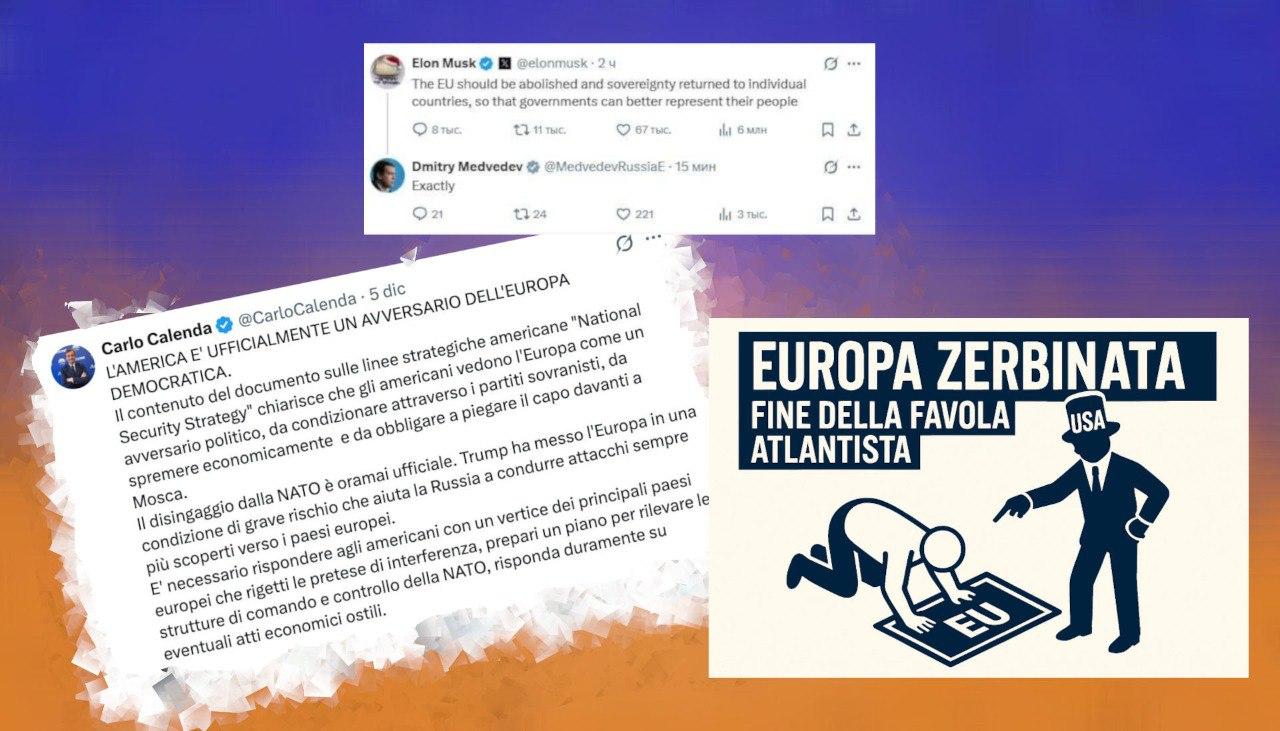
    In questo cimitero di ingenuità ecco che arriva Calenda. Molti dei lettori, quando lo nomino, obiettano che non conta nulla e che quindi è meglio ignorarlo. Ma non si tratta di lui, è l’apparato che lo pompa e me lo fa apparire ovunque a contare davvero. E quello non si deve ignorare. Dunque andiamo avanti. Calenda, dicevo, con la serietà corrucciata di chi è arrivato tardi alla lezione e non ha capito l’argomento, annuncia che “bisogna rispondere agli americani” e che l’Europa deve “rigettare interferenze, preparare piani, rilevare strutture NATO”. Sembra uno di quei topolini della favola che proponevano di attaccare un campanello alla coda del gatto per accorgersi quando arrivava ma non sapevano spiegare come attaccare la campanella. Diciamo che Calenda dimentica un dettaglio grande quanto una base militare: l’Europa non ha più sovranità. Ha solo basi USA. Una caterva di basi. E non esiste un ufficietto europeo con un modulo per “rilevarle”.
    È sublime: Calenda propone un “Yankee go home” senza avere una “home” da cui farli andare. Un piano di difesa europea senza autonomia industriale, energetica o strategica. La caricatura perfetta dell’europeismo moralista che ha svenduto tutto in nome dei “valori”.

    I No Pax e i guerrapiattisti oggi soffrono il contraccolpo della loro stessa propaganda.
    Per anni hanno urlato: “liberiamoci dalla dipendenza russa!” (sostituendo un rapporto stabile che era di mutua convenienza ed era il contrario di una minaccia con una dipendenza totale dagli USA, pagata tre volte e senza contropartite).
    Poi dicevano “difendiamo l’Europa dagli autoritari!” (mentre consegnavano l’Europa a decisioni prese a Washington, nel Pentagono e nelle sale operative NATO, mentre dicevano che i crimini di Bibi il g3N0cida erano un buon “lavoro sporco” fatto nel nostro interesse). Poi urlavano “l’autonomia strategica!” (mentre firmavano l’atto di morte dell’autonomia energetica, industriale e diplomatica).

    [SECONDA PARTE]

    Il risultato è un’Europa che non decide nulla, non influenza nulla, non guida nulla. Semplicemente subisce e non ha nessuna traiettoria tecnologica in atto per risollevarsi. Questa è la tragedia: i No Pax hanno militarizzato l’immaginario, ma disarmato l’economia del continente. Più parlavano di competitività e altre parole vacue, più ci facevano arretrare in ogni statistica, fino al colpo di grazia delle sanzioni, l’auto-sabotaggio perfetto.
    E qui tornano utili le tesi che ha esibito Francesco Forciniti, da scolpire sul frontone dell’UE:
    • doveva darci forza → ci ha resi irrilevanti,
    • doveva difendere il benessere → ha prodotto impoverimento,
    • doveva garantire pace → prepara riarmo e leva,
    • doveva creare coesione → ha generato fratture e rancori,
    • doveva essere democratica → è diventata l’anticamera ottusa di un’oligarchia lobbistica,
    • doveva renderci competitivi → ha costruito la stagnazione come regime.
    Il re è nudo, si usa dire. Ma qui è peggio. È un re morto, circondato solo da cortigiani che litigano sulle decorazioni del feretro.
    Calenda vuole opporsi agli USA? Wow, vastissimo programma, bello. Ma con cosa? Con quale sovranità? Con quali strutture? Con quali élite che per trent’anni hanno considerato l’obbedienza a Washington l’unica forma di politica estera possibile? Dove li trova gli euro-entusiasti dopo la desertificazione ultratrentennale della forza economica dell’Italia, ad esempio? L’Europa non può rispondere agli americani perché non esiste più come soggetto politico. Esiste come appendice tecnico–militare di un alleato che la considera zavorra.
    I No Pax e i guerrapiattisti possono continuare a urlare, a piangere e a giocare alla geopolitica su X e sui giornali illeggibili che vendono sempre meno. Ma la realtà ormai è chiara: gli USA fanno i loro interessi. E noi abbiamo dimenticato come si fa a difendere i nostri.
    Pazienza se Calenda dice sciocchezze e Musk, pur con tutti i suoi conflitti di interesse, dice su questo la cosa giusta. Pazienza se Dmitry Medvedev dice anche lui il giusto. Una via d’uscita esiste e non passa da questa UE ormai prossima all’implosione.
    Per salvarsi serve una separazione lucida e ordinata che restituisca agli Stati europei ciò che hanno ceduto: sovranità politica, autonomia economica, libertà energetica e monetaria.
    La direzione non è Washington, che ci vuole subalterni, ma il mondo che cresce: i BRICS+, dove cooperazione e sviluppo non richiedono abiure di indipendenza.
    Il futuro è multipolare. Ma per entrarci dobbiamo prima liberarci da questa architettura europea che sta affondando. Uscirne non è un tabù, ma una questione di sopravvivenza.
    [FINE]
    π—˜π—¨π—₯𝗒𝗣𝗔 π—­π—˜π—₯π—•π—œπ—‘π—”π—§π—”: π—™π—œπ—‘π—˜ π——π—˜π—Ÿπ—Ÿπ—” π—™π—”π—©π—’π—Ÿπ—” π—”π—§π—Ÿπ—”π—‘π—§π—œπ—¦π—§π—”. Di Pino Cabras [PRIMA PARTE] La scena è tragica e comica insieme: i guerrapiattisti No Pax, quelli che fino a ieri ci spiegavano con tutto il sussiego possibile che “l’America ci protegge”, oggi piangono perché il “daddy” geopolitico ha pubblicato nero su bianco ciò che ogni adulto poteva già sapere: l’Europa per gli USA è solo un concorrente da manipolare, un vassallo da spremere, non certo un alleato da difendere. E così, nel campo NAFO - quel curioso esercito di meme-warriors filo-NATO che passa le giornate su X o su Facebook a fare propaganda come se fosse un videogioco - si passa dal pianto greco alla disperazione isterica. C’è chi frigna perché “daddy ci ha lasciati soli”, chi delira perché “gli USA sono stati corrotti” (e riprende ogni leggenda nera su Trump “asset di Adolf Putin”) e chi continua a recitare la liturgia dell’Occidente faro di civiltà proprio mentre affoga nei suoi stessi dogmi. Ho visto perfino Gramellini e Floris dire che l’Europa non ha mai preteso di imporre una visione, perché invece include con rispetto. Interi continenti colonizzati prenderanno nota di questa strabiliante novità. Poi ci sono i furbi che stanno già riposizionandosi: almeno loro non credono alle favole che raccontano. Tutti gli altri, come ricorda Francesco Dall’Aglio, farebbero bene a tatuarsi addosso la semplice verità: gli USA non ci hanno mai voluto bene. Ci ha hanno semmai usati e continueranno a farlo finché l’Europa resterà legata a questa spiazzatissima infrastruttura di vecchie illusioni tecnocratiche e nuovi avventurismi militari del tutto velleitari. “Fuck EU”, diceva Victoria Nuland nelle segrete stanze, proprio nei giorni in cui manipolava legioni di europeisti servili e illusi che assecondavano il suo “regime change” a Kiev. Non era una frase qualsiasi, ma il vero manuale operativo. In questo cimitero di ingenuità ecco che arriva Calenda. Molti dei lettori, quando lo nomino, obiettano che non conta nulla e che quindi è meglio ignorarlo. Ma non si tratta di lui, è l’apparato che lo pompa e me lo fa apparire ovunque a contare davvero. E quello non si deve ignorare. Dunque andiamo avanti. Calenda, dicevo, con la serietà corrucciata di chi è arrivato tardi alla lezione e non ha capito l’argomento, annuncia che “bisogna rispondere agli americani” e che l’Europa deve “rigettare interferenze, preparare piani, rilevare strutture NATO”. Sembra uno di quei topolini della favola che proponevano di attaccare un campanello alla coda del gatto per accorgersi quando arrivava ma non sapevano spiegare come attaccare la campanella. Diciamo che Calenda dimentica un dettaglio grande quanto una base militare: l’Europa non ha più sovranità. Ha solo basi USA. Una caterva di basi. E non esiste un ufficietto europeo con un modulo per “rilevarle”. È sublime: Calenda propone un “Yankee go home” senza avere una “home” da cui farli andare. Un piano di difesa europea senza autonomia industriale, energetica o strategica. La caricatura perfetta dell’europeismo moralista che ha svenduto tutto in nome dei “valori”. I No Pax e i guerrapiattisti oggi soffrono il contraccolpo della loro stessa propaganda. Per anni hanno urlato: “liberiamoci dalla dipendenza russa!” (sostituendo un rapporto stabile che era di mutua convenienza ed era il contrario di una minaccia con una dipendenza totale dagli USA, pagata tre volte e senza contropartite). Poi dicevano “difendiamo l’Europa dagli autoritari!” (mentre consegnavano l’Europa a decisioni prese a Washington, nel Pentagono e nelle sale operative NATO, mentre dicevano che i crimini di Bibi il g3N0cida erano un buon “lavoro sporco” fatto nel nostro interesse). Poi urlavano “l’autonomia strategica!” (mentre firmavano l’atto di morte dell’autonomia energetica, industriale e diplomatica). [SECONDA PARTE] Il risultato è un’Europa che non decide nulla, non influenza nulla, non guida nulla. Semplicemente subisce e non ha nessuna traiettoria tecnologica in atto per risollevarsi. Questa è la tragedia: i No Pax hanno militarizzato l’immaginario, ma disarmato l’economia del continente. Più parlavano di competitività e altre parole vacue, più ci facevano arretrare in ogni statistica, fino al colpo di grazia delle sanzioni, l’auto-sabotaggio perfetto. E qui tornano utili le tesi che ha esibito Francesco Forciniti, da scolpire sul frontone dell’UE: • doveva darci forza → ci ha resi irrilevanti, • doveva difendere il benessere → ha prodotto impoverimento, • doveva garantire pace → prepara riarmo e leva, • doveva creare coesione → ha generato fratture e rancori, • doveva essere democratica → è diventata l’anticamera ottusa di un’oligarchia lobbistica, • doveva renderci competitivi → ha costruito la stagnazione come regime. Il re è nudo, si usa dire. Ma qui è peggio. È un re morto, circondato solo da cortigiani che litigano sulle decorazioni del feretro. Calenda vuole opporsi agli USA? Wow, vastissimo programma, bello. Ma con cosa? Con quale sovranità? Con quali strutture? Con quali élite che per trent’anni hanno considerato l’obbedienza a Washington l’unica forma di politica estera possibile? Dove li trova gli euro-entusiasti dopo la desertificazione ultratrentennale della forza economica dell’Italia, ad esempio? L’Europa non può rispondere agli americani perché non esiste più come soggetto politico. Esiste come appendice tecnico–militare di un alleato che la considera zavorra. I No Pax e i guerrapiattisti possono continuare a urlare, a piangere e a giocare alla geopolitica su X e sui giornali illeggibili che vendono sempre meno. Ma la realtà ormai è chiara: gli USA fanno i loro interessi. E noi abbiamo dimenticato come si fa a difendere i nostri. Pazienza se Calenda dice sciocchezze e Musk, pur con tutti i suoi conflitti di interesse, dice su questo la cosa giusta. Pazienza se Dmitry Medvedev dice anche lui il giusto. Una via d’uscita esiste e non passa da questa UE ormai prossima all’implosione. Per salvarsi serve una separazione lucida e ordinata che restituisca agli Stati europei ciò che hanno ceduto: sovranità politica, autonomia economica, libertà energetica e monetaria. La direzione non è Washington, che ci vuole subalterni, ma il mondo che cresce: i BRICS+, dove cooperazione e sviluppo non richiedono abiure di indipendenza. Il futuro è multipolare. Ma per entrarci dobbiamo prima liberarci da questa architettura europea che sta affondando. Uscirne non è un tabù, ma una questione di sopravvivenza. [FINE]
    Haha
    1
    0 Reacties 0 aandelen 3K Views
  • India–Russia Strategic Reset: How Putin’s Visit Signals a New Phase in Global Power Politics
    In recent political news, Russian President Vladimir Putin’s visit to India has highlighted a major shift in global power dynamics. As the world navigates geopolitical uncertainty, the India–Russia partnership is entering a stronger, more strategic phase.
    India continues to rely on Russian systems for military modernization, but the relationship now extends far beyond defense. Both nations are pushing for deeper collaboration in oil and gas supply chains, nuclear energy projects, Arctic exploration, and emerging technologies like space cooperation and quantum research. These areas reflect India’s push for energy security and technological self-reliance.
    For Russia, India offers a stable and influential partner in Asia at a time when Moscow faces intensifying Western sanctions and shifting geopolitical equations. Strengthening ties with New Delhi helps Russia diversify its economic engagements and maintain strategic influence across Eurasia.
    Putin’s visit also underscores a broader diplomatic message: India and Russia are committed to supporting a multipolar global order, where no single superpower dominates international decision-making. As the world navigates new geopolitical uncertainties, the evolving partnership between the two countries is set to play a pivotal role in shaping regional stability and global power balances.
    Weapons in Space: The Secret War Unfolding Above Our Heads and the Future of Conflict in Orbi
    High above our peaceful night skies, an invisible arms race is unfolding. Satellites, surveillance systems, cyber tools, and directed-energy weapons are quietly shaping the future of global conflict. From anti-satellite missiles to orbital “inspector” spacecraft, jamming, hacking, and even rumored kinetic bombardment concepts, space weapons are becoming a central part of this new military frontier. This breakdown explores what these systems really are, why nations are developing them, and how a war in orbit could impact life on Earth—without the sci-fi exaggeration, and in simple language anyone can understand.
    https://youtu.be/jvBQ4-6UQaE?si=oF7zsx1XQHf31yBe
    https://sutranetwork.com/Politics
    India–Russia Strategic Reset: How Putin’s Visit Signals a New Phase in Global Power Politics In recent political news, Russian President Vladimir Putin’s visit to India has highlighted a major shift in global power dynamics. As the world navigates geopolitical uncertainty, the India–Russia partnership is entering a stronger, more strategic phase. India continues to rely on Russian systems for military modernization, but the relationship now extends far beyond defense. Both nations are pushing for deeper collaboration in oil and gas supply chains, nuclear energy projects, Arctic exploration, and emerging technologies like space cooperation and quantum research. These areas reflect India’s push for energy security and technological self-reliance. For Russia, India offers a stable and influential partner in Asia at a time when Moscow faces intensifying Western sanctions and shifting geopolitical equations. Strengthening ties with New Delhi helps Russia diversify its economic engagements and maintain strategic influence across Eurasia. Putin’s visit also underscores a broader diplomatic message: India and Russia are committed to supporting a multipolar global order, where no single superpower dominates international decision-making. As the world navigates new geopolitical uncertainties, the evolving partnership between the two countries is set to play a pivotal role in shaping regional stability and global power balances. Weapons in Space: The Secret War Unfolding Above Our Heads and the Future of Conflict in Orbi High above our peaceful night skies, an invisible arms race is unfolding. Satellites, surveillance systems, cyber tools, and directed-energy weapons are quietly shaping the future of global conflict. From anti-satellite missiles to orbital “inspector” spacecraft, jamming, hacking, and even rumored kinetic bombardment concepts, space weapons are becoming a central part of this new military frontier. This breakdown explores what these systems really are, why nations are developing them, and how a war in orbit could impact life on Earth—without the sci-fi exaggeration, and in simple language anyone can understand. https://youtu.be/jvBQ4-6UQaE?si=oF7zsx1XQHf31yBe https://sutranetwork.com/Politics
    0 Reacties 0 aandelen 932 Views
  • Defense News Today: Global Military Updates, Security Strategies & Modern Warfare Innovations
    Defense News Today brings the latest and most accurate coverage on global military developments, national security decisions, and advanced defense technologies shaping modern warfare. From major geopolitical tensions and strategic defense agreements to updates on air, naval, and ground forces, the platform keeps readers informed on every critical move impacting international peace and security. Stay ahead with expert insights on defense budgets, weapon system upgrades, cybersecurity challenges, and real-time conflict reports—Defense News Today delivers trusted news for analysts, students, and security enthusiasts worldwide.
    Trump’s Big Statement, Putin’s High-Security India Visit & Netflix’s Shock Deal Shake Global Headlines
    Former U.S. President Donald Trump has issued a strong statement on the Russia-Ukraine war, while in Pakistan, Imran Khan’s deteriorating condition has sparked serious allegations from his sister. In India, preparations for Vladimir Putin’s historic high-security visit are making global news. Meanwhile, U.S. tariff pressure has hit Indian exports hard, giving China a major advantage in trade. In sports, rising pressure on Gautam Gambhir has prompted a strong warning from Ravi Shastri. And in entertainment, Netflix’s massive cash offer to acquire Warner Bros Discovery has created major industry shockwaves.
    https://youtu.be/qCLts-PBnZg?si=j11td7BqkyQRAEsl
    https://sutranetwork.com/Defense
    Defense News Today: Global Military Updates, Security Strategies & Modern Warfare Innovations Defense News Today brings the latest and most accurate coverage on global military developments, national security decisions, and advanced defense technologies shaping modern warfare. From major geopolitical tensions and strategic defense agreements to updates on air, naval, and ground forces, the platform keeps readers informed on every critical move impacting international peace and security. Stay ahead with expert insights on defense budgets, weapon system upgrades, cybersecurity challenges, and real-time conflict reports—Defense News Today delivers trusted news for analysts, students, and security enthusiasts worldwide. Trump’s Big Statement, Putin’s High-Security India Visit & Netflix’s Shock Deal Shake Global Headlines Former U.S. President Donald Trump has issued a strong statement on the Russia-Ukraine war, while in Pakistan, Imran Khan’s deteriorating condition has sparked serious allegations from his sister. In India, preparations for Vladimir Putin’s historic high-security visit are making global news. Meanwhile, U.S. tariff pressure has hit Indian exports hard, giving China a major advantage in trade. In sports, rising pressure on Gautam Gambhir has prompted a strong warning from Ravi Shastri. And in entertainment, Netflix’s massive cash offer to acquire Warner Bros Discovery has created major industry shockwaves. https://youtu.be/qCLts-PBnZg?si=j11td7BqkyQRAEsl https://sutranetwork.com/Defense
    0 Reacties 0 aandelen 1K Views
  • Global Mobile Satellite Services Market Projected to Strengthen in Value and Scale by 2029

    Grab 20% Off With Code ONLINE20 On Global market Reports – Evaluate Global Trends, Market Risks, and Competitive Intelligence

    What Is the Predicted Market Size and CAGR of the Mobile Satellite Services Market by the End of the 2029?
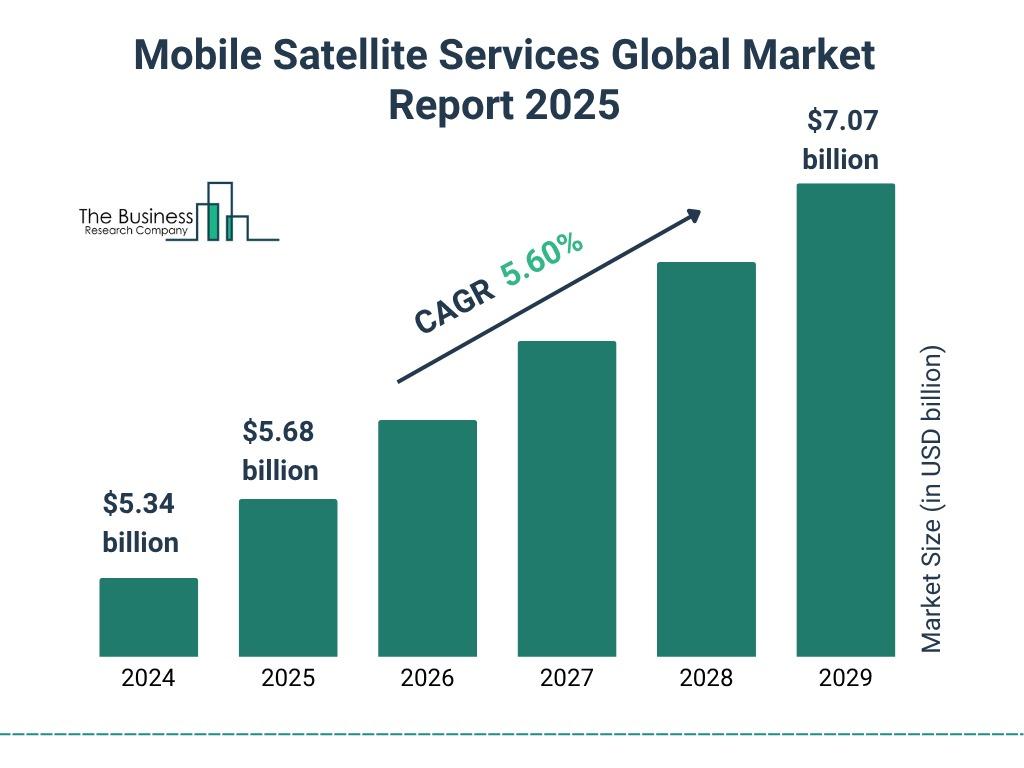
    The mobile satellite services market size has grown strongly in recent years. It will grow from $5.34 billion in 2024 to $5.68 billion in 2025 at a compound annual growth rate (CAGR) of 6.4%. The growth in the historic period can be attributed to emergence of global connectivity needs, increased military and defense applications, expansion of broadcasting and media, enterprise connectivity, telecommunications backhaul.

    The mobile satellite services market size is expected to see strong growth in the next few years. It will grow to $7.07 billion in 2029 at a compound annual growth rate (CAGR) of 5.6%. The growth in the forecast period can be attributed to emerging market growth, commercial space activities, smart transportation, increased agriculture and precision farming, adoption of smart transportation. Major trends in the forecast period include integration with 5G networks, rapid expansion of IoT connectivity, increasing demand for broadband connectivity, enhanced disaster response and public safety solutions, diversification of service offerings.

    Get your free report sample today:
    Mobile Satellite Services Market Size and Growth Report 2025 Sample (https://www.thebusinessresearchcompany.com/sample.aspx?id=14143&type=smp)

    What Are the Significant Market Forces Driving the Mobile Satellite Services Market Performance?
    The expansion of oil and gas exploration is expected to propel the growth of the mobile satellite services market going forward. Oil and gas exploration refers to the process of searching for underground or underwater reservoirs of oil and natural gas deposits. It is rising due to economic, technological, and geopolitical factors to meet global energy needs. Mobile satellite services are used in oil and gas exploration activities to offer dependable communication, data transmission, logistics assistance, and environmental monitoring in remote and challenging environments. For instance, in March 2024, according to the Energy Information Administration, a U.S-based government agency U.S. crude oil production grew by 9% in 2023 compared to 2022, reaching a record 12.9 million barrels per day. This increase has driven higher crude oil exports, despite U.S. refineries continuing to be optimized for processing heavier crude oils. Therefore, the expansion of oil and gas exploration is driving the growth of the mobile satellite services market.

    Which Segments Are Likely to Shape the Future Outlook of the Mobile Satellite Services Market?
    The mobile satellite servicesmarket covered in this report is segmented –

    1) By Service: Voice, Data
    2) By Application: Land Mobile Satellite Service, Aeronautical Mobile Satellite Service, Maritime Mobile Satellite Service
    3) By Industry: Oil And gas, Media And Entertainment, Transportation, Aviation, Defense, Automative, Government, Other Industries

    Subsegments:
    1) By Voice: Satellite Phone Services, Push-To-Talk Services
    2) By Data: Internet Access Services, Remote Monitoring And Control Services


    Which Future-Ready Trends Are Expected to Influence the Mobile Satellite Services Market?
    Major companies operating in the mobile satellite service industry are adopting a strategic partnership approach to provide resilient and reliable connectivity, particularly in remote and rural areas where terrestrial infrastructure is insufficient. Strategic partnerships refer to a process in which companies leverage each other's strengths and resources to achieve mutual benefits and success. For instance, in June 2023, Spark New Zealand, a New Zealand-based telecommunications company, partnered with Lynk Global., a US-based developer of satellite-to-mobile-phone satellite constellations. With this partnership, they aim to launch a satellite-to-mobile service, aiming to enhance connectivity for its customers, address key challenges, capitalize on emerging opportunities, and position themselves as a leader in innovative connectivity solutions for the New Zealand market.

    Which Major Organizations Influence the Direction of the Mobile Satellite Services Market?
    Major companies operating in the mobile satellite services market are Ericsson AB, Telstra Corporation Limited, Singapore Telecommunications Limited., Viasat Inc., Intelsat SA, SES S.A., EchoStar Corporation, Hughes Network Systems, AI Yah Satellite Communications company P.J.S.C, Inmarsat plc, Eutelsat Communications S.A., Telesat Canada, Iridium Communications Inc., Telespazio S.p.A., Comtech Telecommunications Corporation, Orbcomm Inc., Encompass Digital Media Inc., Speedcast International Limited, Globecast Asia Pte Ltd, Gilat Satellite Networks Ltd., Globalstar Inc., Avanti Communications Group plc, Ligado Networks LLC, Russian Satellite Communications Company (RSCC), MTN Satellite Communications Inc.

    Get the detailed mobile satellite services market report today
    https://www.thebusinessresearchcompany.com/report/mobile-satellite-services-global-market-report (https://www.thebusinessresearchcompany.com/report/mobile-satellite-services-global-market-report)

    Which Region Holds the Largest Share of the Mobile Satellite Services Market?
    North America was the largest region in the Mobile Satellite Service market in 2024. North America is expected to be the fastest-growing region in the forecast period. The regions covered in the mobile satellite services market report are Asia-Pacific, Western Europe, Eastern Europe, North America, South America, Middle East, Africa.

    #Contact Us:#
    The Business Research Company: Market Research Reports (https://thebusinessresearchcompany.com/)
    Americas +1 310-496-7795
    Asia +44 7882 955267 & +91 8897263534
    Europe +44 7882 955267
    Email: info@tbrc.info (mailto:info@tbrc.info)

    #Follow Us On:#

    LinkedIn: The Business Research Company | LinkedIn (https://in.linkedin.com/company/the-business-research-company)



    Global Mobile Satellite Services Market Projected to Strengthen in Value and Scale by 2029 Grab 20% Off With Code ONLINE20 On Global market Reports – Evaluate Global Trends, Market Risks, and Competitive Intelligence What Is the Predicted Market Size and CAGR of the Mobile Satellite Services Market by the End of the 2029? The mobile satellite services market size has grown strongly in recent years. It will grow from $5.34 billion in 2024 to $5.68 billion in 2025 at a compound annual growth rate (CAGR) of 6.4%. The growth in the historic period can be attributed to emergence of global connectivity needs, increased military and defense applications, expansion of broadcasting and media, enterprise connectivity, telecommunications backhaul. The mobile satellite services market size is expected to see strong growth in the next few years. It will grow to $7.07 billion in 2029 at a compound annual growth rate (CAGR) of 5.6%. The growth in the forecast period can be attributed to emerging market growth, commercial space activities, smart transportation, increased agriculture and precision farming, adoption of smart transportation. Major trends in the forecast period include integration with 5G networks, rapid expansion of IoT connectivity, increasing demand for broadband connectivity, enhanced disaster response and public safety solutions, diversification of service offerings. Get your free report sample today: Mobile Satellite Services Market Size and Growth Report 2025 Sample (https://www.thebusinessresearchcompany.com/sample.aspx?id=14143&type=smp) What Are the Significant Market Forces Driving the Mobile Satellite Services Market Performance? The expansion of oil and gas exploration is expected to propel the growth of the mobile satellite services market going forward. Oil and gas exploration refers to the process of searching for underground or underwater reservoirs of oil and natural gas deposits. It is rising due to economic, technological, and geopolitical factors to meet global energy needs. Mobile satellite services are used in oil and gas exploration activities to offer dependable communication, data transmission, logistics assistance, and environmental monitoring in remote and challenging environments. For instance, in March 2024, according to the Energy Information Administration, a U.S-based government agency U.S. crude oil production grew by 9% in 2023 compared to 2022, reaching a record 12.9 million barrels per day. This increase has driven higher crude oil exports, despite U.S. refineries continuing to be optimized for processing heavier crude oils. Therefore, the expansion of oil and gas exploration is driving the growth of the mobile satellite services market. Which Segments Are Likely to Shape the Future Outlook of the Mobile Satellite Services Market? The mobile satellite servicesmarket covered in this report is segmented – 1) By Service: Voice, Data 2) By Application: Land Mobile Satellite Service, Aeronautical Mobile Satellite Service, Maritime Mobile Satellite Service 3) By Industry: Oil And gas, Media And Entertainment, Transportation, Aviation, Defense, Automative, Government, Other Industries Subsegments: 1) By Voice: Satellite Phone Services, Push-To-Talk Services 2) By Data: Internet Access Services, Remote Monitoring And Control Services Which Future-Ready Trends Are Expected to Influence the Mobile Satellite Services Market? Major companies operating in the mobile satellite service industry are adopting a strategic partnership approach to provide resilient and reliable connectivity, particularly in remote and rural areas where terrestrial infrastructure is insufficient. Strategic partnerships refer to a process in which companies leverage each other's strengths and resources to achieve mutual benefits and success. For instance, in June 2023, Spark New Zealand, a New Zealand-based telecommunications company, partnered with Lynk Global., a US-based developer of satellite-to-mobile-phone satellite constellations. With this partnership, they aim to launch a satellite-to-mobile service, aiming to enhance connectivity for its customers, address key challenges, capitalize on emerging opportunities, and position themselves as a leader in innovative connectivity solutions for the New Zealand market. Which Major Organizations Influence the Direction of the Mobile Satellite Services Market? Major companies operating in the mobile satellite services market are Ericsson AB, Telstra Corporation Limited, Singapore Telecommunications Limited., Viasat Inc., Intelsat SA, SES S.A., EchoStar Corporation, Hughes Network Systems, AI Yah Satellite Communications company P.J.S.C, Inmarsat plc, Eutelsat Communications S.A., Telesat Canada, Iridium Communications Inc., Telespazio S.p.A., Comtech Telecommunications Corporation, Orbcomm Inc., Encompass Digital Media Inc., Speedcast International Limited, Globecast Asia Pte Ltd, Gilat Satellite Networks Ltd., Globalstar Inc., Avanti Communications Group plc, Ligado Networks LLC, Russian Satellite Communications Company (RSCC), MTN Satellite Communications Inc. Get the detailed mobile satellite services market report today https://www.thebusinessresearchcompany.com/report/mobile-satellite-services-global-market-report (https://www.thebusinessresearchcompany.com/report/mobile-satellite-services-global-market-report) Which Region Holds the Largest Share of the Mobile Satellite Services Market? North America was the largest region in the Mobile Satellite Service market in 2024. North America is expected to be the fastest-growing region in the forecast period. The regions covered in the mobile satellite services market report are Asia-Pacific, Western Europe, Eastern Europe, North America, South America, Middle East, Africa. #Contact Us:# The Business Research Company: Market Research Reports (https://thebusinessresearchcompany.com/) Americas +1 310-496-7795 Asia +44 7882 955267 & +91 8897263534 Europe +44 7882 955267 Email: info@tbrc.info (mailto:info@tbrc.info) #Follow Us On:# LinkedIn: The Business Research Company | LinkedIn (https://in.linkedin.com/company/the-business-research-company)

    0 Reacties 0 aandelen 3K Views
  • Global Mass Transit Security Market Projected to Strengthen in Value and Scale by 2029

    Grab 20% Off With Code ONLINE20 On Global market Reports – Evaluate Global Trends, Market Risks, and Competitive Intelligence

    What Is the Predicted Market Size and CAGR of the Mass Transit Security Market by the End of the 2029?
    The mass transit security market size has grown strongly in recent years. It will grow from $42.88 billion in 2024 to $46.12 billion in 2025 at a compound annual growth rate (CAGR) of 7.6%. The growth in the historic period can be attributed to public transportation systems, demand for innovative security solutions, increased investments in advanced surveillance, increased access control systems, increased biometrics, security breaches.

    The mass transit security market size is expected to see strong growth in the next few years. It will grow to $58.52 billion in 2029 at a compound annual growth rate (CAGR) of 6.1%. The growth in the forecast period can be attributed to increasing public incidents, deployment of biometric identification systems, terrorism threats, public awareness and cooperation, geopolitical tensions. Major trends in the forecast period include AI-driven threat detection, enhanced biometric identification, internet of things (IoT) security, mobile security solutions, drone detection and mitigation.

    Get your free report sample today:
    Mass Transit Security Market Report 2025, Growth and Analysis Sample (https://www.thebusinessresearchcompany.com/sample.aspx?id=14133&type=smp)

    What Are the Significant Market Forces Driving the Mass Transit Security Market Performance?
    The increasing threats and security concerns are expected to propel the growth of the mass transit security market going forward. Security threats and concerns refer to any potential danger or harmful event that can exploit a vulnerability and cause harm to any personnel. Public transit environments may be susceptible to criminal activities, including theft, assaults, and vandalism. Mass transit security plays a crucial role in addressing threats and security concerns by implementing measures to protect passengers, infrastructure, and operations from various risks. For instance, in April 2024, according to the Department for Science, Innovation and Technology, a UK-based government department, An estimated 22% of businesses and 14% of charities have encountered cyber crime in the past year. This figure increases to 45% for medium-sized businesses, 58% for large businesses, and 37% for high-income charities. Alternatively, among the 50% of businesses and 32% of charities reporting any cybersecurity breaches or attacks, just over two-fifths (44% of businesses and 42% of charities) ultimately fell victim to cyber crime. Therefore, increasing threats and security concerns are driving the mass transit security market.

    Which Segments Are Likely to Shape the Future Outlook of the Mass Transit Security Market?
    The mass transit securitymarket covered in this report is segmented –

    1) By Type: Airways Transit Security, Seaways Transit Security, Roadways Transit Security, Railways Transit Security, Other Types
    2) By Service Type: Managed Services, Professional Services
    3) By Solution: Surveillance and Monitoring, Screening System, Biometric Security And Authentication System, Fire Safety And Detection System, Perimeter Intrusion Detection, Access Control, Other Solutions
    4) By Application: Homeland Security, Industrial, Retail And Payment Industries, Logistics And Transportation Industries, Healthcare, Other Applications

    Subsegments:
    1) By Airways Transit Security: Airport Security Screening, Passenger And Baggage Screening, Perimeter Security Systems
    2) By Seaways Transit Security: Port Security Solutions, Vessel Monitoring Systems, Cargo Security Measures
    3) By Roadways Transit Security: Vehicle Surveillance Systems, Traffic Management Solutions, Emergency Response Systems
    4) By Railways Transit Security: Train Surveillance Systems, Station Security Solutions, Rail Network Monitoring
    5) By Other Types: Emergency Services Security, Public Transport Security Systems, Event Security Management

    What New Market Trends Are Emerging in the Mass Transit Security Market?
    Major companies operating in the mass transit security market are focusing on developing new technologies, such as AI-enabled video analytics platform. This platform process actionable insights and conclusions from digital video using AI techniques. For instance, in October 2024, PRAMA, an India-based manufacturer of video security products, launched transport security innovations, including AI-based cameras and traffic management solutions. PRAMA's transportation solutions uniquely focus on securing transportation hubs with advanced video surveillance systems, featuring a Command and Control solution for proactive video data monitoring. These products are specifically designed to enhance vehicle security and traffic management, ensuring a safe and efficient flow for travelers, vehicles, and pedestrians alike.

    Which Major Organizations Influence the Direction of the Mass Transit Security Market?
    Major companies operating in the mass transit security market are Siemens AG, Panasonic Corporation, Cisco Systems Inc., Hanwha Group, Honeywell International Inc, Johnson Controls International PLC, Thales Group, Tyco International PLC, L3Harris Technologies Inc, Analog Devices Inc., Hikvision Digital Technology Co. Ltd, Bosch Security Systems Inc., NICE Systems Ltd., Axis Communications AB, OSI Systems Inc, Kratos Defense & Security Solutions Inc. (KTOS), Flir Systems Inc., Smiths Detection Inc, Avigilon Corporation, Nuctech Company Limited, Rapiscan Systems Inc, Genetec Inc., Analogic Corporation, Teleste, SDI Presence LLC, March Networks Corporation, IndigoVision Group PLC, High Rise Security Systems LLC, AngelTrax, Fortem Technologies Inc.

    Get the detailed mass transit security market report today
    Mass Transit Security Market Report 2025, Growth and Analysis (https://www.thebusinessresearchcompany.com/report/mass-transit-security-global-market-report)

    Which Region Holds the Largest Share of the Mass Transit Security Market?
    North America was the largest region in the mass transit security market in 2024. Asia-Pacific is expected to be the fastest-growing region in the forecast period. The regions covered in the mass transit security market report are Asia-Pacific, Western Europe, Eastern Europe, North America, South America, Middle East, Africa.

    #Contact Us:#
    The Business Research Company: Market Research Reports (https://thebusinessresearchcompany.com/)
    Americas +1 310-496-7795
    Asia +44 7882 955267 & +91 8897263534
    Europe +44 7882 955267
    Email: info@tbrc.info (mailto:info@tbrc.info)

    #Follow Us On:#

    LinkedIn: The Business Research Company | LinkedIn (https://in.linkedin.com/company/the-business-research-company)

    Global Mass Transit Security Market Projected to Strengthen in Value and Scale by 2029 Grab 20% Off With Code ONLINE20 On Global market Reports – Evaluate Global Trends, Market Risks, and Competitive Intelligence What Is the Predicted Market Size and CAGR of the Mass Transit Security Market by the End of the 2029? The mass transit security market size has grown strongly in recent years. It will grow from $42.88 billion in 2024 to $46.12 billion in 2025 at a compound annual growth rate (CAGR) of 7.6%. The growth in the historic period can be attributed to public transportation systems, demand for innovative security solutions, increased investments in advanced surveillance, increased access control systems, increased biometrics, security breaches. The mass transit security market size is expected to see strong growth in the next few years. It will grow to $58.52 billion in 2029 at a compound annual growth rate (CAGR) of 6.1%. The growth in the forecast period can be attributed to increasing public incidents, deployment of biometric identification systems, terrorism threats, public awareness and cooperation, geopolitical tensions. Major trends in the forecast period include AI-driven threat detection, enhanced biometric identification, internet of things (IoT) security, mobile security solutions, drone detection and mitigation. Get your free report sample today: Mass Transit Security Market Report 2025, Growth and Analysis Sample (https://www.thebusinessresearchcompany.com/sample.aspx?id=14133&type=smp) What Are the Significant Market Forces Driving the Mass Transit Security Market Performance? The increasing threats and security concerns are expected to propel the growth of the mass transit security market going forward. Security threats and concerns refer to any potential danger or harmful event that can exploit a vulnerability and cause harm to any personnel. Public transit environments may be susceptible to criminal activities, including theft, assaults, and vandalism. Mass transit security plays a crucial role in addressing threats and security concerns by implementing measures to protect passengers, infrastructure, and operations from various risks. For instance, in April 2024, according to the Department for Science, Innovation and Technology, a UK-based government department, An estimated 22% of businesses and 14% of charities have encountered cyber crime in the past year. This figure increases to 45% for medium-sized businesses, 58% for large businesses, and 37% for high-income charities. Alternatively, among the 50% of businesses and 32% of charities reporting any cybersecurity breaches or attacks, just over two-fifths (44% of businesses and 42% of charities) ultimately fell victim to cyber crime. Therefore, increasing threats and security concerns are driving the mass transit security market. Which Segments Are Likely to Shape the Future Outlook of the Mass Transit Security Market? The mass transit securitymarket covered in this report is segmented – 1) By Type: Airways Transit Security, Seaways Transit Security, Roadways Transit Security, Railways Transit Security, Other Types 2) By Service Type: Managed Services, Professional Services 3) By Solution: Surveillance and Monitoring, Screening System, Biometric Security And Authentication System, Fire Safety And Detection System, Perimeter Intrusion Detection, Access Control, Other Solutions 4) By Application: Homeland Security, Industrial, Retail And Payment Industries, Logistics And Transportation Industries, Healthcare, Other Applications Subsegments: 1) By Airways Transit Security: Airport Security Screening, Passenger And Baggage Screening, Perimeter Security Systems 2) By Seaways Transit Security: Port Security Solutions, Vessel Monitoring Systems, Cargo Security Measures 3) By Roadways Transit Security: Vehicle Surveillance Systems, Traffic Management Solutions, Emergency Response Systems 4) By Railways Transit Security: Train Surveillance Systems, Station Security Solutions, Rail Network Monitoring 5) By Other Types: Emergency Services Security, Public Transport Security Systems, Event Security Management What New Market Trends Are Emerging in the Mass Transit Security Market? Major companies operating in the mass transit security market are focusing on developing new technologies, such as AI-enabled video analytics platform. This platform process actionable insights and conclusions from digital video using AI techniques. For instance, in October 2024, PRAMA, an India-based manufacturer of video security products, launched transport security innovations, including AI-based cameras and traffic management solutions. PRAMA's transportation solutions uniquely focus on securing transportation hubs with advanced video surveillance systems, featuring a Command and Control solution for proactive video data monitoring. These products are specifically designed to enhance vehicle security and traffic management, ensuring a safe and efficient flow for travelers, vehicles, and pedestrians alike. Which Major Organizations Influence the Direction of the Mass Transit Security Market? Major companies operating in the mass transit security market are Siemens AG, Panasonic Corporation, Cisco Systems Inc., Hanwha Group, Honeywell International Inc, Johnson Controls International PLC, Thales Group, Tyco International PLC, L3Harris Technologies Inc, Analog Devices Inc., Hikvision Digital Technology Co. Ltd, Bosch Security Systems Inc., NICE Systems Ltd., Axis Communications AB, OSI Systems Inc, Kratos Defense & Security Solutions Inc. (KTOS), Flir Systems Inc., Smiths Detection Inc, Avigilon Corporation, Nuctech Company Limited, Rapiscan Systems Inc, Genetec Inc., Analogic Corporation, Teleste, SDI Presence LLC, March Networks Corporation, IndigoVision Group PLC, High Rise Security Systems LLC, AngelTrax, Fortem Technologies Inc. Get the detailed mass transit security market report today Mass Transit Security Market Report 2025, Growth and Analysis (https://www.thebusinessresearchcompany.com/report/mass-transit-security-global-market-report) Which Region Holds the Largest Share of the Mass Transit Security Market? North America was the largest region in the mass transit security market in 2024. Asia-Pacific is expected to be the fastest-growing region in the forecast period. The regions covered in the mass transit security market report are Asia-Pacific, Western Europe, Eastern Europe, North America, South America, Middle East, Africa. #Contact Us:# The Business Research Company: Market Research Reports (https://thebusinessresearchcompany.com/) Americas +1 310-496-7795 Asia +44 7882 955267 & +91 8897263534 Europe +44 7882 955267 Email: info@tbrc.info (mailto:info@tbrc.info) #Follow Us On:# LinkedIn: The Business Research Company | LinkedIn (https://in.linkedin.com/company/the-business-research-company)

    0 Reacties 0 aandelen 3K Views
  • Global Trends & Diplomatic Insights – Highlights from Boris Johnson AIM Summit

    The AIM Summit roundtable featuring Boris Johnson Global Shifts Roundtable Discussion delivered a detailed examination of ongoing global transformations. Johnson highlighted how geopolitical realignments, technological disruptions, and regional instability are redefining the global order. https://www.gulfanalytica.com/navigating-global-shifts-insights-from-a-roundtable-with-boris-johnson-at-the-aim-summit
    Global Trends & Diplomatic Insights – Highlights from Boris Johnson AIM Summit The AIM Summit roundtable featuring Boris Johnson Global Shifts Roundtable Discussion delivered a detailed examination of ongoing global transformations. Johnson highlighted how geopolitical realignments, technological disruptions, and regional instability are redefining the global order. https://www.gulfanalytica.com/navigating-global-shifts-insights-from-a-roundtable-with-boris-johnson-at-the-aim-summit
    0 Reacties 0 aandelen 456 Views
  • QUELLO CHE NON VOGLIONO FAR SAPERE SULLE VERE CAUSE DELL’AZIONE RUSSA IN UCRAINA

    di Ivan Zeno

    La verità è semplice, ma viene scientemente nascosta. Per anni la Russia ha chiesto un’unica cosa: protezione per quasi dieci milioni di russofoni in Ucraina. Non l’annessione dell’Ucraina, non la ricostruzione dell’URSS, non le fantasie propagandistiche diffuse in Occidente. Solo una tutela minima, formalizzata negli accordi di Minsk I e II, rispettivamente nel 2014 e nel 2015. Cosa hanno fatto Kiev, Washington e Bruxelles? Assolutamente nulla.

    Hanno ignorato, rinviato, deriso.

    Perché diciamola tutta: l’Ucraina quegli accordi non li ha mai voluti. Li ha spacciati per “punitivi”, quando non prevedevano nemmeno un centimetro di territorio ceduto. Si chiedeva solo un’autonomia speciale, sul modello di qualsiasi regione europea plurilingue. Ma Kiev – con il beneplacito dell’Occidente – ha preferito l’intransigenza totale, arroccandosi dietro slogan identitari invece che affrontare una questione etnica e linguistica reale.

    E allora, quale strada si è scelta? Quella delle armi. Otto anni di bombardamenti sul Donbass, otto anni di vittime civili, otto anni di una guerra che l’Occidente fingendo di non vedere ha semplicemente lasciato marcire. Anzi: ha alimentato politicamente e militarmente, pur di mantenere il conflitto congelato e funzionale ai propri obiettivi geopolitici.

    Nel 2019 Zelensky ha vinto promettendo pace, dialogo e applicazione degli accordi di Minsk. Una menzogna elettorale: una volta al potere ha fatto l’esatto opposto. Nel 2022 preparava l’offensiva finale contro Lugansk e Donetsk, con colonne corazzate pronte a schiacciare le repubbliche separatiste.

    Nessuna autonomia. Nessun compromesso. Solo muscoli e propaganda.

    E sul fronte diplomatico? Putin chiedeva – ancora una volta – un tavolo sulla sicurezza europea. E gli Stati Uniti hanno risposto con un arroganza degna di un impero in decadenza: “Non è in agenda.” Fine della conversazione. Poi però si permettono di impartire lezioni su “dialogo” e “multilateralismo”.

    Il risultato oggi è sotto gli occhi di tutti. Le regioni a maggioranza russofona coincidono quasi perfettamente con i territori ora controllati dalla Russia, salvo Odessa e parte di Kharkov. In pratica, Putin si è preso ciò che per anni americani ed europei hanno disprezzato, ignorato o trattato come un fastidio geopolitico.

    Quello che si poteva garantire con la politica lo si è regalato alla forza militare. Una cecità strategica impressionante.

    E nonostante questa catena di fallimenti, si continua a ripetere la solita favola: “invasori e invasi”, “imperialismo russo”, “Putin vuole conquistare l’Europa”. Una narrazione bambinesca, funzionale solo a coprire responsabilità enormi. Perché se si riconoscesse la verità, bisognerebbe ammettere che l’Occidente ha sbagliato tutto: analisi, diplomazia, strategia e tempistiche.

    E invece si persevera. Ancora armi, ancora miliardi, ancora propaganda.

    E soprattutto un’escalation sempre più vicina alla linea rossa di uno scontro diretto tra NATO e Russia. Una follia geopolitica che nessuno ha il coraggio di ammettere, perché significherebbe riconoscere che l’intera architettura occidentale – politica, militare e mediatica – ha costruito per anni una narrazione completamente scollegata dalla realtà.
    QUELLO CHE NON VOGLIONO FAR SAPERE SULLE VERE CAUSE DELL’AZIONE RUSSA IN UCRAINA di Ivan Zeno La verità è semplice, ma viene scientemente nascosta. Per anni la Russia ha chiesto un’unica cosa: protezione per quasi dieci milioni di russofoni in Ucraina. Non l’annessione dell’Ucraina, non la ricostruzione dell’URSS, non le fantasie propagandistiche diffuse in Occidente. Solo una tutela minima, formalizzata negli accordi di Minsk I e II, rispettivamente nel 2014 e nel 2015. Cosa hanno fatto Kiev, Washington e Bruxelles? Assolutamente nulla. Hanno ignorato, rinviato, deriso. Perché diciamola tutta: l’Ucraina quegli accordi non li ha mai voluti. Li ha spacciati per “punitivi”, quando non prevedevano nemmeno un centimetro di territorio ceduto. Si chiedeva solo un’autonomia speciale, sul modello di qualsiasi regione europea plurilingue. Ma Kiev – con il beneplacito dell’Occidente – ha preferito l’intransigenza totale, arroccandosi dietro slogan identitari invece che affrontare una questione etnica e linguistica reale. E allora, quale strada si è scelta? Quella delle armi. Otto anni di bombardamenti sul Donbass, otto anni di vittime civili, otto anni di una guerra che l’Occidente fingendo di non vedere ha semplicemente lasciato marcire. Anzi: ha alimentato politicamente e militarmente, pur di mantenere il conflitto congelato e funzionale ai propri obiettivi geopolitici. Nel 2019 Zelensky ha vinto promettendo pace, dialogo e applicazione degli accordi di Minsk. Una menzogna elettorale: una volta al potere ha fatto l’esatto opposto. Nel 2022 preparava l’offensiva finale contro Lugansk e Donetsk, con colonne corazzate pronte a schiacciare le repubbliche separatiste. Nessuna autonomia. Nessun compromesso. Solo muscoli e propaganda. E sul fronte diplomatico? Putin chiedeva – ancora una volta – un tavolo sulla sicurezza europea. E gli Stati Uniti hanno risposto con un arroganza degna di un impero in decadenza: “Non è in agenda.” Fine della conversazione. Poi però si permettono di impartire lezioni su “dialogo” e “multilateralismo”. Il risultato oggi è sotto gli occhi di tutti. Le regioni a maggioranza russofona coincidono quasi perfettamente con i territori ora controllati dalla Russia, salvo Odessa e parte di Kharkov. In pratica, Putin si è preso ciò che per anni americani ed europei hanno disprezzato, ignorato o trattato come un fastidio geopolitico. Quello che si poteva garantire con la politica lo si è regalato alla forza militare. Una cecità strategica impressionante. E nonostante questa catena di fallimenti, si continua a ripetere la solita favola: “invasori e invasi”, “imperialismo russo”, “Putin vuole conquistare l’Europa”. Una narrazione bambinesca, funzionale solo a coprire responsabilità enormi. Perché se si riconoscesse la verità, bisognerebbe ammettere che l’Occidente ha sbagliato tutto: analisi, diplomazia, strategia e tempistiche. E invece si persevera. Ancora armi, ancora miliardi, ancora propaganda. E soprattutto un’escalation sempre più vicina alla linea rossa di uno scontro diretto tra NATO e Russia. Una follia geopolitica che nessuno ha il coraggio di ammettere, perché significherebbe riconoscere che l’intera architettura occidentale – politica, militare e mediatica – ha costruito per anni una narrazione completamente scollegata dalla realtà.
    Angry
    3
    0 Reacties 0 aandelen 4K Views
  • Economic & Geopolitical Takeaways from the Boris Johnson Global Shifts Discussion

    Boris Johnson Global shifts roundtable discussion, where geopolitical shifts and economic uncertainty were key themes. Key takeaways from the Boris Johnson roundtable emphasized the urgency of international cooperation and robust economic planning. Meanwhile, David Gibson-Moore on Middle East crisis delivered a strong analytical framework for understanding market volatility. These insights help businesses and governments adopt informed strategies during uncertain global conditions.https://www.gulfanalytica.com/navigating-global-shifts-insights-from-a-roundtable-with-boris-johnson-at-the-aim-summit
    Economic & Geopolitical Takeaways from the Boris Johnson Global Shifts Discussion Boris Johnson Global shifts roundtable discussion, where geopolitical shifts and economic uncertainty were key themes. Key takeaways from the Boris Johnson roundtable emphasized the urgency of international cooperation and robust economic planning. Meanwhile, David Gibson-Moore on Middle East crisis delivered a strong analytical framework for understanding market volatility. These insights help businesses and governments adopt informed strategies during uncertain global conditions.https://www.gulfanalytica.com/navigating-global-shifts-insights-from-a-roundtable-with-boris-johnson-at-the-aim-summit
    0 Reacties 0 aandelen 546 Views
  • Kevin McCarthy Geopolitical Trends Dubai

    The Kevin McCarthy geopolitical trends Dubai discussion delved into how global power shifts, trade alliances, and regional tensions influence economic strategies. McCarthy provided a clear analysis of how fiscal stability, diplomacy, and political cooperation are intertwined in achieving sustainable growth. He highlighted the UAE’s growing influence as a mediator between East and West, underscoring the need for balanced leadership in uncertain geopolitical times. https://www.gulfanalytica.com/key-insights-from-kevin-mccarthy-on-global-sovereign-debt-political-polarization-and-emerging-market-trends-at-aim-summit-dubai
    Kevin McCarthy Geopolitical Trends Dubai The Kevin McCarthy geopolitical trends Dubai discussion delved into how global power shifts, trade alliances, and regional tensions influence economic strategies. McCarthy provided a clear analysis of how fiscal stability, diplomacy, and political cooperation are intertwined in achieving sustainable growth. He highlighted the UAE’s growing influence as a mediator between East and West, underscoring the need for balanced leadership in uncertain geopolitical times. https://www.gulfanalytica.com/key-insights-from-kevin-mccarthy-on-global-sovereign-debt-political-polarization-and-emerging-market-trends-at-aim-summit-dubai
    0 Reacties 0 aandelen 1K Views
  • Boris Johnson Insights on Global Shifts: Highlights from AIM Summit

    The Boris Johnson insights on global shifts shared during the AIM Summit focused on leadership, diplomacy, and the future of global economics. Johnson and David Gibson-Moore examined challenges such as geopolitical instability and energy transition. https://www.gulfanalytica.com/navigating-global-shifts-insights-from-a-roundtable-with-boris-johnson-at-the-aim-summit
    Boris Johnson Insights on Global Shifts: Highlights from AIM Summit The Boris Johnson insights on global shifts shared during the AIM Summit focused on leadership, diplomacy, and the future of global economics. Johnson and David Gibson-Moore examined challenges such as geopolitical instability and energy transition. https://www.gulfanalytica.com/navigating-global-shifts-insights-from-a-roundtable-with-boris-johnson-at-the-aim-summit
    0 Reacties 0 aandelen 796 Views
Zoekresultaten