


ABM and Intent Data: The Perfect Pair for Precision Marketing
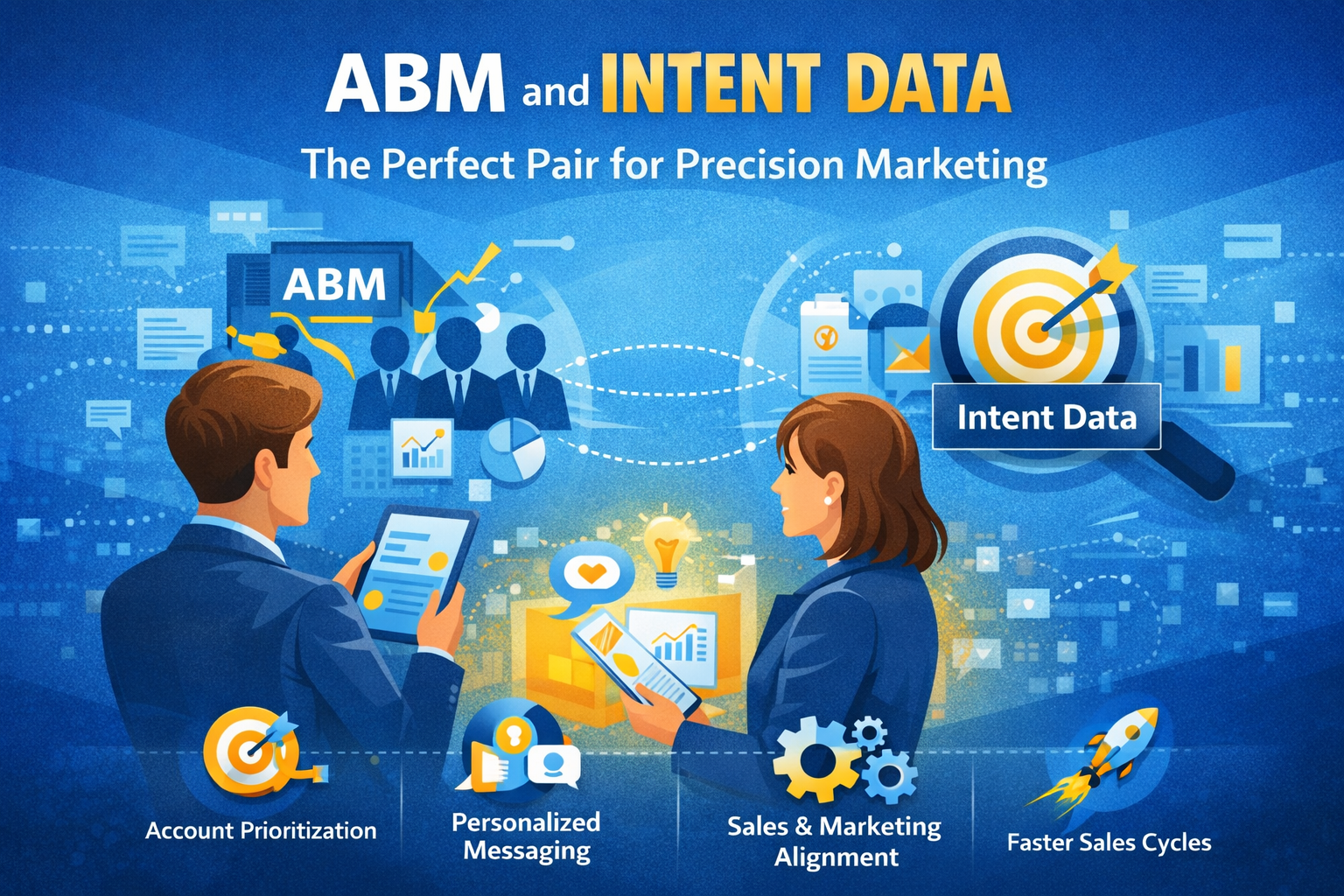
In today’s competitive B2B environment, marketers are moving beyond broad targeting strategies and focusing on precision marketing. One of the most effective approaches for achieving this is combining Account-Based Marketing (ABM) with intent data. Together, these strategies help organizations identify high-value accounts, understand their interests, and engage them with highly personalized campaigns at the right time.
Understanding ABM in Modern B2B Marketing
Account-Based Marketing (ABM) is a strategy that focuses on targeting specific high-value accounts rather than casting a wide net. Instead of generating a large number of leads, ABM concentrates marketing and sales efforts on companies that are most likely to become valuable customers.
This approach aligns marketing and sales teams to deliver personalized messaging, tailored campaigns, and customized experiences designed to address the unique needs of each target account.
The Role of Intent Data
Intent data refers to behavioral signals that indicate when a company is actively researching products or services related to your offerings. These signals are collected from online activities such as content consumption, keyword searches, industry research, and website visits.
By analyzing these signals, marketers can identify when an account is moving into an active buying phase. This allows teams to engage potential customers earlier in the decision-making process.
Why ABM and Intent Data Work So Well Together
When ABM and intent data are combined, marketing teams gain deeper visibility into which accounts are showing real buying interest. This combination creates a more focused and efficient marketing strategy.
1. Better Account Prioritization
Intent data helps marketers identify which target accounts are actively researching relevant topics. This allows teams to prioritize accounts that are more likely to convert, improving efficiency and sales outcomes.
2. Highly Personalized Messaging
Intent insights reveal the topics and challenges that prospects are exploring. Marketers can use this information to create personalized content, emails, and campaigns that directly address the needs of each account.
3. Improved Sales and Marketing Alignment
When both teams have access to intent insights, they can collaborate more effectively. Marketing can nurture accounts with targeted content, while sales teams can reach out at the right moment with relevant solutions.
4. Faster Sales Cycles
By engaging prospects who are already researching solutions, businesses can shorten the time it takes to move from awareness to purchase. This helps accelerate pipeline growth and improve conversion rates.
Implementing an ABM and Intent Data Strategy
To maximize the benefits of this approach, organizations should integrate intent data with CRM systems, marketing automation tools, and ABM platforms. This allows marketers to automatically identify high-intent accounts, trigger personalized campaigns, and track engagement across multiple channels.
Additionally, companies should continuously monitor intent signals to identify new opportunities and adjust their messaging based on evolving buyer interests.
Conclusion
ABM and intent data together create a powerful framework for precision marketing. While ABM focuses on targeting the right accounts, intent data provides the insights needed to engage them at the perfect moment. By combining these strategies, B2B organizations can improve account prioritization, deliver more personalized experiences, and ultimately drive stronger revenue growth.
As the B2B buying process becomes more complex and data-driven, the integration of ABM and intent data will continue to play a crucial role in helping businesses connect with the right prospects and build meaningful customer relationships.
INTENT AMPLIFY is evolving fast. Are you keeping up? Read more at intentamplify.com
To participate in our interviews, please write to our Media Room at info@intentamplify.com
 English
 Arabic
 French
 Spanish
 Portuguese
 Deutsch
 Turkish
 Dutch
Dutch
 Italiano
 Russian
 Romaian
 Portuguese (Brazil)
 Greek
Greek