


Buyer Intent Data Explained: Strategies, Platforms, and Real Use Cases
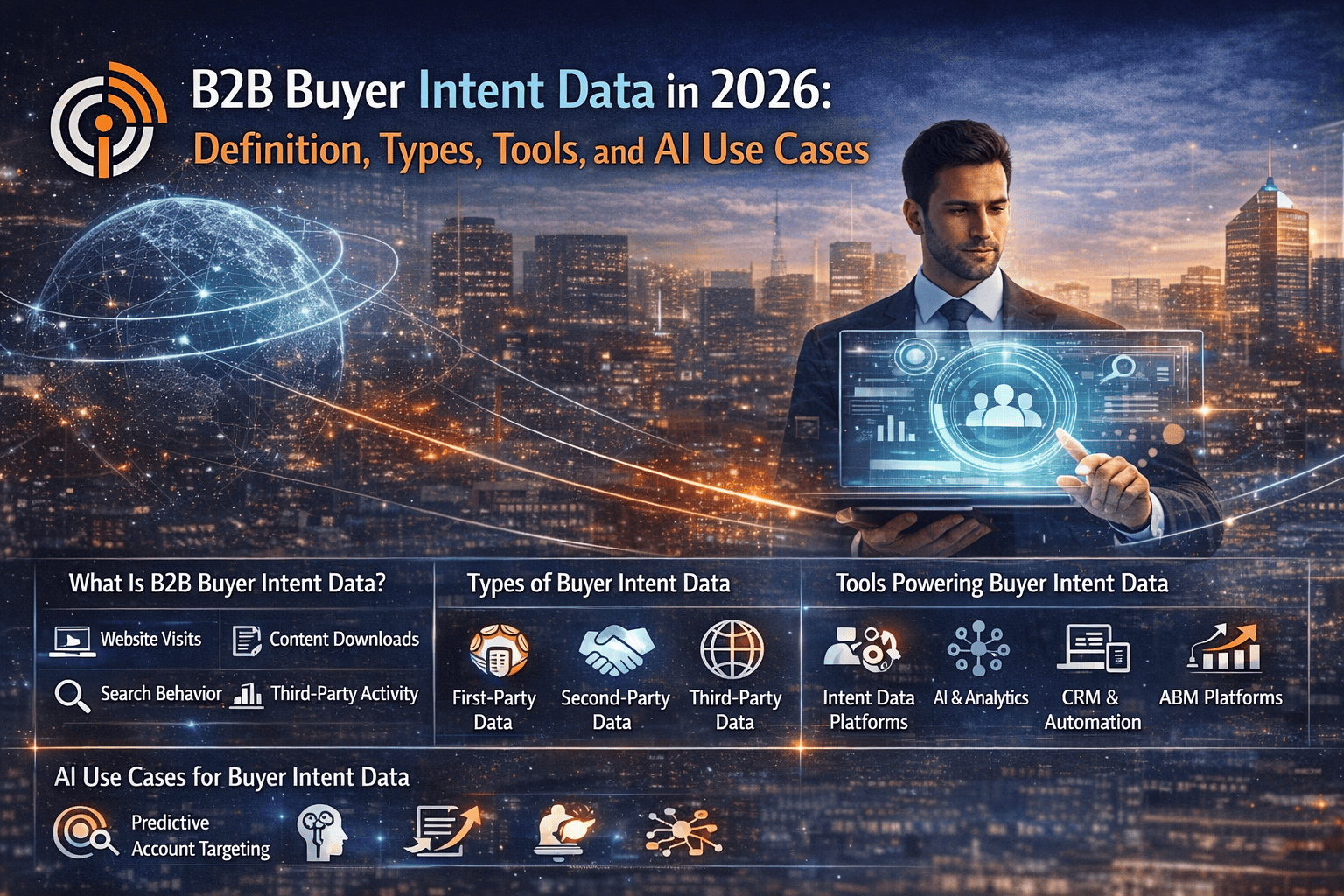
In 2026, B2B organizations are moving beyond traditional lead generation and embracing data-driven strategies to identify high-value opportunities. One of the most powerful drivers of this shift is buyer intent data insights that reveal when companies are actively researching products, services, or solutions.
With AI and predictive analytics becoming mainstream, intent data is no longer just a marketing advantage. It is a revenue-critical asset used by sales, marketing, and customer success teams to engage the right accounts at the right time.
What Is B2B Buyer Intent Data?
B2B buyer intent data refers to behavioral signals that indicate a company’s interest in a specific solution, service, or category. These signals help organizations identify potential buyers who are already in the research or decision-making phase.
Intent data is collected from multiple digital interactions, including:
- Website visits
- Content downloads
- Search behavior
- Webinar registrations
- Product comparisons
- Third-party publisher activity
By analyzing these signals, organizations can understand buyer readiness and tailor their engagement strategies accordingly.
Types of Buyer Intent Data
First-Party Intent Data
This comes directly from your owned channels such as your website, emails, CRM, and product interactions. It provides the most accurate insight into how prospects engage with your brand.
Examples include:
- Page visits and session duration
- Form submissions
- Email engagement
- Demo requests
Second-Party Intent Data
Second-party data is shared between trusted partners. It provides additional visibility into prospects who interact with related platforms or communities.
Third-Party Intent Data
Collected from external sources like publisher networks, review sites, and industry platforms, third-party intent data helps identify accounts researching relevant topics across the web.
Tools Powering Buyer Intent Data in 2026
Modern intent data strategies rely on advanced technologies that collect, analyze, and activate signals in real time.
Key tools include:
- Intent data platforms
- AI-powered analytics engines
- CRM and marketing automation systems
- Account-based marketing platforms
- Predictive lead scoring tools
- Data enrichment and intelligence solutions
These tools help organizations turn raw signals into actionable insights that drive engagement and pipeline growth.
AI Use Cases for Buyer Intent Data
Artificial intelligence has dramatically increased the value of intent data by enabling predictive insights and automation.
Predictive Account Targeting
AI models analyze behavior patterns to identify which accounts are most likely to convert, helping teams focus on high-value opportunities.
Smart Lead Scoring
Machine learning enhances traditional scoring models by incorporating intent signals, engagement history, and buying behavior.
Personalized Content Recommendations
AI suggests relevant content, messaging, and offers based on a prospect’s interests and research activity.
Sales Prioritization
Sales teams receive alerts when intent signals spike, enabling timely outreach and faster deal progression.
Campaign Optimization
AI evaluates performance and automatically adjusts targeting, messaging, and channels for better results.
How Intent Data Drives Revenue
Organizations using intent data effectively see measurable business impact:
- Higher conversion rates
- Shorter sales cycles
- Improved campaign ROI
- Better alignment between sales and marketing
- Increased pipeline predictability
By focusing on in-market buyers, teams reduce wasted effort and improve efficiency.
Challenges and Considerations
Despite its advantages, implementing intent data strategies requires careful planning.
Common challenges include:
- Data integration across platforms
- Privacy and compliance requirements
- Interpreting signals accurately
- Aligning internal teams around insights
Successful organizations address these through governance, training, and technology investment.
The Future of Buyer Intent Data
The role of intent data will expand significantly beyond 2026, with innovations such as:
- Real-time predictive engagement
- Deeper AI-driven insights
- Integration across the entire customer lifecycle
- Stronger first-party data ecosystems
- Privacy-first data strategies
Intent data will become a core pillar of revenue intelligence and go-to-market strategy.
INTENT AMPLIFY is evolving fast. Are you keeping up? Read more at intentamplify.com
To participate in our interviews, please write to our Media Room at info@intentamplify.com
 Portuguese
 English
 Arabic
 French
 Spanish
 Deutsch
 Turkish
 Dutch
Dutch
 Italiano
 Russian
 Romaian
 Portuguese (Brazil)
 Greek
Greek