


How AI Is Reshaping Human Resources in the Digital Era
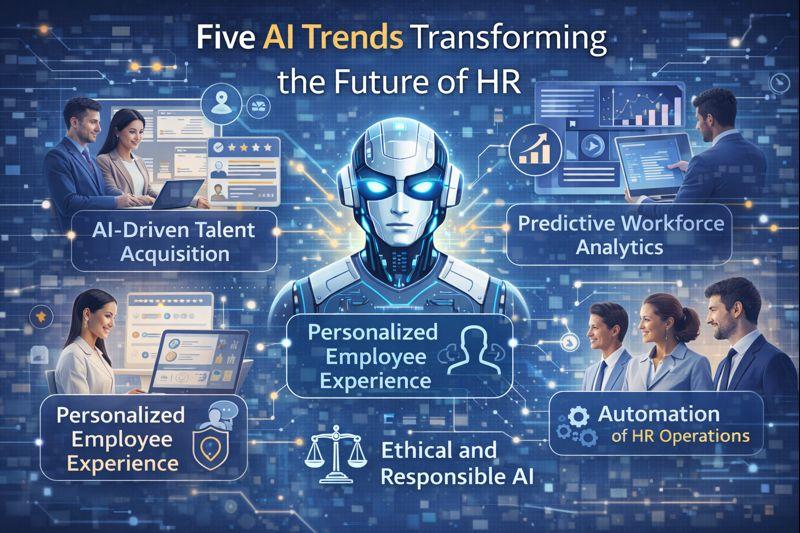
Artificial intelligence is no longer a supporting tool in human resources it is becoming a core driver of HR strategy and decision-making. As organizations adapt to evolving workforce expectations, skills shortages, and digital transformation, AI is helping HR teams move from administrative execution to strategic impact. The future of HR will be shaped by intelligent systems that enhance efficiency, insight, and employee experience.
Here are five AI trends that are fundamentally transforming the future of HR.
1. Skills-Based and AI-Driven Talent Acquisition
AI is shifting recruitment away from traditional role-based hiring toward skills-based talent acquisition. Advanced AI models analyze resumes, job descriptions, and workforce data to identify skills, potential, and role fit more accurately.
This trend enables:
- Faster and more accurate candidate screening
- Reduced bias in early hiring stages
- Better alignment between skills and business needs
AI-powered ATS and talent intelligence platforms are redefining how organizations find and hire the right talent.
2. Predictive Workforce Analytics
AI-powered analytics allow HR leaders to move from reactive reporting to predictive decision-making. By analyzing historical and real-time data, AI can forecast attrition risks, skills gaps, and future workforce demand.
This trend supports:
- Proactive workforce planning
- Early intervention for retention challenges
- Data-driven succession planning
Predictive analytics is turning HR into a forward-looking strategic function.
3. Personalized Employee Experience at Scale
AI enables HR teams to deliver personalized experiences across large, diverse workforces. From tailored learning recommendations to customized engagement initiatives, AI helps meet individual employee needs without increasing manual effort.
Key benefits include:
- Personalized learning and career paths
- Smarter internal mobility recommendations
- Improved engagement and productivity
The future of HR will focus on personalization powered by intelligent systems.
4. Automation of Core HR Operations
AI-driven automation is reducing the administrative burden on HR teams by handling repetitive and time-consuming tasks. From onboarding workflows to policy queries and employee support, AI-powered assistants are streamlining daily HR operations.
This trend allows HR teams to:
- Save time and reduce manual errors
- Improve response times for employees
- Focus on strategic and people-centric initiatives
Automation is freeing HR to focus on value creation rather than process management.
5. Ethical, Explainable, and Responsible AI in HR
As AI adoption grows, so does the need for transparency, fairness, and compliance. Organizations are increasingly prioritizing ethical AI frameworks to ensure responsible use of workforce data.
This trend emphasizes:
- Bias detection and mitigation
- Explainable AI decision-making
- Strong data privacy and governance practices
Responsible AI will be essential for building trust with employees and regulators alike.
What This Means for HR Leaders
These AI trends signal a fundamental shift in how HR operates. HR leaders must focus on:
- Building AI literacy within HR teams
- Choosing platforms designed specifically for HR use cases
- Balancing automation with human judgment
- Aligning AI initiatives with business and people strategies
Organizations that embrace these trends thoughtfully will gain a competitive advantage in attracting, developing, and retaining talent.
HR tech is evolving fast. Are you keeping up? Read more at HR Technology Insights
To participate in our interviews, please write to our HRTech Media Room at info@intentamplify.com
 Turkish
 English
 Arabic
 French
 Spanish
 Portuguese
 Deutsch
 Dutch
Dutch
 Italiano
 Russian
 Romaian
 Portuguese (Brazil)
 Greek
Greek