


Why Do I Need Cell Culture Plates and Flasks?
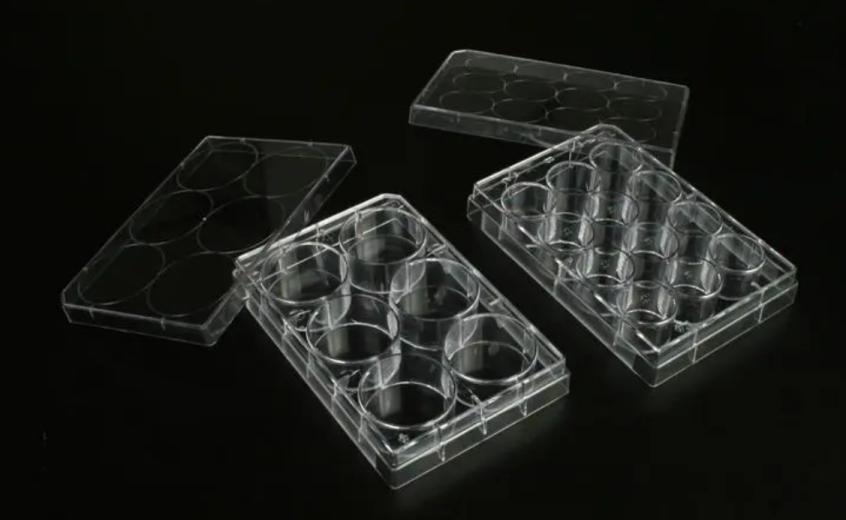
You need cell culture plates and flasks because they provide specialized environments for growing and studying cells in a controlled setting. Here's a breakdown of why they're essential for cell biology research:
l Controlled Growth: These containers offer a sterile, contained space for cultivating cells separate from their natural environment. This allows for precise control over factors like media composition, temperature, and gas exchange, optimizing the conditions for cell growth and function.
l Scalability: Plates and flasks come in various sizes, catering to different cell numbers. Flasks, with their larger surface area, are ideal for expanding cell populations needed for further experiments. Plates, on the other hand, are suitable for maintaining smaller cultures or conducting assays on specific cell numbers.
l Observation and Manipulation: Cell culture plates, particularly those with multiple wells, allow for easy observation of cells under a microscope. You can monitor cell growth, morphology (shape), and behavior throughout the experiment. Some plates have features facilitating manipulation, such as well separation for studying different conditions or scraping tools for collecting cells.
l Experimentation: Plates are particularly useful for various cell biology experiments. Multiwell plates enable high-throughput assays, where multiple conditions can be tested simultaneously on different wells. Specific plates, like microfluidic plates, offer precise control over the cell environment for studying cell-cell interactions or mimicking specific tissue conditions.
l Specialized Applications: Certain flasks, like roller bottles, are designed for large-scale cultures of adherent cells. Flasks with inserts allow co-culturing different cell types or separating cells from spent media for further analysis.
In essence, cell culture plates and flasks act as miniature worlds for your cells, providing the necessary environment and tools to cultivate them, observe their behavior, and conduct various experiments that would be impossible within the complex environment of a living organism. If you have a specific type of cell or experiment in mind, I can delve deeper into the advantages of using plates or flasks for that particular case. You might also be interested in What Are the Differences and Similarities Between Cell Culture Plates and Cell Culture Flasks?
 Russian
 English
 Arabic
 French
 Spanish
 Portuguese
 Deutsch
 Turkish
 Dutch
Dutch
 Italiano
 Romaian
 Portuguese (Brazil)
 Greek
Greek