


Understanding the Sensitivity of Electronic Weighing Indicators to Ambient Temperatures
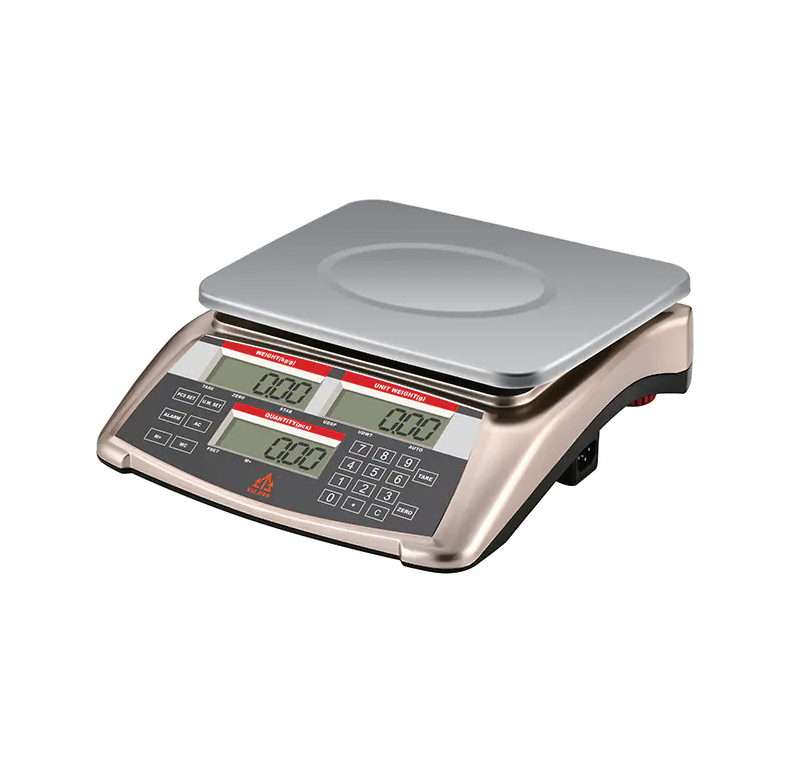
In the domain of precision measurement, the Electronic Weighing Indicator (EWI) stands as a pivotal tool across various industries. Its performance, however, is not universally consistent and can be significantly influenced by environmental conditions, particularly temperature. This article seeks to explore how different temperature conditions affect the accuracy and reliability of Electronic Weighing Indicators.
Electronic Weighing Indicators are designed to provide precise measurements under a range of operational conditions. However, temperature can introduce variability that impacts these devices' performance. The internal components of an EWI, such as sensors and microprocessors, can expand or contract with temperature changes, potentially leading to inaccuracies in weight readings. Manufacturers often specify an optimal operating temperature range for their EWIs, within which the devices are guaranteed to function with the highest degree of accuracy.
The impact of temperature on an Electronic Weighing Indicator can be categorized into two main scenarios: short-term fluctuations and long-term exposure. Short-term temperature changes, such as those experienced throughout a single day, can cause immediate and temporary effects on the EWI. These fluctuations can lead to temporary drift in the readings, which is why it is crucial to allow the EWI to acclimate to the environment before taking measurements. In contrast, long-term exposure to extreme temperatures can cause permanent damage to the EWI, reducing its lifespan and accuracy.
To mitigate the effects of temperature on Electronic Weighing Indicators, manufacturers often employ various strategies. These include the use of temperature compensation algorithms within the EWI's software, which can adjust the readings based on the current environmental conditions. Additionally, some EWIs are designed with temperature sensors that automatically correct the measurements in real time. However, these corrective measures are only effective within the EWI's specified temperature range.
It is also important to consider the type of sensor used in the EWI, as different sensors have varying sensitivities to temperature. Strain gauge sensors, for instance, are known to be more susceptible to temperature changes than load cell sensors. Therefore, the selection of an EWI should take into account the specific temperature conditions that the device will encounter in its operational environment.
For environments with extreme temperature variations, it is advisable to choose Electronic Weighing Indicators that are rated for those conditions. Some EWIs are designed to operate in temperatures ranging from -20°C to 60°C, while others may have a more limited range. Ensuring that the EWI is suitable for the expected temperature conditions is crucial for maintaining accuracy and preventing damage to the device.
To further safeguard the performance of Electronic Weighing Indicators in varying temperatures, regular calibration is essential. Calibration not only accounts for the natural wear and tear of the device but also compensates for any temperature-induced inaccuracies. By calibrating the EWI in the same temperature range in which it will be used, businesses can ensure that the device provides accurate and reliable measurements.
In conclusion, the performance of Electronic Weighing Indicators is intricately linked to the ambient temperature. Understanding the effects of temperature on these devices is crucial for maintaining their accuracy and ensuring that they remain reliable tools in any precision measurement task. By selecting the appropriate EWI for the environmental conditions, allowing for acclimatization, employing temperature compensation features, and conducting regular calibration, businesses can optimize the performance of their Electronic Weighing Indicators and maintain the integrity of their measurements.
Preventing dust and insects more effectively with an external aluminum alloy bracket
Reinforced casing for anti-drop and impact resistance.
High stability and antifreeze waterproof chip motherboard
Zemic customized load cell verification interval can be 0.1g.
 Turkish
 English
 Arabic
 French
 Spanish
 Portuguese
 Deutsch
 Dutch
Dutch
 Italiano
 Russian
 Romaian
 Portuguese (Brazil)
 Greek
Greek