


Comparative Analysis: Ultrasonic Oxidative Desulfurization vs. Hydrodesulfurization (HDS)
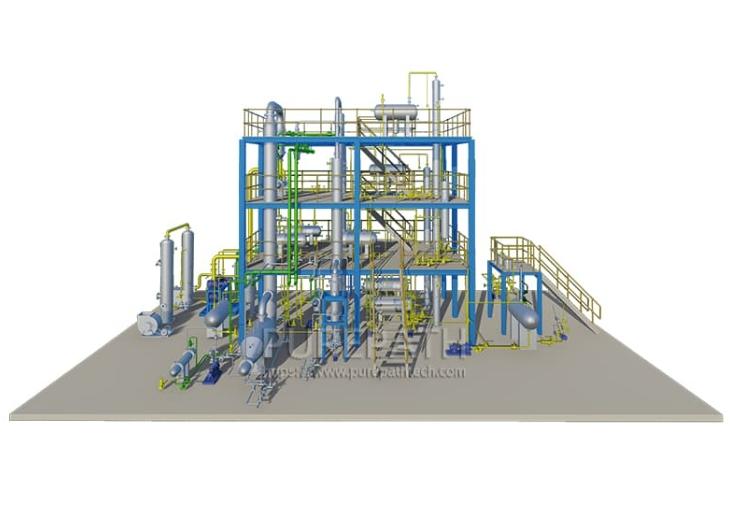
The global push for cleaner fuels has intensified the need for efficient desulfurization technologies. Two prominent methods—Ultrasonic Oxidative Desulfurization (UOD) and Hydrodesulfurization (HDS)—have emerged as key players in reducing sulfur content in fuels. While both aim to achieve the same goal, their mechanisms, efficiency, and environmental impacts differ significantly. Let’s dive into a comparative analysis of these two technologies.
Hydrodesulfurization (HDS): The Conventional Approach
HDS is the most widely used desulfurization method in refineries. It involves reacting sulfur-containing compounds (like thiols, sulfides, and thiophenes) with hydrogen at high temperatures (300–400°C) and pressures (30–130 atm) in the presence of a catalyst, typically cobalt-molybdenum or nickel-molybdenum. The process converts sulfur compounds into hydrogen sulfide (H₂S), which is then separated and converted to elemental sulfur.
Advantages of HDS:
High Efficiency: HDS is highly effective in removing simple sulfur compounds like mercaptans and sulfides.
Established Technology: It has been used for decades and is well-integrated into refinery operations.
Limitations of HDS:
High Energy Consumption: The process requires significant energy due to high temperatures and pressures.
Inefficiency with Complex Compounds: HDS struggles to remove refractory sulfur compounds like dibenzothiophene (DBT) and its derivatives.
High Costs: The need for hydrogen and specialized equipment makes HDS expensive.
Ultrasonic Oxidative Desulfurization (UOD): The Emerging Alternative
UOD is a novel, non-catalytic desulfurization method that uses ultrasonic waves and oxidants (like hydrogen peroxide) to break down sulfur compounds. The ultrasonic waves create cavitation bubbles, which generate extreme local temperatures and pressures, facilitating the oxidation of sulfur compounds into sulfoxides and sulfones. These oxidized compounds are then easily separated from the fuel.
Advantages of UOD:
Mild Operating Conditions: UOD operates at ambient temperatures and pressures, reducing energy consumption.
Effectiveness with Refractory Compounds: It excels at removing complex sulfur compounds that HDS cannot efficiently process.
Environmentally Friendly: UOD produces fewer greenhouse gases and does not require hydrogen.
Limitations of UOD:
Scalability Challenges: The technology is still in the developmental stage and faces hurdles in large-scale implementation.
Oxidant Costs: The need for oxidants like hydrogen peroxide can increase operational costs.
Conclusion
While HDS remains the industry standard due to its reliability and efficiency for simpler sulfur compounds, UOD offers a promising alternative, particularly for refractory sulfur removal and environmental sustainability. As research progresses, UOD could become a complementary or even competitive technology to HDS, paving the way for cleaner fuels and greener refining processes. The choice between the two ultimately depends on the specific requirements, scale, and economic considerations of the refinery.
 Russian
 English
 Arabic
 French
 Spanish
 Portuguese
 Deutsch
 Turkish
 Dutch
Dutch
 Italiano
 Romaian
 Portuguese (Brazil)
 Greek
Greek