


How to Inspect Coated Screws
Ensuring the quality and reliability of coated screws is paramount across various industries and applications. Coating not only enhances their appearance but also shields against corrosion, bolstering durability. To guarantee adherence to desired standards, rigorous inspection methods are indispensable. Here's a detailed exploration of these methods:
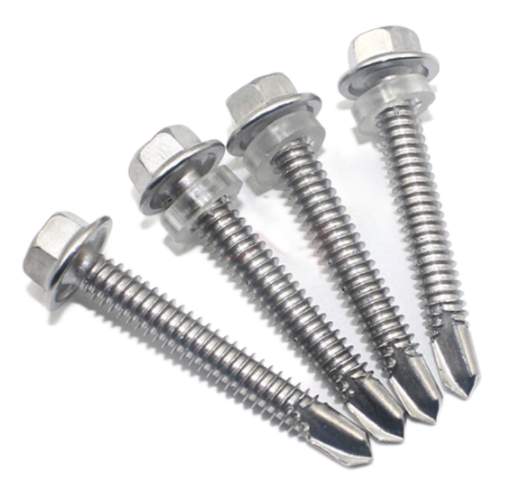
Cosmetic Inspection:
A visual assessment ensures even coating distribution without irregularities like bubbles or discoloration. This sustains aesthetic appeal and assures consistent quality.
Coating Thickness Inspection:
Measuring Tool Method: Utilizes precision tools like micrometers to gauge coating thickness.
Magnetic Method: Employs magnetic induction to measure non-magnetic coating thickness on ferrous substrates.
Microscopy: Examines screws under a microscope for precise measurement, especially useful for thin coatings.
Chronometric Flow Method: Utilizes a stopwatch to measure coating material flow time, correlating with thickness.

Adhesion Strength Inspection:
Friction Polishing Test: Subjects screws to friction against a hard surface to assess resistance to coating removal.
File Method Test: Uses a file to scrape coating surface, evaluating resistance to removal.
Scratch Method: Involves making a scratch to assess detachment; minimal or no detachment indicates strong adhesion.
Bending Test: Evaluates flexibility and adhesion by controlled bending; intact coating signifies good adhesion.
Thermal Shock Test: Exposes screws to rapid temperature changes to assess adhesion; minimal coating damage indicates strong adhesion.
Squeeze Method: Applies pressure to assess adhesion; intact coating under pressure indicates good adhesion.
Corrosion Resistance Inspection:
Atmospheric Explosion Test: Exposes screws to corrosive atmosphere to simulate real-world conditions.
Neutral Salt Spray Test (NSS Test): Evaluates corrosion resistance by exposing screws to salt spray environment.
Acetate Spray Test (ASS Test) and Copper Accelerated Acetate Spray Test (CASS Test): Assess corrosion resistance under rigorous conditions.
Corrosion Paste Corrosion Test (CORR Test) and Solution Droplet Corrosion Test: Directly apply corrosive substances to assess corrosion.
Immersion Test, Inter-Immersion Corrosion Test, etc.: Immerse screws in corrosive solutions to simulate various environments.
In conclusion, these inspection methods ensure quality, reliability, and performance of coated screws. Establishing partnerships with reputable manufacturers is crucial. Through meticulous research, evaluation of track records, consideration of quality assurance, and assessing customer support, businesses can forge successful collaborations meeting industry demands.
 Portuguese (Brazil)
 English
 Arabic
 French
 Spanish
 Portuguese
 Deutsch
 Turkish
 Dutch
Dutch
 Italiano
 Russian
 Romaian
 Greek
Greek