


Why Cloud-Native Development is Dominating Indian Software Companies
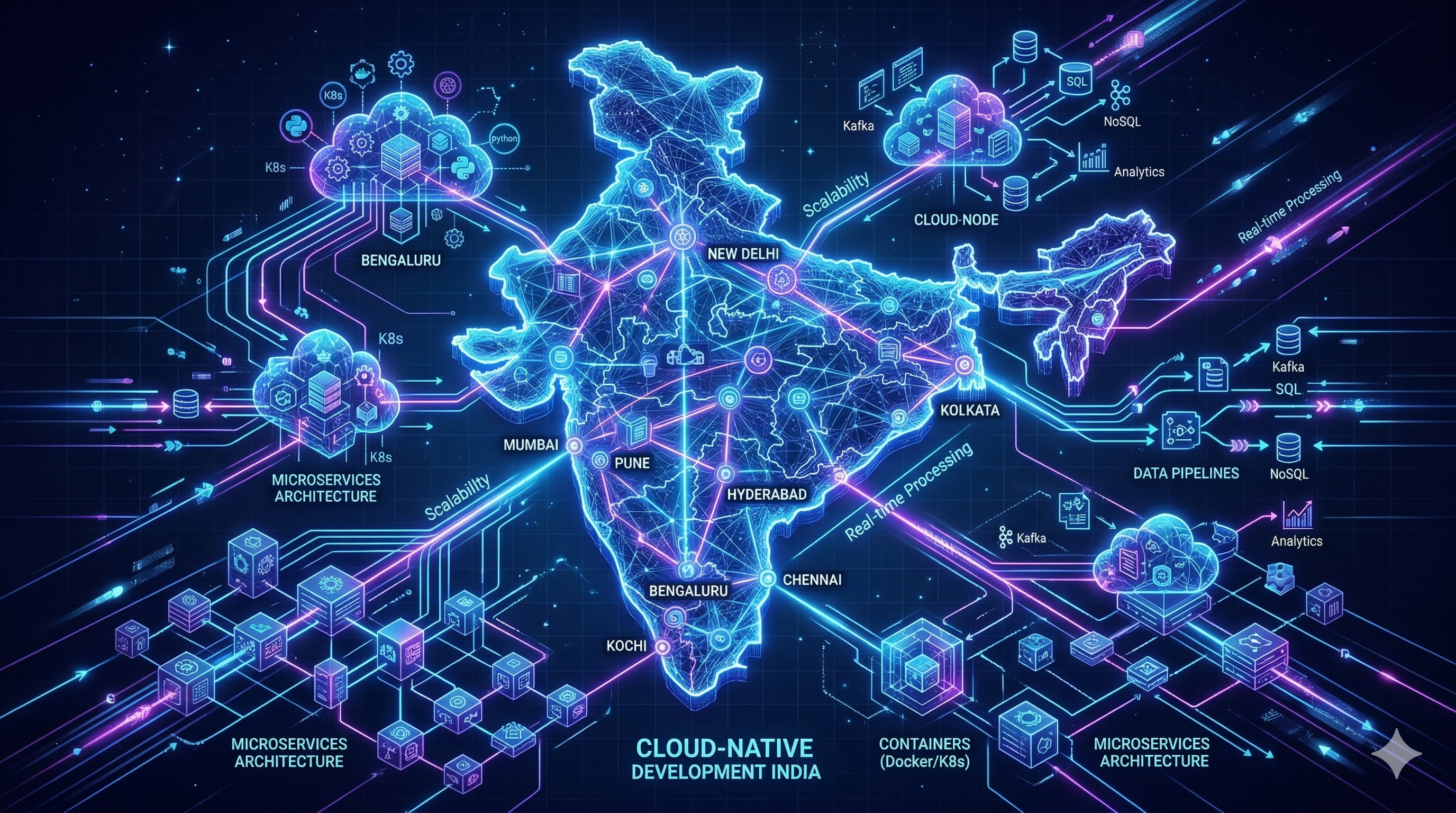
Something shifted in the last few years—and it wasn’t subtle. Indian tech firms didn’t just adopt cloud infrastructure; they rebuilt their delivery models around it. That’s a deeper move. Structural. Intentional.
Today, software development companies in India are no longer competing purely on cost. They’re competing on how efficiently they can design, deploy, and scale software in cloud-native environments. That shift is rewriting the outsourcing equation entirely.
Cloud-Native Isn’t a Trend—It’s an Operating Model
There’s a tendency to label cloud-native as just another tech upgrade. That’s inaccurate.
Cloud-native development fundamentally changes:
-
How applications are built
-
How teams collaborate
-
How systems scale
Indian firms recognized this early. Not out of innovation alone—but necessity. Managing high volumes of global clients requires infrastructure that can flex instantly.
Monolithic systems couldn’t support that. Cloud-native could.
The Cost Advantage Got Reinforced—Not Replaced
India’s reputation in cost of software development India vs USA still holds. But cloud-native amplified it.
Here’s how:
-
Pay-as-you-go infrastructure reduces upfront costs
-
Automated scaling eliminates wasted resources
-
DevOps pipelines reduce manual overhead
This creates a compounding effect.
Lower labor cost + efficient infrastructure = aggressive pricing without sacrificing margins.
That’s difficult to compete with.
DevOps Culture Became the Default
Cloud-native development doesn’t work without DevOps.
Indian companies embraced this faster than expected.
CI/CD pipelines, automated deployments, containerization—these aren’t premium offerings anymore. They’re baseline.
This shift enables:
-
Faster release cycles
-
Reduced downtime
-
Continuous product iteration
In the context of offshore software development India, this is critical. Clients don’t just want delivery. They want velocity.
Cloud-native + DevOps delivers that combination.
Microservices Fit the Outsourcing Model Perfectly
Traditional architectures create bottlenecks. One change breaks everything.
Microservices solve that.
Indian firms leverage microservices to:
-
Break large systems into smaller components
-
Assign different modules to distributed teams
-
Scale specific features independently
This aligns perfectly with remote software development teams.
Multiple teams. Parallel development. Faster output.
It’s not just efficient—it’s operationally scalable.
Global Clients Demand Cloud-First Solutions
This isn’t just supply-driven. It’s demand-driven.
Clients—especially in the US—now expect:
-
Cloud deployment from day one
-
API-first architecture
-
Scalable infrastructure
The conversation around outsourcing software development USA vs India has shifted.
It’s no longer:
“Can they build it cheaper?”
It’s:
“Can they build it to scale globally?”
Indian companies adapted quickly. Faster than many expected.
Talent Evolution: From Coders to Cloud Engineers
The talent pool in India has evolved.
Developers are no longer just writing code. They’re:
-
Managing cloud infrastructure (AWS, Azure, GCP)
-
Designing distributed systems
-
Implementing container orchestration (Kubernetes)
This matters.
Because cloud-native development isn’t just about tools—it’s about architectural thinking.
The rise of specialized roles—DevOps engineers, cloud architects—has strengthened India’s position in global software outsourcing.
Startup Ecosystem Accelerated Adoption
India’s startup ecosystem played a quiet but powerful role.
Startups don’t have the luxury of legacy systems. They build cloud-native by default.
This created:
-
A workforce already trained in modern architectures
-
Faster experimentation cycles
-
Higher familiarity with scalable systems
So when these developers move into outsourcing firms, they bring that mindset with them.
That’s how industry-wide change happens.
Enterprise Clients Are Driving Complexity
It’s not just startups anymore.
Large enterprises outsourcing to India now expect:
-
Multi-cloud strategies
-
High availability systems
-
Compliance-ready infrastructure
Cloud-native development supports all of this.
And Indian firms, especially at scale, have built capabilities around enterprise software development outsourcing that align with these expectations.
This isn’t entry-level work anymore.
It’s high-stakes engineering.
Time Zone + Cloud = Continuous Development
Here’s an underrated advantage.
Cloud-native systems allow real-time updates, monitoring, and deployment.
Combine that with time zone differences—and development becomes continuous.
US teams log off. Indian teams pick up. Systems evolve around the clock.
This enhances productivity in india vs usa outsourcing models.
Not theoretically. Practically.
Scalability Is No Longer a Selling Point—It’s Expected
A few years ago, scalability was a differentiator.
Now it’s assumed.
Cloud-native development ensures:
-
Horizontal scaling
-
Load balancing
-
Fault tolerance
Indian firms don’t market this aggressively anymore.
Because clients expect it by default.
That’s how you know a trend has matured.
Challenges Still Exist—And They’re Not Small
This isn’t a flawless system.
Cloud-native introduces:
-
Increased architectural complexity
-
Higher dependency on cloud providers
-
Security challenges in distributed systems
Not all dedicated development teams handle this equally well.
The gap between top-tier and average firms is widening.
Choosing the right partner matters more than ever.
The Bigger Shift: From Cost Centers to Capability Centers
India used to be seen as a cost center.
That perception is fading.
Cloud-native capabilities have repositioned Indian firms as:
-
Innovation partners
-
Scalable engineering hubs
-
Long-term technology collaborators
This changes how businesses approach software outsourcing comparison.
It’s no longer about saving money.
It’s about building systems that last.
Final Take: Cloud-Native Is the New Baseline
The dominance of cloud-native development among software development companies in India isn’t accidental.
It’s the result of:
-
Market pressure
-
Talent evolution
-
Infrastructure advantages
-
Global demand shifts
And it’s not slowing down.
In the broader debate of offshore development India vs USA, cloud-native capability has become a deciding factor.
Because in modern software, the question isn’t whether your system works.
It’s whether it scales, adapts, and survives under real-world conditions.
And right now, Indian companies are building exactly for that reality.
 Portuguese (Brazil)
 English
 Arabic
 French
 Spanish
 Portuguese
 Deutsch
 Turkish
 Dutch
Dutch
 Italiano
 Russian
 Romaian
 Greek
Greek