


Buffet Catering vs Packed Meals for Offices: What Works Better?
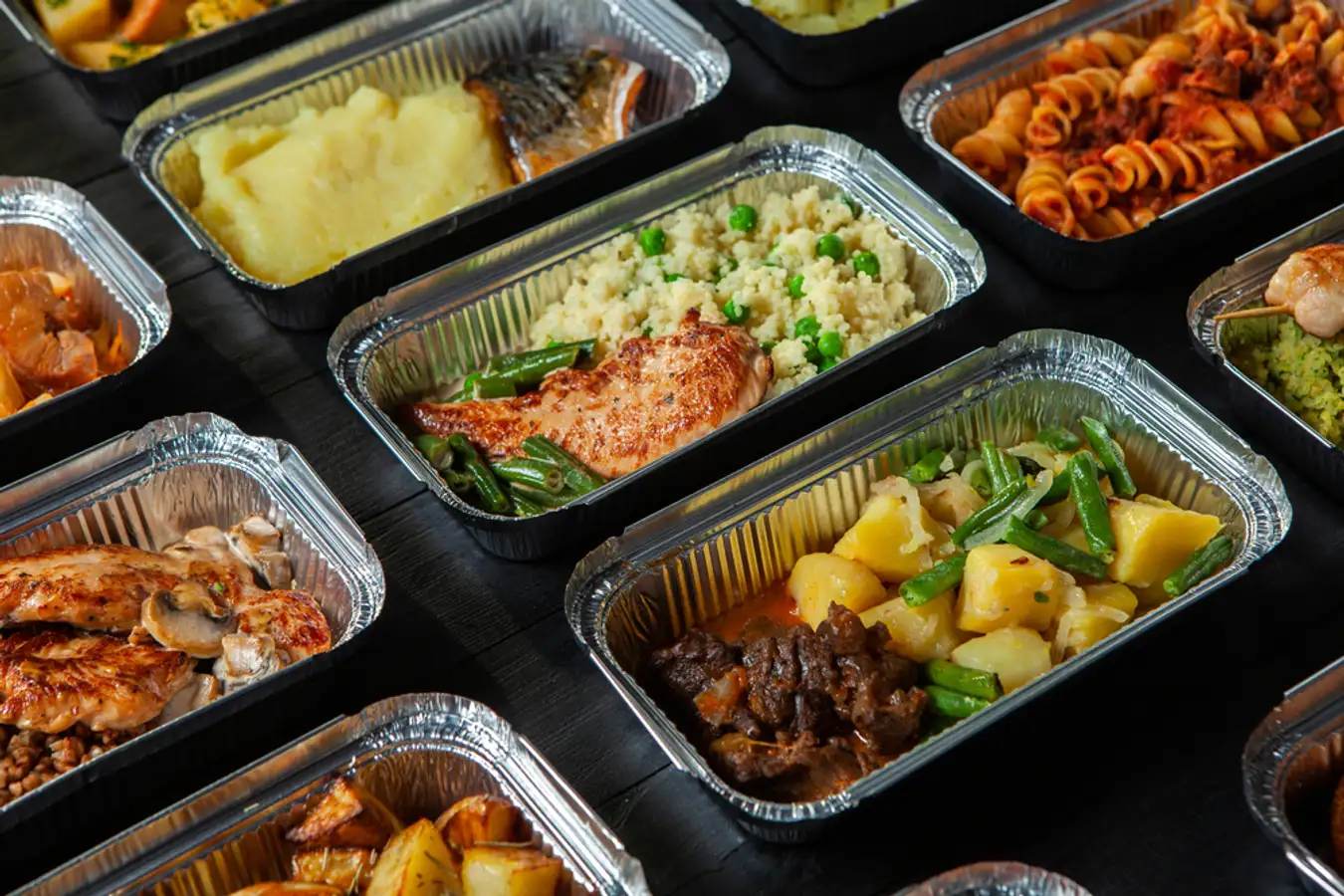
Ask ten office managers this question and you'll get ten different answers — because both options genuinely work, just for different organizations in different circumstances.
The real question isn't which format is universally superior. It's which format fits your team's size, culture, physical space, and daily operational rhythm. Packed food services in noida have grown significantly in corporate adoption over the last few years — but buffet catering hasn't disappeared, and for good reason. Both formats have genuine strengths and genuine limitations that deserve honest examination.
This guide covers exactly that — so the decision you make is based on what actually applies to your organization, not what sounds good in a sales pitch.
Packed Food Services in Noida: What the Format Does Well
Individual Packed Meals: The Core Advantages
Packed meals — individual boxes, tiffins, or thalis delivered per person — solve a specific set of problems that buffet catering creates. Understanding those problems first makes the advantages clearer.
Buffet catering requires: a dedicated service area, serving equipment, catering staff on-site, a space large enough for employees to queue and move around comfortably, and a timing window during which food is at optimal quality. Many Noida office environments — particularly mid-sized companies in commercial buildings without dedicated cafeteria infrastructure — don't have these conditions consistently available.
Packed food services in noida bypass all of these requirements. The meals arrive individually packaged, require no service infrastructure, can be distributed across multiple floors or workstations, and don't require dedicated dining space. For offices in multi-tenant commercial buildings where cafeteria space is shared or unavailable, packed meals are often the only practically viable daily meal format.
The per-person control that individual packaging provides is also significant. Each employee receives a defined portion, reducing both over-eating driven by buffet abundance and the food wastage that buffet-style service consistently produces.
Dietary Accuracy at the Individual Level
In a buffet, dietary accommodation happens at the service point — an employee with Jain requirements avoids certain dishes, a vegetarian skips the non-vegetarian section, someone with a nut allergy navigates carefully. The accuracy of that accommodation depends entirely on the employee's own vigilance and clear labeling at the serving point.
Individual packed meals can be prepared, packaged, and labeled specifically per dietary requirement — each person's meal customized to their actual dietary needs at the production stage rather than managed by the employee at the service point.
For organizations with employees who have genuine allergy requirements or medical dietary restrictions, this individual-level accuracy is meaningfully safer than buffet navigation. It also removes the anxiety that many employees with dietary restrictions experience at buffet service — the uncertainty of whether a dish contains a restricted ingredient that isn't immediately visible.
Supporting Hybrid and Remote Teams
This is where packed meals have a structural advantage that buffet catering simply cannot replicate.
A buffet only serves people who are physically present. For hybrid organizations — where some employees are in the Noida office and others are working from home in Greater Noida, Delhi, or Ghaziabad — buffet catering either excludes remote team members from the meal benefit entirely or requires a completely separate arrangement for them.
Packed food services in noida that deliver both to office locations and home addresses can serve the entire hybrid team simultaneously — same meal, same day, same brand experience, regardless of where individual employees are working. This equity between in-office and remote employees is a genuine cultural asset that buffet-only programs can't provide.
Corporate Meal Boxes in Noida: Format Variations Worth Knowing
Beyond the Standard Thali: What Corporate Meal Boxes Actually Include
The term "packed meal" covers a significant range — from the basic carrier-bag tiffin to premium multi-compartment meal boxes with genuinely composed nutrition and presentation quality. Understanding the range helps set appropriate expectations.
Standard thali box: Dal, one or two sabzis, rice, roti, and pickle. This is the baseline corporate meal box and the format that most corporate meal boxes in noida started with. It works well for organizations where the primary requirement is adequate, familiar, affordable daily nutrition.
Balanced nutrition box: A more intentionally composed format — including a protein component (paneer, dal, egg, or chicken depending on the track), a vegetable component, a grain component (rice or roti), and typically a salad or fresh component. Designed with nutritional balance rather than just familiarity.
Premium corporate meal box: Multiple items, higher-quality ingredients, better packaging, and often a broader cuisine reference — including south Indian, continental, or health-focused components alongside standard Indian thali elements. This format positions the meal benefit as a genuine perk rather than just practical nutrition.
Occasion or event meal box: Used for team celebrations, quarterly review lunches, onboarding welcome meals, or client engagement occasions — typically with elevated packaging, a more varied or festive menu composition, and sometimes branded elements that make the experience distinctive.
CaterNexa designs programs across all four of these formats — helping organizations select the right format level for their culture and budget rather than defaulting to whatever the caterer's standard offering is.
B2B Thali Services in Noida: The Traditional Format in a Modern Context
Why the Thali Format Remains Relevant for Corporate Catering
The thali — a complete, balanced meal served in a partitioned format — has remained the dominant corporate meal format across north India's corporate corridor not through inertia, but because it genuinely fits the requirement.
B2B thali services in noida at a professional standard solve three problems simultaneously: nutritional completeness (a properly composed thali covers carbohydrates, protein, vegetables, and condiments in a single serving), cultural familiarity (the format is recognizable and comfortable for the large majority of Noida's corporate workforce), and operational simplicity (standardized portions are easier to produce at scale and deliver without quality loss than more complex meal formats).
The modernization of the thali format — better packaging materials, more accurate portion control, dietary-specific track variations, and wider menu rotation within the thali structure — has addressed most of the historical criticisms of the format (repetitiveness, inadequate packaging, poor temperature retention) while retaining the operational and cultural advantages that made it the default.
For organizations looking for a daily corporate meal program that is reliable, culturally appropriate, cost-efficient, and nutritionally adequate without requiring complex customization, professional b2b thali services in noida remain a well-justified choice.
Buffet Catering for Offices: When It Makes More Sense
The Genuine Advantages of Buffet-Style Service
Having covered packed meals' strengths honestly, buffet catering deserves equal honest treatment — because it isn't a lesser format. It's a different format, with different strengths.
Social dining that builds team culture. The buffet's most genuine strength is what happens around the food rather than in the food itself. When employees gather at a buffet simultaneously, serve themselves, and sit together — the informal social interaction that occurs builds the relational fabric that makes teams genuinely cohesive rather than merely professionally cooperative.
This communal dimension is difficult to manufacture through any other means. Virtual team lunches with individual packed meals can partially replicate it; a well-organized in-person buffet does it more naturally and with less effort.
Menu variety at a single service point. A buffet can offer eight to twelve items simultaneously — more variety in a single meal service than any individual packed box can contain. Employees with strong food preferences, who might find a standard thali box limiting, have genuine choice. This variety also accommodates diverse dietary requirements through separation of dishes rather than separate production tracks.
Better for special occasions and events. Town halls, quarterly reviews, anniversary celebrations, client lunches, and onboarding days have an experiential dimension that buffet catering serves and individual packed meals don't. The presentation, abundance, and social facilitation that a well-executed buffet provides fits occasions where the meal experience is part of the event rather than just practical nutrition alongside it.
Fresher food at the service point. Hot food served from chafing dishes immediately after preparation is, for most dishes, better than the same food packaged, transported, and consumed 30 to 60 minutes later. For organizations with on-site preparation capability or a catering operation that can serve quickly after production, the temperature and freshness advantage of buffet service is real.
The Genuine Limitations of Buffet Service
Space and infrastructure requirements. Buffet service requires meaningful dedicated space — not just a table, but a properly ventilated, temperature-appropriate service area with space for queuing, serving, and typically nearby seating for the eating process itself. Many commercial office buildings in Noida don't have this infrastructure, particularly for mid-sized companies that aren't primary tenants with dedicated facilities.
Wastage is structural, not accidental. Buffet catering consistently produces 15 to 25% food wastage — food prepared but not consumed. This isn't a management failure; it's an inherent feature of buffet service, where production must cover anticipated demand with margin for variation. Organizations paying for 200 meals in a buffet format are paying for food that feeds 150 to 170 people. This wastage is built into the price.
Headcount variability management. Accurate attendance prediction is difficult — particularly for hybrid teams. A buffet prepared for 150 people when only 110 attend produces significant wastage and cost inefficiency. Packed meal services can be adjusted with reasonable advance notice to match actual attendance more closely.
Hygiene and contamination risk. Self-service buffets, by their nature, involve multiple people handling serving implements over an extended service window. This creates hygiene considerations that individual sealed packed meals don't carry. Post-pandemic, some employee populations remain sensitive to shared serving scenarios.
Side-by-Side Comparison: Key Decision Factors
|
Factor |
Packed Meals |
Buffet Catering |
|
Space required |
Minimal — distribution only |
Significant — service and dining area |
|
Infrastructure needed |
None |
Chafing dishes, serving equipment |
|
Wastage |
Low — per-order production |
High — 15–25% structural |
|
Dietary accuracy |
High — per-person customization |
Moderate — employee-managed |
|
Hybrid/remote inclusion |
Excellent — home delivery possible |
Not applicable |
|
Social dining |
Partial — requires activation |
Strong — natural |
|
Headcount flexibility |
High — adjustable with notice |
Low — advance commitment required |
|
Cost at small scale (<50) |
Favorable |
Premium |
|
Cost at large scale (200+) |
Competitive |
Improves with scale |
|
Best for |
Daily programs, hybrid teams, varied offices |
Events, celebrations, stable large headcounts |
How to Choose: A Practical Decision Framework
Consider Your Physical Space First
Physical space is often the most constraining factor — and the most honest starting point.
Does your office have a dedicated area where 50%+ of your employees can comfortably gather simultaneously for lunch? Is there dedicated serving infrastructure, or would buffet equipment compete with workstation or meeting room space? Is the HVAC and temperature management adequate for maintaining hot food quality at a serving station?
If the answers to these questions are uncertain or negative, buffet service will be a recurring operational problem regardless of the catering quality. Packed food services in noida don't need this infrastructure and are the practically viable option for the majority of Noida's commercial office environments.
Consider Your Attendance Pattern
Stable, high in-office attendance — 80%+ of employees in the office on any given day, with predictable patterns — improves the economics and operational viability of buffet service.
Variable, hybrid attendance — where 40 to 70% of employees are in the office on any given day, with day-to-day fluctuation — makes buffet service economically inefficient and operationally problematic. Packed meals match production to actual confirmed demand, significantly reducing wastage and cost inefficiency at variable attendance.
Use a Hybrid Model for Different Occasions
The most sophisticated office catering programs don't choose one format exclusively — they use each format where it fits best.
CaterNexa designs hybrid programs for Noida corporate clients: b2b thali services in noida and corporate meal boxes in noida for daily meal provision with their cost efficiency, dietary accuracy, and hybrid-team inclusivity; buffet catering for monthly team events, quarterly reviews, client occasions, and organization-wide celebrations where the communal experience is part of the purpose.
This hybrid approach delivers the practical daily meal benefit at appropriate cost while still providing the elevated, social food experiences that punctuate a team's calendar and genuinely contribute to culture.
Practical Tips for Getting the Most From Either Format
For packed meal programs: Rotate the menu across a minimum 10-day cycle — repetition is the fastest route to employee disengagement. Survey dietary preferences before launch, not after. Designate a single daily collection point that doesn't disrupt workflow.
For buffet catering: Establish a defined service window — not "lunch is available anytime between 12 and 2," but a 45-minute window where the whole team eats together. This maximizes the social benefit that justifies buffet's cost premium. Brief, informal team interaction at a buffet works; a buffet with employees drifting in and out individually produces neither the social benefit nor the operational efficiency.
For hybrid programs: Be explicit with employees about when each format applies — daily packed meals on regular working days, buffet service on designated team days. Clarity about the format prevents confusion and allows employees to plan accordingly.
Conclusion
Neither buffet catering nor packed meals is the right answer for every organization — and any catering provider who tells you otherwise without asking about your specific context is selling a format rather than solving a problem.
Packed food services in noida offer operational simplicity, dietary accuracy, hybrid team inclusivity, lower wastage, and cost efficiency that make them the right daily meal format for most Noida offices operating in standard commercial environments. Corporate meal boxes in noida and b2b thali services in noida at a professional standard cover the nutrition, variety, and individual accommodation that a daily program requires.
Buffet catering earns its place — and its higher cost — on the occasions where shared communal dining is genuinely the point: team events, celebrations, special presentations, and cultural moments that packed boxes can supplement but not fully replace.
CaterNexa helps Noida organizations design programs that use both formats intelligently — daily packed meal provision with the quality and variety that sustains long-term engagement, and event-based buffet service that delivers the social experience worth gathering for.
Start with your space, your attendance reality, and your culture — and let those specifics drive the format decision rather than defaulting to whichever option your previous vendor happened to provide.
 Turkish
 English
 Arabic
 French
 Spanish
 Portuguese
 Deutsch
 Dutch
Dutch
 Italiano
 Russian
 Romaian
 Portuguese (Brazil)
 Greek
Greek