


Identity Verification Service, KYC & Face Match Verification: The Future of Secure Digital Onboarding
In today’s digital-first world, businesses must ensure that their customers are genuine, secure, and compliant with regulations. This is where identity verification service KYC (Know Your Customer), and face match verification play a critical role. These technologies not only prevent fraud but also streamline onboarding processes, making them faster and more user-friendly.
What is an Identity Verification Service?
An identity verification service is a digital solution that validates whether a person is who they claim to be. It uses advanced technologies such as artificial intelligence (AI), machine learning, and biometric authentication to verify user identities in real time.
These services are widely used across industries like banking, fintech, e-commerce, and telecommunications. By automating the verification process, businesses can reduce manual errors, enhance customer trust, and comply with global regulations.
Understanding KYC (Know Your Customer)
KYC is a mandatory compliance process that businesses use to verify the identity of their customers. It involves collecting and validating official documents such as passports, Aadhaar cards, or driver’s licenses.
Key Benefits of KYC:
-
Fraud Prevention: Helps detect fake identities and suspicious activities
-
Regulatory Compliance: Ensures adherence to government and financial regulations
-
Improved Customer Trust: Builds credibility and transparency
-
Faster Onboarding: Automates verification for quick approvals
With digital KYC, businesses can verify users remotely without the need for physical presence, making the process more convenient and scalable.
What is Face Match Verification?
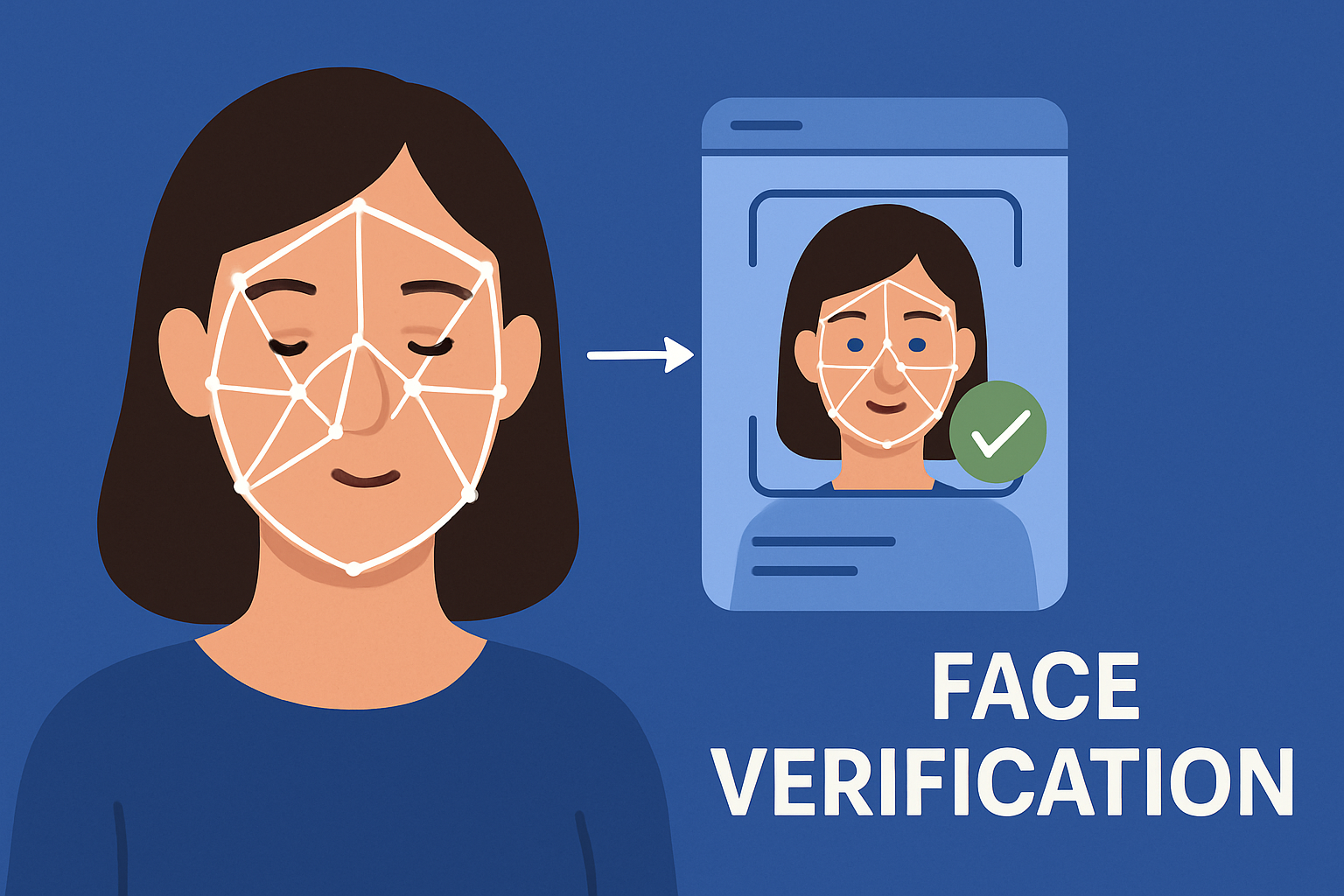
Face match verification is a biometric authentication method that compares a user’s live selfie with the photo on their identity document. It ensures that the person submitting the document is the rightful owner.
This process uses facial recognition algorithms to analyze key facial features such as:
-
Eye distance
-
Nose shape
-
Jawline structure
The system then calculates a match score to determine whether the two images belong to the same person.
How Identity Verification, KYC, and Face Match Work Together
When combined, identity verification services, KYC, and face match verification create a robust security framework:
-
Document Verification: Upload and validate identity documents
-
Data Extraction: Extract user details using OCR technology
-
Face Match Check: Compare selfie with document photo
-
Liveness Detection: Ensure the user is physically present (not a spoof)
This layered approach significantly reduces the risk of identity theft, deepfake attacks, and account fraud.
Why Businesses Should Adopt These Solutions
Modern businesses must prioritize security without compromising user experience. Implementing identity verification, KYC, and face match verification offers several advantages:
-
Enhanced Security: Multi-layer verification reduces fraud risks
-
Seamless User Experience: Quick and hassle-free onboarding
-
Global Compliance: Meets AML and regulatory requirements
-
Cost Efficiency: Reduces manual verification costs
Conclusion
As digital transactions continue to grow, the need for secure and reliable identity verification becomes more important than ever. By integrating KYC and face match verification into their systems, businesses can ensure a safe, compliant, and efficient onboarding process. Investing in these technologies is not just a regulatory necessity—it’s a strategic move toward building trust and long-term customer relationships.
 Portuguese (Brazil)
 English
 Arabic
 French
 Spanish
 Portuguese
 Deutsch
 Turkish
 Dutch
Dutch
 Italiano
 Russian
 Romaian
 Greek
Greek