


When Should You Consider Replacing Your Subaru Engine?
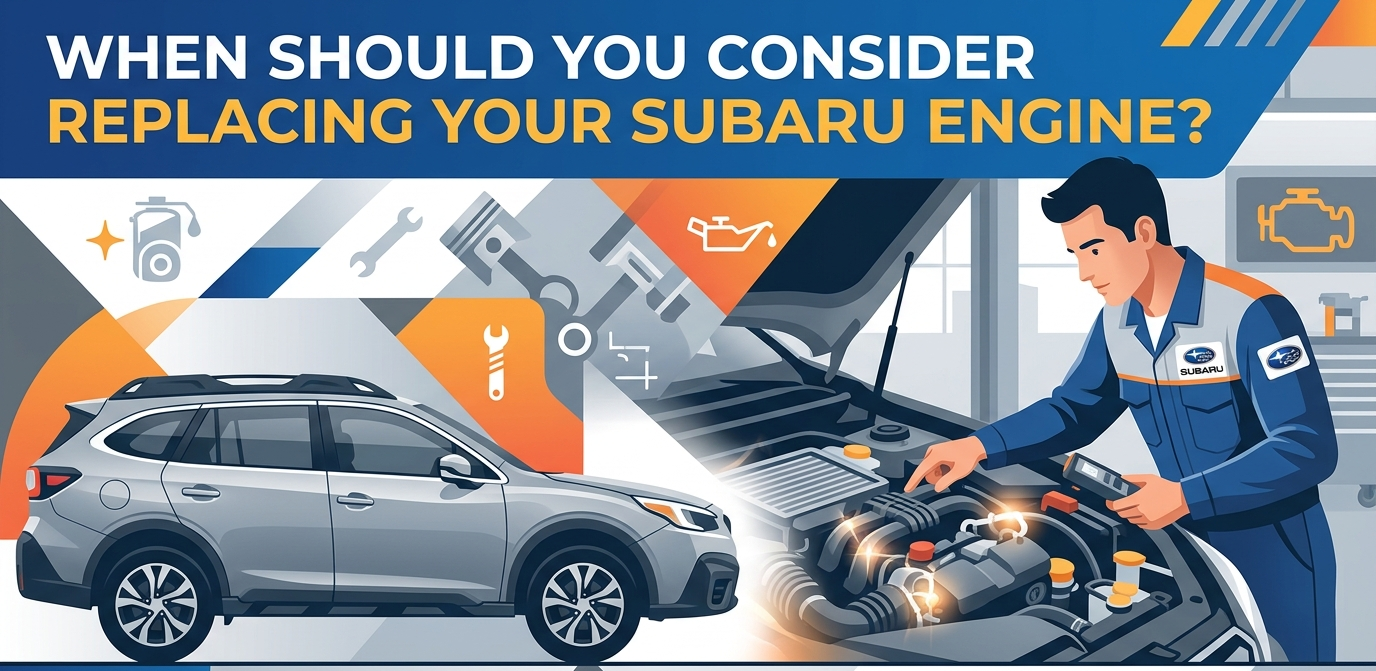
Your Subaru engine is the beating heart of one of the most trusted vehicles on the road today. Subaru has built a loyal global following on the strength of its horizontally opposed "boxer" engine design, renowned for its low center of gravity, smooth power delivery, and all-weather reliability. Yet no engine lasts forever and a failing Subaru engine can quickly turn your dependable daily driver into a liability. Knowing the right time to consider a replacement is not just about saving money; it is about safety, performance, and preserving the longevity of a vehicle you love.
Understanding the Lifespan of a Subaru Engine
Subaru's boxer engines are impressively durable when properly maintained. With regular oil changes, timely timing belt replacements (on older models), and proper coolant management, many Subaru engines comfortably reach 200,000 miles and beyond. However, factors such as deferred maintenance, head gasket failures a well-documented issue in certain Subaru generations oil consumption problems, and simple wear over time can significantly shorten that lifespan. Understanding your engine's history is the first step toward making an informed decision about repair versus replacement.
Subaru EJ-series engines from the late 1990s through mid-2000s are particularly known for head gasket vulnerabilities. If your vehicle falls in this range and has not had a professional inspection recently, it is worth getting one before minor seepage becomes a catastrophic failure.
Top Warning Signs That Engine Replacement May Be Necessary
Not every engine problem demands a full replacement many issues can be resolved with targeted repairs. However, several symptoms signal that the damage may be too extensive, too expensive, or simply not worth repairing on an engine with high mileage. Here are the critical red flags every Subaru owner should know:
-
01Persistent White or Blue Smoke from the ExhaustWhite smoke typically indicates coolant entering the combustion chamber a classic sign of a blown head gasket or cracked cylinder head. Blue smoke points to oil burning, which suggests worn piston rings or valve seals. When these issues are chronic and systemic, a simple repair often fails to resolve the root cause permanently.
-
02Severe Oil Consumption Between Changes Consuming more than one quart of oil per 1,000 miles is considered excessive. While some oil use is normal in older, high-mileage engines, rapid consumption signals internal wear that can cascade into far greater damage if ignored. If top-ups have become a weekly routine, an engine replacement conversation is warranted.
-
03Knocking or Rod Knock SoundsA deep, rhythmic knocking noise especially one that worsens under acceleration is almost always a sign of worn rod bearings. Left unaddressed, a spun bearing can destroy the crankshaft and connecting rods, turning a manageable problem into a total engine loss. At this stage, replacement is usually more cost-effective than a rebuild.
-
04Coolant and Oil Mixing (Milky Oil)If you remove your oil cap and find a creamy, milky residue, coolant has breached into the oil system. This is catastrophic for engine lubrication and can cause rapid bearing wear. It is a definitive sign of head gasket failure and, depending on how long the contamination has been present, the internal damage may already be irreversible.
-
05Loss of Compression Across Multiple CylindersA compression test is one of the most reliable diagnostic tools available. If two or more cylinders show significantly reduced compression, the engine's ability to generate power is fundamentally compromised. Worn rings, damaged valves, or a warped head may be to blame and the cost to correct all of these issues simultaneously often exceeds the value of a replacement engine.
-
06Overheating That Keeps RecurringA single overheating incident can warp cylinder heads, damage gaskets, and crack engine blocks. Repeated overheating compounds the damage with every occurrence. If your temperature gauge is climbing despite a healthy cooling system, the underlying cause may be internal engine degradation rather than an external component failure.
The cost of ignoring a dying engine is always greater than the cost of replacing it at the right time.
Repair vs. Rebuild vs. Replace: Which Makes Sense?
Once serious engine damage is confirmed, owners face three broad options: targeted repair, a full engine rebuild, or outright replacement with a used, remanufactured, or new engine. Targeted repairs make sense when damage is isolated a single blown head gasket on an otherwise healthy engine with moderate mileage, for instance. A rebuild involves disassembling the engine, replacing worn components, and reassembling it to factory specifications; this is a viable path when the block itself is structurally sound. Replacement installing a quality used or remanufactured engine is often the most cost-effective and time-efficient solution when internal damage is widespread, when mileage is high, or when the vehicle's overall value justifies the investment.
The Role of Mileage and Vehicle Value
Before committing to any repair or replacement, it is essential to weigh the cost against your vehicle's current market value. As a rough rule of thumb, if repair or replacement costs exceed 50–70% of the vehicle's value, you are approaching the threshold where selling or trading in may be the more rational financial decision. That said, Subaru vehicles hold their value well, and a well-maintained Outback, Forester, or Impreza with a fresh engine can easily provide another 100,000 miles of reliable service making replacement a sound investment rather than throwing good money after bad.
Used, Remanufactured, or New: Choosing the Right Replacement Engine
When replacement is the right call, choosing the correct type of replacement engine matters enormously. A used engine sourced from a low-mileage donor vehicle is typically the most budget-friendly option, though quality varies widely by supplier. A remanufactured engine rebuilt to OEM specifications with new bearings, seals, gaskets, and other critical components offers a middle ground of reliability at a moderate price point, often backed by a warranty. A brand-new OEM engine from Subaru is the gold standard but carries the highest price tag. Your choice should be guided by your budget, your vehicle's remaining lifespan, and the credibility of your parts supplier.
How to Find a Trustworthy Engine Supplier
The quality of your replacement engine is only as good as the supplier you buy it from. Look for suppliers who offer detailed mileage and vehicle history for used engines, who provide warranty coverage of at least 90 days (preferably longer), who can confirm compatibility with your specific Subaru year, make, and model, and who have verifiable customer reviews and industry standing. Cutting corners on sourcing to save a few hundred dollars upfront can result in significantly higher costs down the road if the replacement unit fails prematurely.
When it comes to sourcing a high-quality replacement engine, Moon Auto Parts is a name that consistently comes up among Subaru owners and independent mechanics alike. With a wide inventory of tested, verified engines and a reputation built on transparency and customer satisfaction, Moon Auto Parts offers the kind of peace of mind that matters most when you are making a significant investment in your vehicle's future.
Frequently Asked Questions
 French
 English
 Arabic
 Spanish
 Portuguese
 Deutsch
 Turkish
 Dutch
Dutch
 Italiano
 Russian
 Romaian
 Portuguese (Brazil)
 Greek
Greek