


Nut Welder: Precision Welding Solutions for Modern Manufacturing
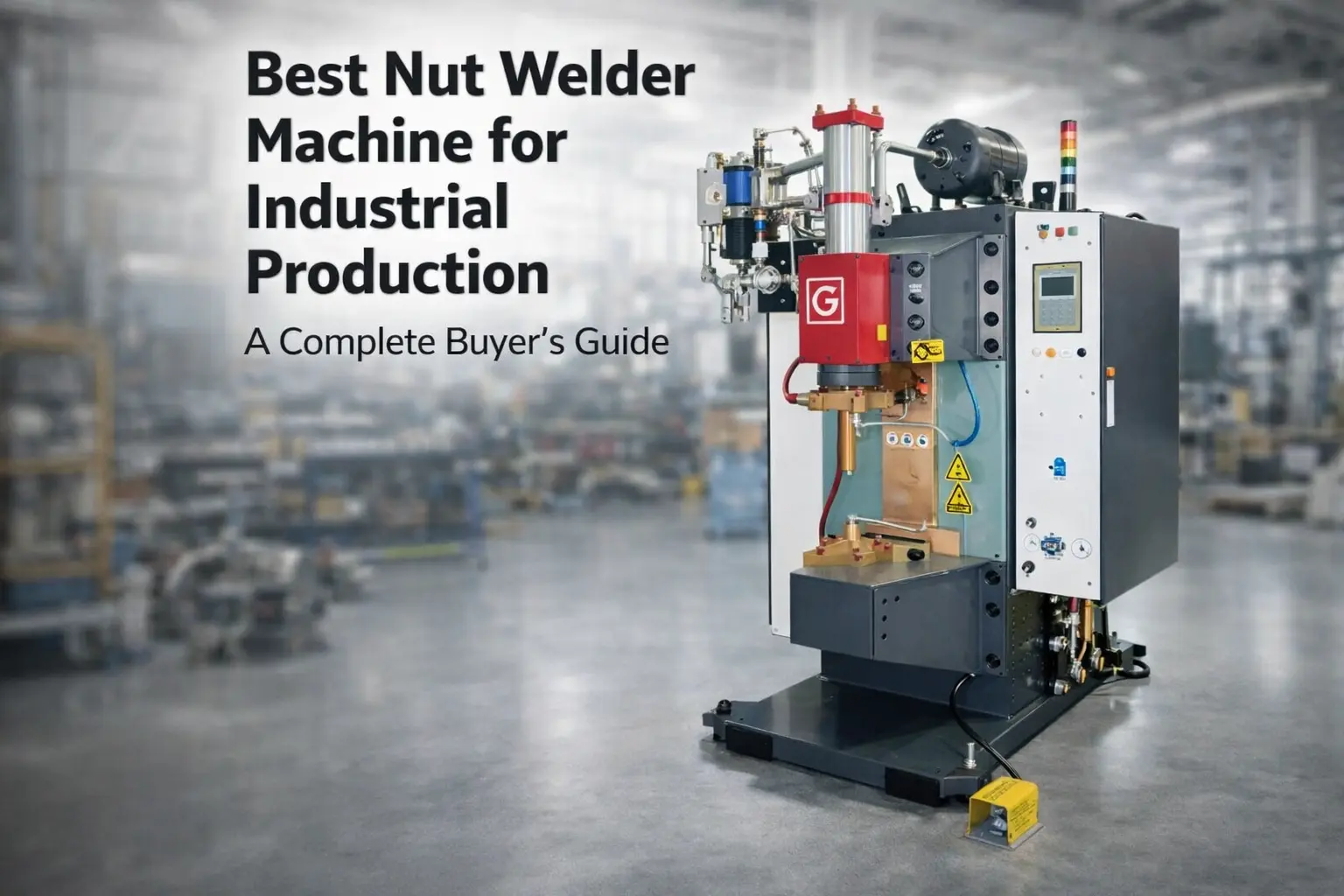
In modern manufacturing, efficiency, precision, and reliability are critical. For engineers, OEMs, and factory managers looking to optimize assembly processes, a nut welder is an essential piece of equipment. Nut welding, also known as projection or resistance nut welding, allows secure attachment of nuts to metal components without drilling, tapping, or additional fasteners, saving time and improving consistency on production lines.
Heron Welder, a global leader in industrial welding solutions, designs advanced nut welding machines and automated systems tailored to meet the demands of high-volume production, automotive assembly, electronics, and other industrial sectors.
What is a Nut Welder?
A nut welder is a specialized resistance welding machine that fastens nuts onto metal workpieces using electrical resistance and pressure. The process involves:
-
Placing the nut on the designated metal spot.
-
Applying precise pressure with the welding electrode.
-
Passing a controlled electric current through the nut and metal.
-
Melting the interface slightly to form a solid, permanent weld upon cooling.
This method eliminates the need for pre-drilled holes or threaded fasteners, reducing assembly steps and labor costs.
Types of Nut Welders
Nut welding solutions vary depending on production requirements:
1. Manual Nut Welders
Ideal for low-volume or repair applications, manual nut welders provide precision control with human-guided electrodes. Operators can adjust current, pressure, and weld time to match material thickness and nut size.
2. Semi-Automatic Nut Welders
These systems combine operator placement with automated welding cycles, improving consistency while maintaining flexibility for medium-volume production.
3. Fully Automated Nut Welding Systems
Integrated into production lines, automated nut welders can handle high-volume tasks with robotic arms, CNC-controlled positioning, and programmable welding cycles. These systems are perfect for automotive OEMs, appliance manufacturers, and industrial assembly plants seeking maximum throughput and minimal manual intervention.
Applications of Nut Welding
Nut welding is widely used in industries where strong, reliable fastening is required without traditional mechanical fasteners:
-
Automotive Manufacturing: Attaching nuts to chassis, engine components, and body panels.
-
Appliance Production: Securing fasteners on washing machines, ovens, and refrigerators.
-
Metal Furniture Fabrication: Attaching nuts to steel or aluminum frames.
-
Electronics & Electrical Enclosures: Precision fastening on panels and housings.
Heron Welder machines are engineered to meet these diverse needs, providing consistent weld quality across various metals, including mild steel, stainless steel, and aluminum alloys.
Advantages of Using a Nut Welder
Adopting nut welding technology offers several benefits:
-
Speed: Weld nuts in seconds, reducing assembly cycle times.
-
Accuracy: Precise current control ensures consistent welds without damaging surrounding material.
-
Cost Savings: Eliminates pre-drilling and reduces the need for additional fasteners or adhesives.
-
Automation-Friendly: Compatible with robotic and conveyor line integration for high-volume production.
-
Material Versatility: Works on multiple metals and thicknesses without extensive setup changes.
Comparing Nut Welding with Other Fastening Methods
| Method | Advantages | Limitations |
|---|---|---|
| Nut Welding | Fast, strong, precise, automation-ready | Initial machine investment |
| Threaded Fasteners | Widely available, simple | Time-consuming, requires pre-drilled holes |
| Riveting / Clinching | No heat needed, reliable | Slower, less flexible for automation |
| Adhesive Bonding | Smooth appearance, vibration resistance | Curing time, less strength on metals |
Heron Welder offers machines that combine nut welding with other resistance or FSPR solutions, allowing manufacturers to select the optimal method for each production challenge.
Best Practices for Nut Welding
To ensure high-quality nut welds:
-
Material Preparation: Clean and degrease metal surfaces to avoid weld defects.
-
Correct Electrode Selection: Choose electrodes compatible with nut size and material thickness.
-
Optimize Welding Parameters: Adjust current, pressure, and weld time for consistent results.
-
Regular Maintenance: Inspect electrodes for wear and replace when necessary to maintain weld quality.
-
Integrate Quality Control: Use vision systems or sensors to verify proper nut placement and weld integrity on automated lines.
Heron Welder provides training, technical guidance, and customized solutions to ensure each customer achieves peak performance and reliability.
FAQs About Nut Welders
1. Can nut welders work on aluminum or stainless steel?
Yes. Heron’s nut welding machines are engineered for multiple metals, including aluminum and stainless steel, with adjustable current and electrode configurations.
2. What is the typical cycle time for a nut weld?
Cycle times vary depending on material and nut size but typically range from 1 to 5 seconds, making them ideal for high-volume production.
3. Can nut welding be automated?
Absolutely. Heron designs fully automated systems with robotic handling, CNC positioning, and programmable weld parameters for seamless integration into production lines.
4. How do I choose the right nut welder for my factory?
Consider production volume, nut sizes, material types, and automation needs. Heron offers consultation to match the perfect machine to your requirements.
5. What maintenance is required for a nut welding machine?
Regular inspection of electrodes, calibration of welding parameters, and preventive maintenance ensure consistent weld quality and extended machine lifespan.
Why Choose Heron Welder?
With decades of experience in industrial welding, metal joining, and automation solutions, Heron Welder is trusted by OEMs, factories, and automation integrators worldwide. Our nut welding machines are:
-
Engineered for precision, durability, and high productivity.
-
Fully compatible with automated production lines and robotic systems.
-
Backed by expert consultation, training, and after-sales support.
Heron Welder doesn’t just supply machines; we deliver complete welding solutions optimized for your production goals.
Take the Next Step
Whether you need a manual nut welder for small-scale operations or a fully automated nut welding system for high-volume production, Heron Welder can design a solution that fits your factory’s needs.
Contact Heron today to request a quote or consult with our engineers for customized welding and automation solutions that drive efficiency, quality, and cost savings in your operations.
 Portuguese (Brazil)
 English
 Arabic
 French
 Spanish
 Portuguese
 Deutsch
 Turkish
 Dutch
Dutch
 Italiano
 Russian
 Romaian
 Greek
Greek