


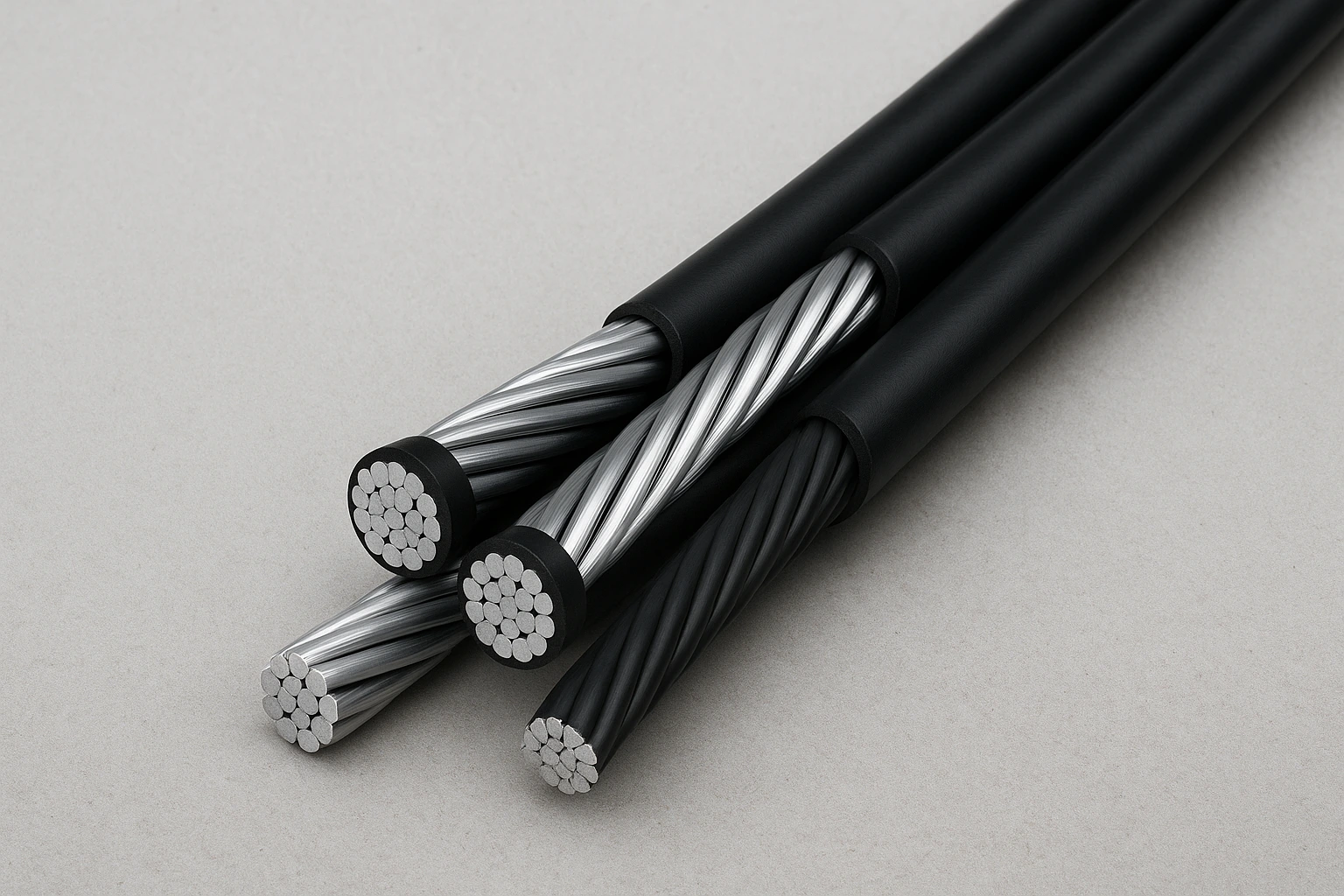
In today’s rapidly evolving power infrastructure landscape, selecting the right overhead cable is critical for ensuring efficient, reliable, and cost-effective electricity transmission. Engineers, EPC contractors, and procurement managers face increasing pressure to balance performance, durability, and budget constraints especially in large-scale transmission and distribution projects.
This guide explores the fundamentals of overhead cable systems, key selection criteria, and how advanced manufacturing solutions from HNBF Power can help solve common industry challenges.
Understanding Overhead Cable Systems in Power Distribution
Overhead cables are essential components in electrical networks, designed to transmit power across long distances using poles or towers. These systems are widely used in urban, rural, and industrial grid infrastructure due to their cost efficiency and ease of installation.
Key Types of Overhead Cables
1. AAC (All Aluminum Conductor)
-
Ideal for short-distance transmission
-
Excellent conductivity
-
Lightweight and cost-effective
2. AAAC (All Aluminum Alloy Conductor)
-
Higher strength than AAC
-
Better corrosion resistance
-
Suitable for coastal and high-humidity environments
3. ACSR (Aluminum Conductor Steel Reinforced)
-
High tensile strength for long spans
-
Steel core enhances mechanical durability
-
Commonly used in high-voltage transmission lines
4. ABC (Aerial Bundled Cable)
-
Insulated conductors bundled together
-
Reduced power theft and line losses
-
Safer for densely populated areas
Each type of overhead cable is engineered for specific applications, making proper selection crucial for project success.
Key Challenges in Overhead Cable Selection
Despite their widespread use, overhead cable systems come with several challenges that engineers and buyers must address:
Environmental Exposure
Overhead lines are constantly exposed to:
-
Extreme temperatures
-
UV radiation
-
Wind and ice loads
Choosing cables with high resistance to environmental stress is essential to ensure long-term reliability.
Mechanical Stress and Sagging
Improper cable selection can lead to:
-
Excessive sag
-
Line breakage
-
Increased maintenance costs
High-strength conductors like ACSR are often preferred for long-span applications.
Power Loss and Efficiency
Inefficient conductors can cause:
-
Higher transmission losses
-
Reduced system performance
Optimizing conductor material and size helps improve overall efficiency.
Installation and Maintenance Costs
While overhead systems are generally more affordable than underground cables, poor-quality materials can lead to:
-
Frequent repairs
-
Increased lifecycle costs
How to Choose the Right Overhead Cable
Selecting the ideal overhead cable requires a balance between electrical performance, mechanical strength, and environmental suitability.
Consider Voltage Level and Load Capacity
-
Low-voltage distribution: ABC or AAC
-
Medium to high voltage: AAAC or ACSR
Evaluate Environmental Conditions
-
Coastal or corrosive areas: AAAC
-
High wind or long span areas: ACSR
Assess Installation Requirements
-
Urban environments: ABC for safety
-
Rural transmission lines: Bare conductors like AAC/ACSR
Focus on Lifecycle Cost
Instead of focusing only on initial cost, consider:
-
Maintenance requirements
-
Expected lifespan
-
Energy efficiency
Why Quality Manufacturing Matters
The performance of an overhead cable depends heavily on manufacturing precision and material quality. Substandard conductors can lead to system failures, safety risks, and financial losses.
Key Quality Factors
-
High-purity aluminum and alloy materials
-
Advanced stranding technology
-
Strict compliance with IEC, ASTM, and BS standards
-
Consistent diameter and tensile strength
HNBF Power: Delivering Reliable Overhead Cable Solutions
HNBF Power stands out as a trusted global manufacturer of overhead conductors and power cables, supporting utilities, EPC contractors, and infrastructure developers worldwide.
What Sets HNBF Power Apart?
Advanced Manufacturing Capabilities
HNBF Power utilizes modern production lines to ensure:
-
Precision stranding
-
Uniform conductor quality
-
High tensile strength
Comprehensive Product Range
From AAC and AAAC to ACSR and ABC cables, HNBF Power offers complete solutions for:
-
Transmission networks
-
Distribution systems
-
Industrial power applications
Custom Engineering Support
Every project has unique requirements. HNBF Power provides:
-
Tailored conductor designs
-
Technical consultation for engineers
-
Support for complex grid projects
Global Quality Standards
All products are manufactured in compliance with international standards, ensuring reliability across diverse operating environments.
Practical Applications of Overhead Cables
Overhead cables play a vital role in multiple sectors:
Power Utilities
-
Long-distance transmission lines
-
Grid interconnections
Urban Infrastructure
-
Low-voltage distribution using ABC cables
-
Safer electrification in cities
Industrial Projects
-
Power supply for factories and plants
-
Temporary or permanent installations
Rural Electrification
-
Cost-effective expansion of power networks
-
Reliable connectivity for remote areas
Future Trends in Overhead Cable Technology
The power industry is evolving, and overhead cable technology is advancing to meet new demands:
-
High-temperature low-sag (HTLS) conductors for increased capacity
-
Improved corrosion-resistant alloys
-
Smart grid compatibility
-
Lightweight, high-strength materials
Manufacturers like HNBF Power are continuously innovating to support next-generation power infrastructure.
FAQs About Overhead Cable
1. What is the main advantage of overhead cable over underground cable?
Overhead cables are more cost-effective, easier to install, and simpler to maintain compared to underground systems.
2. Which overhead cable is best for long-distance transmission?
ACSR is widely preferred due to its high tensile strength and ability to handle long spans.
3. Are aerial bundled cables safer than bare conductors?
Yes, ABC cables are insulated, reducing the risk of electrical accidents and power theft.
4. How do I choose the right conductor size?
It depends on load requirements, voltage level, and environmental conditions. Engineering calculations and supplier consultation are essential.
5. What standards should overhead cables meet?
Common standards include IEC, ASTM, and BS, ensuring performance, safety, and durability.
Power Your Projects with Reliable Overhead Cable Solutions
Choosing the right overhead cable is more than a technical decision it directly impacts the efficiency, safety, and long-term success of your power infrastructure project. By partnering with an experienced manufacturer, you can minimize risks and maximize performance.
HNBF Power is committed to delivering high-quality, customized overhead conductor solutions tailored to your project needs.
Contact HNBF Power today to discuss your requirements and get expert support for your next transmission or distribution project.

 English
 Arabic
 French
 Spanish
 Portuguese
 Turkish
 Dutch
Dutch
 Italiano
 Russian
 Romaian
 Portuguese (Brazil)
 Greek
Greek