


How AI Improves Facial Recognition Accuracy
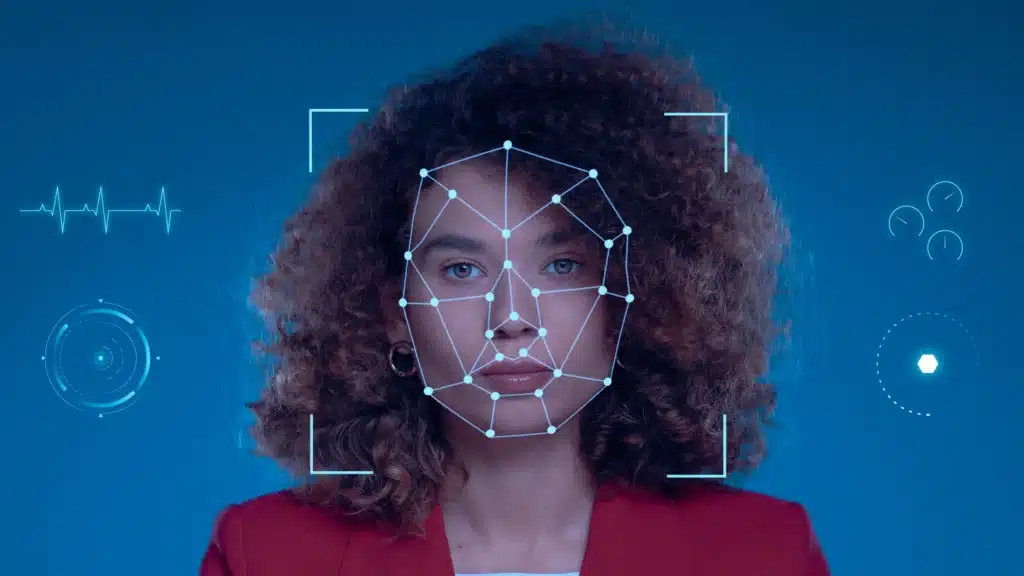
Facial recognition technology has advanced rapidly in recent years, largely due to improvements in artificial intelligence. AI enables systems to analyze complex facial patterns with greater precision, even in challenging real-world environments.
By combining deep learning, large training datasets, and advanced image processing, modern facial recognition systems achieve higher accuracy and stronger fraud detection capabilities. These improvements are transforming biometric authentication into a reliable solution for secure digital identity verification.
Understanding Facial Recognition Technology
Facial recognition is a biometric technology used to identify or verify individuals based on their facial features. A camera captures an image of a face, and specialized algorithms analyze unique characteristics such as eye position, facial symmetry, and the shape of key landmarks.
Earlier facial recognition systems relied on simple pattern matching techniques. These systems worked reasonably well in controlled environments but often struggled with real-world conditions such as lighting changes, different facial expressions, or camera angles.
Artificial intelligence has dramatically improved this process. AI models learn from millions of images and continuously refine their ability to recognize subtle facial differences. As a result, modern facial recognition systems can perform accurately in dynamic environments.
The Role of AI in Facial Recognition
Artificial intelligence plays a central role in improving facial recognition accuracy. AI allows systems to process large volumes of image data and identify patterns that traditional algorithms could not detect.
Deep Learning and Neural Networks
Deep learning models use layered neural networks to analyze facial images. Each layer examines different characteristics, from basic edges and shapes to complex facial structures.
Through continuous training, these neural networks become highly skilled at recognizing faces under different conditions. They can distinguish between individuals with very similar facial features and adapt to variations in lighting, pose, and expression.
Feature Mapping and Biometric Templates
AI-powered systems extract key facial landmarks and convert them into a digital representation known as a biometric template. This template is unique to each individual and can be compared with stored templates during authentication.
Many organizations integrate these capabilities into digital platforms using advanced facial recognition integration tools that allow developers to implement biometric authentication within mobile apps, onboarding systems, and digital identity platforms.
Improving Performance in Real-World Conditions
One of the biggest advantages of AI-powered facial recognition is its ability to perform reliably in real-world situations.
Lighting and Environmental Adaptation
AI algorithms can adjust for varying lighting conditions by enhancing image contrast and identifying key facial features even when images are partially shadowed.
Facial Expression and Aging
Human faces naturally change over time due to aging, makeup, facial hair, or expressions. AI models are trained to recognize long-term facial patterns, allowing systems to maintain accuracy despite these changes.
Pose and Angle Recognition
People rarely look directly at cameras in real-world environments. AI-powered systems can recognize faces even when the head is slightly turned or tilted.
These capabilities significantly improve recognition performance in everyday situations.
The Importance of High-Quality Training Data
AI models rely on large training datasets to improve recognition accuracy. By analyzing millions of images from diverse sources, AI systems learn to identify facial features across different demographics, lighting conditions, and environments.
Large datasets help reduce bias and ensure that recognition systems perform consistently across diverse populations. Research initiatives such as the Face Recognition Technology (FERET) database program have contributed significantly to improving biometric recognition systems by providing standardized datasets for testing and development.
These training resources allow AI models to continuously improve their performance and reliability.
AI-Powered Fraud Detection
Artificial intelligence not only improves recognition accuracy but also strengthens fraud detection capabilities.
Fraudsters sometimes attempt to bypass identity verification systems using stolen images, manipulated photos, or synthetic media. AI systems analyze visual patterns and detect inconsistencies that may indicate fraud.
Detecting Manipulated Images
AI can identify irregular pixel patterns, inconsistent lighting, or image compression artifacts that suggest photo manipulation.
Identifying Deepfakes
Advanced AI systems can also detect deepfake content by analyzing subtle facial movements and inconsistencies in facial textures.
These capabilities help platforms detect identity fraud before unauthorized access occurs.
AI in Biometric Authentication Systems
AI-powered facial recognition is now used across a wide range of industries.
Financial Services
Banks and fintech companies use biometric authentication to verify customer identities during remote onboarding and reduce fraud risks.
Mobile Device Security
Many smartphones use facial recognition as a secure method of unlocking devices and authorizing transactions.
Travel and Border Control
Airports and border agencies increasingly use facial recognition to speed up identity verification for travelers.
Digital Platforms
Online platforms use biometric authentication to reduce fake accounts and strengthen identity verification processes.
These applications demonstrate how AI is transforming facial recognition into a powerful tool for digital security.
Ethical and Security Considerations
As facial recognition becomes more widely used, organizations must also address ethical and privacy concerns. Responsible implementation requires transparent policies and secure handling of biometric data.
International cybersecurity organizations emphasize the importance of responsible biometric deployment. The ENISA guidance on biometric technologies and security highlights best practices for protecting biometric systems from misuse while maintaining user privacy.
Organizations implementing facial recognition must ensure secure storage, encryption, and clear user consent policies.
The Future of AI in Facial Recognition
Artificial intelligence will continue to drive innovation in biometric authentication. Future systems are expected to combine facial recognition with other biometric signals such as voice recognition, behavioral biometrics, and device intelligence.
These multimodal authentication systems will provide stronger security while maintaining convenient user experiences.
AI models will also continue to improve their ability to detect fraud, deepfakes, and other sophisticated identity attacks. As these technologies evolve, facial recognition will become an even more essential component of digital identity systems.
Conclusion
Artificial intelligence has dramatically improved the accuracy and reliability of facial recognition technology. Through deep learning, large training datasets, and advanced image analysis, AI enables systems to recognize faces more accurately and detect fraudulent activity more effectively.
As digital services continue to grow, AI-powered facial recognition will play a crucial role in strengthening identity verification and securing online platforms against evolving cybersecurity threats.
 Portuguese
 English
 Arabic
 French
 Spanish
 Deutsch
 Turkish
 Dutch
Dutch
 Italiano
 Russian
 Romaian
 Portuguese (Brazil)
 Greek
Greek