


What Is Cast Aluminum?
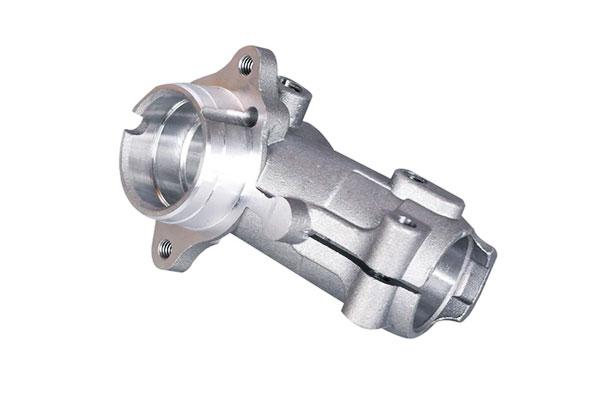
1. Basic definition
Cast aluminum refers to aluminum (or aluminum-based alloys) that have been shaped by pouring molten metal into a mold where it solidifies into the desired geometry.
Unlike wrought aluminum (rolled, forged, or extruded and then machined), cast aluminum is formed directly from the liquid state, which allows economical production of complex shapes, thin walls and near-net-shape parts.
2. Principal casting processes
- Sand casting (green-sand / resin sand): flexible, low tooling cost; good for large, one-off or low-volume parts.
- Permanent-mold (gravity) casting: metal molds reused; better surface finish and mechanical properties than sand, medium volumes.
- High-pressure die casting (HPDC): molten metal is injected into a steel die under high pressure; high volume, excellent dimensional accuracy and surface finish.
- Investment (lost-wax) casting: wax patterns form ceramic shells, then melted out; excellent detail and surface finish for small complex parts.
- Low-pressure and vacuum casting: used when reduced porosity or improved mechanical properties are required.
3. Common cast aluminum alloy families
- A380 / Al-Si-Cu family (general die-casting alloys): balanced castability, machinability and corrosion resistance — widely used in HPDC.
- ADC12 / high-Si die alloys: very good fluidity for thin walls and intricate details.
- A356 / A357 (Al-Si-Mg): heat-treatable, used when higher strength/fatigue performance is required.
- B390 / hypereutectic alloys: high Si for improved wear and thermal stability.
(Exact compositions and properties should reference accepted alloy standards.)
4. Advantages of cast aluminum
- Geometry freedom: complex internal passages, ribs, bosses and thin walls are achievable.
- Near-net shape: reduces machining, waste and assembly operations.
- Lightweight: strong specific strength for many structural parts.
- Good thermal conductivity: useful for housings and heat-dissipating components.
- Economic at volume: especially HPDC for large production runs.
5. Limitations and challenges
- Porosity and defects: hydrogen porosity, shrinkage cavities and oxide inclusions must be controlled.
- Lower ductility / toughness vs wrought in some alloys: depends on alloy and heat treatment.
- Dimensional stability: castings can require compensation for solidification shrinkage and distortion.
- Surface finish variability: depends on process (HPDC best, sand casting roughest).
- Tooling cost for high volumes: die steel and machining are expensive up front.
6. Typical applications
Automotive engine blocks, transmission housings, wheel and wheel components, pump and compressor housings, electrical enclosures, consumer electronics housings, aerospace structural or secondary components, heat sinks, art and architectural castings.
7. Closing note
Cast aluminum is a versatile route to produce lightweight, complex and cost-effective components across industries.
Success depends on selecting the appropriate alloy and casting method, controlling melt and process variables, and integrating casting design with downstream machining and inspection plans.
References:https://langhe-industry.com/what-is-cast-aluminum/
 Deutsch
 English
 Arabic
 French
 Spanish
 Portuguese
 Turkish
 Dutch
Dutch
 Italiano
 Russian
 Romaian
 Portuguese (Brazil)
 Greek
Greek