


How "Agentic AI" Capital is Creating a New Class of "Process Pros."
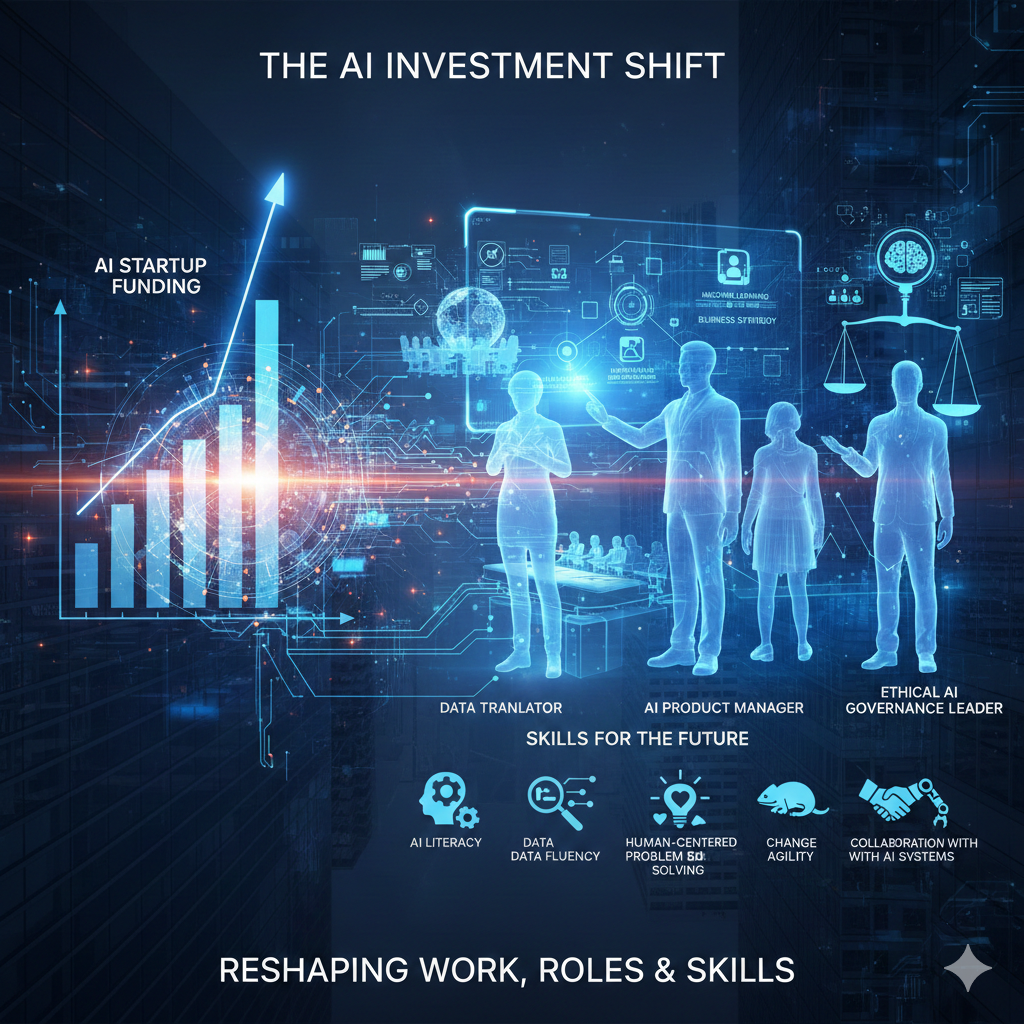
Artificial intelligence is no longer just a technology trend it’s an investment movement shaping the future of work. Billions of dollars flowing into AI startups, platforms, and enterprise solutions are doing more than accelerating innovation; they are reshaping how organizations think about talent, roles, and skills.
Historically, funding waves have always influenced workforce transformation. Cloud computing created demand for DevOps engineers. The SaaS boom elevated product managers and customer success roles. Now, AI investment is signaling the next major shift in how work is structured and what skills matter most.
Organizations that pay attention to where AI funding is going can anticipate what skills will become scarce, which roles will evolve, and how workforce planning must adapt.
The Investment Signals Behind the Shift
AI funding is increasingly concentrated in areas such as generative AI, automation platforms, applied AI in enterprise operations, and AI-driven analytics. Venture capital and enterprise spending are targeting solutions that improve productivity, decision-making, and scalability.
These funding patterns reveal three clear workforce implications:
· Automation of routine knowledge work
· Increased demand for interdisciplinary skills
This means the future workforce won’t just include more engineers—it will require professionals who can collaborate with AI, guide its use, and translate its outputs into business decisions.
Emerging Roles Shaped by AI Investment
As capital flows into AI ecosystems, new job categories are forming while existing ones evolve. Roles gaining traction include:
AI Product Managers
Professionals who understand both machine learning capabilities and business needs are becoming essential. They bridge the gap between technical teams and organizational strategy.
AI Operations Specialists
With organizations deploying AI tools at scale, specialists are needed to monitor performance, governance, and real-world impact.
Prompt Engineers and AI Trainers
While still evolving, these roles focus on refining AI interactions, improving outputs, and ensuring alignment with organizational goals.
Data Translators
Not pure data scientists, but professionals who convert analytics insights into operational strategies and decisions.
Ethical AI and Governance Leaders
As AI regulation and trust become priorities, companies are investing in roles that ensure responsible use and compliance.
These roles highlight a major shift: the future workforce isn’t defined by technical depth alone but by the ability to work alongside intelligent systems.
Skills That Will Define the Next Workforce Era
AI funding is accelerating demand for skills that blend technology, critical thinking, and adaptability. Key capabilities include:
AI Literacy Across Functions
Every department—from HR to finance to marketing—will require a baseline understanding of how AI works and where it fits into workflows.
Data Fluency
The ability to interpret data, question outputs, and use insights for decision-making will be a core skill, not a specialized one.
Human-Centered Problem Solving
As machines handle execution, humans will focus on creativity, strategy, empathy, and ethical considerations.
Change Agility
Organizations will prioritize employees who can adapt quickly as tools, workflows, and expectations evolve.
Collaboration with AI Systems
Knowing how to guide, refine, and supervise AI tools will become as essential as using software applications today.
Impact on HR and Talent Strategy
For HR leaders, AI funding trends signal an urgent need to rethink talent strategies. Traditional hiring based on static job descriptions will struggle to keep pace with rapidly evolving skill demands.
Forward-thinking organizations are shifting toward:
· Skills-based hiring instead of role-based hiring
· Internal reskilling and upskilling programs
· AI-integrated performance management
· Workforce planning aligned with technology roadmaps
Rather than asking “Who do we hire?” companies must ask, “What capabilities do we need to build continuously?”
The competition for AI-ready talent is already intense, but the bigger challenge lies in transforming existing employees into AI-enabled contributors.
HR tech is evolving fast. Are you keeping up? Read more at HR Technology Insights
To participate in our interviews, please write to our HRTech Media Room at info@intentamplify.com
 Italiano
 English
 Arabic
 French
 Spanish
 Portuguese
 Deutsch
 Turkish
 Dutch
Dutch
 Russian
 Romaian
 Portuguese (Brazil)
 Greek
Greek