


When to Use Split Jump Rings vs. Standard Jump Rings in Jewelry Design
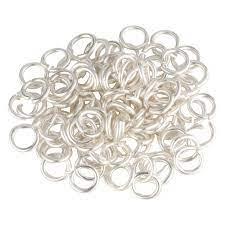
Jump rings are small but essential components in jewelry making. They connect clasps, pendants, charms, and chain segments, holding entire designs together. While they may look similar at first glance, split jump rings and standard (open) jump rings serve different purposes. Understanding when to use each type can significantly impact the durability, functionality, and professional finish of your jewelry.
This guide explains the differences between split and standard jump rings and helps you decide which is best for your design.
What Are Standard Jump Rings?
Standard jump rings are circular metal rings with a single cut that allows them to be opened and closed using pliers. They are widely used in jewelry-making because they are:
-
Easy to open and close
-
Available in various sizes and gauges
-
Suitable for quick assembly
-
Ideal for chainmaille weaving
These rings rely on proper closure technique for strength and security.
What Are Split Jump Rings?
Split jump rings resemble miniature key rings. Instead of a single cut, they consist of two overlapping coils. To attach components, you twist items onto the ring just like adding a key to a keychain.
Split rings provide:
-
Extra security
-
Reduced risk of accidental opening
-
Stronger hold without soldering
They are especially useful in high-stress areas of jewelry.
Key Differences Between Split and Standard Jump Rings
| Feature | Standard Jump Ring | Split Jump Ring |
|---|---|---|
| Opening Type | Single cut | Double coil |
| Security Level | Moderate (depends on closure) | High |
| Ease of Use | Very easy | Slightly more effort |
| Best For | Decorative weaving, light connections | Heavy charms, high-stress areas |
Understanding these differences helps you make informed design choices.
When to Use Standard Jump Rings
1. Chainmaille Jewelry
Standard jump rings are essential for chainmaille weaves such as Byzantine, European 4-in-1, and Persian patterns. Their single-cut design allows easy manipulation and precise pattern construction.
Split rings are not suitable for weaving due to their layered structure.
2. Lightweight Designs
For earrings, delicate necklaces, and fine chains, standard jump rings are usually sufficient. When properly closed—by twisting rather than pulling—they provide reliable connections.
3. Designs Requiring Flexibility
Standard jump rings are ideal when you need to frequently open or adjust components during the design process. They allow faster assembly and modifications.
4. Soldered Applications
In fine jewelry, standard jump rings are often soldered closed for added security. Once soldered, they become stronger than split rings and offer a seamless finish.
When to Use Split Jump Rings
1. Attaching Heavy Charms or Pendants
If your design includes heavier elements, such as gemstone pendants or multiple charms, split jump rings offer superior holding power. The double-coil design reduces the risk of the ring pulling apart under weight.
2. Bracelet Clasps
Bracelets experience more movement and tension than necklaces. Using split jump rings to attach clasps adds an extra layer of protection against accidental opening.
3. Keychains and Accessories
Split jump rings are ideal for non-fine jewelry applications like keychains, bag charms, and accessories that undergo daily wear and pulling.
4. No-Solder Projects
If you prefer not to solder your connections, split rings provide built-in security without additional tools or processes.
Strength Considerations
While split rings are generally more secure than unsoldered standard jump rings, thickness (gauge) matters just as much. A thick, properly closed standard jump ring can be stronger than a thin split ring.
For maximum strength:
-
Choose heavier gauge wire for load-bearing areas
-
Ensure proper closure technique
-
Consider soldering for fine jewelry
Design intent should guide your material choice.
Aesthetic Differences
Standard jump rings create a cleaner, smoother appearance because they consist of a single wire circle. They blend seamlessly into fine jewelry designs.
Split rings have visible overlapping coils, which may not suit delicate or high-end pieces. For luxury designs, standard soldered rings often provide a more refined finish.
Practical Tips for Choosing the Right Ring
-
Use standard jump rings for chainmaille and decorative designs.
-
Use split jump rings for strength in high-stress connections.
-
Match the ring material to your jewelry metal for consistency.
-
Select the appropriate gauge for durability.
-
Consider soldering standard rings for maximum security.
Balancing security and aesthetics ensures both beauty and reliability.
Conclusion
Choosing between split jump rings and standard jump rings depends on your design goals, stress points, and desired finish. Standard jump rings offer flexibility and are essential for chainmaille and fine jewelry, especially when soldered. Split jump rings provide added security in high-tension areas without requiring soldering.
By understanding when to use each type, jewelry designers can create pieces that are not only beautiful but also durable and dependable. Small components like jump rings may seem simple, but they play a crucial role in the overall strength and quality of your jewelry designs.
 Portuguese
 English
 Arabic
 French
 Spanish
 Deutsch
 Turkish
 Dutch
Dutch
 Italiano
 Russian
 Romaian
 Portuguese (Brazil)
 Greek
Greek