


How to Leverage Intent Data in Location Marketing
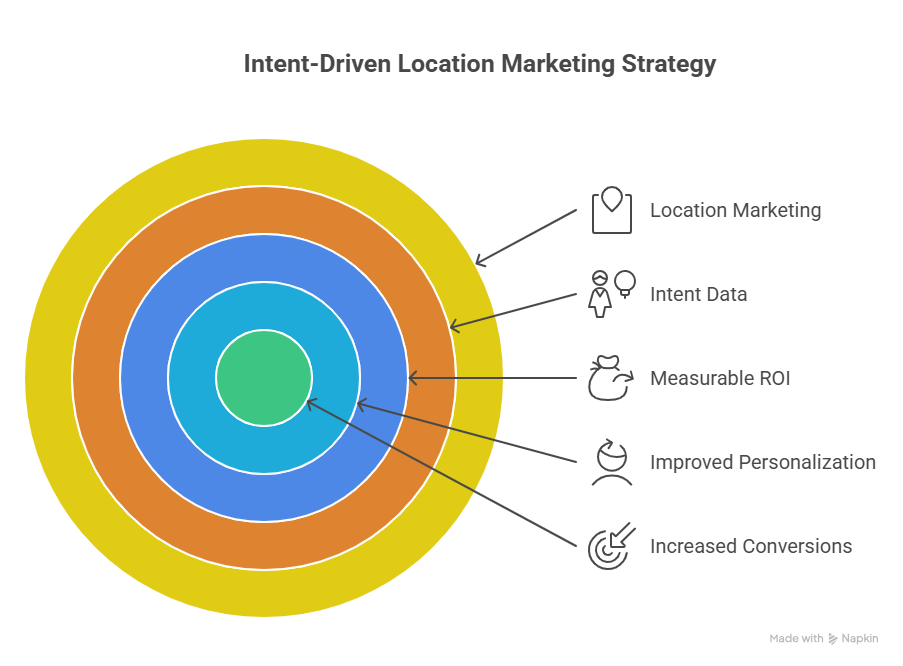
In today’s hyper-competitive landscape, understanding customer intent is no longer optional—it’s essential. Businesses that effectively use intent data can reach the right audience at the right place and time. How to Leverage Intent Data in Location Marketing is a crucial strategy for brands aiming to increase conversions, improve personalization, and drive measurable ROI.
Below, we explore how intent data can transform your location-based marketing strategy.
What Is Intent Data?
Intent data refers to behavioral signals that indicate a consumer’s likelihood to make a purchase or take a specific action.
These signals can include:
- Online searches for products or services
- Website visits and content engagement
- App usage patterns
- Social media interactions
- Geolocation and foot traffic data
When combined with location intelligence, intent data becomes a powerful tool for hyper-targeted marketing campaigns.
Why Intent Data Matters in Location Marketing
Location marketing focuses on engaging customers based on their physical presence or geographic behavior. When layered with intent data, it moves from broad targeting to predictive precision.
Instead of targeting all consumers in a specific zip code, brands can:
- Identify users actively researching similar products
- Detect frequent visits to competitor locations
- Target high-intent buyers near retail outlets
- Personalize offers based on local behavior patterns
This approach increases campaign efficiency and reduces wasted ad spend.
Key Ways to Leverage Intent Data in Location Marketing
1. Combine Foot Traffic Data with Online Behavior
Foot traffic analytics reveal where customers go, while intent data explains why.
For example, if users frequently visit electronics stores and also search for product reviews online, they demonstrate strong purchase intent. Marketers can then deliver targeted ads or mobile push notifications when these customers are near relevant store locations.
This creates a seamless bridge between digital signals and physical actions.
2. Target Competitor Audiences
Intent data helps identify users visiting competitor locations or researching competing brands.
Strategies include:
- Geofencing competitor stores
- Delivering time-sensitive offers
- Highlighting price comparisons
- Promoting unique selling points
By targeting high-intent audiences in real-time, brands can influence purchasing decisions before they’re finalized.
3. Personalize Messaging by Location Context
Intent data allows marketers to tailor messaging based on both interest and geography.
For example:
- Promote winter gear in colder regions
- Highlight local events or store openings
- Offer region-specific discounts
- Customize ad creatives to match local trends
Personalized campaigns increase engagement and improve conversion rates.
4. Optimize Media Spend with Predictive Insights
Not all locations generate equal revenue. Intent data helps identify high-performing areas and allocate budgets accordingly.
Marketers can:
- Analyze conversion rates by region
- Identify high-intent clusters
- Reduce spend in low-performing zones
- Focus on areas with consistent foot traffic growth
This data-driven approach ensures marketing budgets are used strategically.
5. Retarget High-Intent Visitors
Consumers rarely convert on their first interaction. Intent data supports retargeting strategies based on both digital engagement and physical visits.
For instance:
- Retarget users who visited a store but didn’t purchase
- Send follow-up offers after event attendance
- Re-engage customers who browsed products online near a physical store
This keeps your brand top-of-mind and encourages repeat engagement.
Tools and Technologies That Power Intent-Driven Location Marketing
Modern platforms integrate multiple data sources to deliver actionable insights:
- GPS and mobile location data
- Programmatic advertising platforms
- Customer Data Platforms (CDPs)
- AI-driven analytics tools
- CRM systems
By centralizing these technologies, brands can create unified customer profiles and deliver consistent omnichannel experiences.
Benefits of Leveraging Intent Data in Location Marketing
When executed effectively, this strategy delivers measurable results:
- Higher conversion rates
- Improved customer acquisition
- Reduced customer acquisition costs
- Increased foot traffic
- Stronger ROI on advertising campaigns
More importantly, it shifts marketing from reactive to predictive.
Challenges to Consider
While powerful, intent data strategies require careful implementation.
Key considerations include:
- Data privacy regulations (GDPR, CCPA)
- Accurate data integration
- Avoiding over-targeting or ad fatigue
- Ensuring transparency with consumers
Brands must balance personalization with ethical data usage to build long-term trust.
The Future of Intent-Driven Location Marketing
As AI and machine learning continue to evolve, intent data will become more precise and predictive. Real-time analytics, improved mobile tracking, and advanced attribution models will further enhance campaign performance.
Businesses that invest in intent-driven strategies today will be better positioned to capture high-value customers tomorrow.
Final Thoughts
Understanding How to Leverage Intent Data in Location Marketing is about combining behavioral insights with geographic intelligence. It allows brands to move beyond static demographic targeting and embrace dynamic, context-aware engagement.
By aligning digital intent signals with real-world location behavior, marketers can deliver timely, relevant experiences that drive both online engagement and offline conversions.
In an era where consumers expect personalization and immediacy, intent-driven location marketing is no longer a competitive advantage—it’s a necessity.
Hashtags
#LocationMarketing #IntentData #DigitalMarketingStrategy #MarTech #CustomerEngagement
 Turkish
 English
 Arabic
 French
 Spanish
 Portuguese
 Deutsch
 Dutch
Dutch
 Italiano
 Russian
 Romaian
 Portuguese (Brazil)
 Greek
Greek