


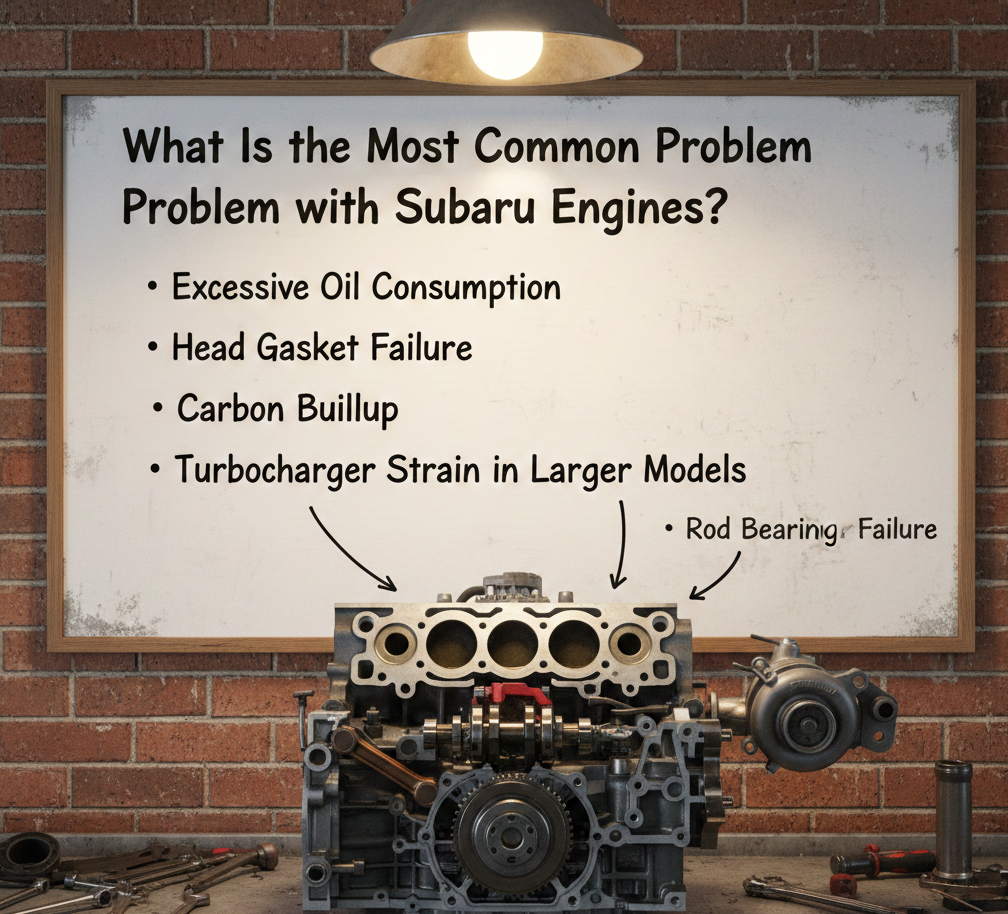
Subaru vehicles are widely known for durability and all-wheel-drive performance, but like any manufacturer, they have experienced recurring mechanical concerns. Over the years, owners and technicians have identified patterns in certain Subaru engines , particularly involving oil consumption and gasket-related failures. Understanding these problems individually—and their corresponding solutions—can help you prevent expensive repairs and extend engine life.
Below, we break down the most common issues one by one, followed directly by their solutions.
Common Problems in Subaru Engines
1. Excessive Oil Consumption
One of the most frequently reported concerns in subaru engines is excessive oil consumption. Drivers often notice they need to add oil between scheduled oil changes.
Why It Happens:
-
Worn or poorly seated piston rings
-
Oil slipping past rings into the combustion chamber
-
PCV system malfunction
-
High mileage internal wear
If ignored, low oil levels can cause bearing damage or complete engine failure.
2. Head Gasket Failure
Older Subaru models, especially those equipped with EJ-series engines, became known for head gasket leaks.
Warning Signs:
-
Overheating
-
White exhaust smoke
-
Coolant mixing with oil
-
External oil or coolant leaks
Because of the boxer layout, stress distribution across the gasket can differ from inline engines, which contributed to earlier reliability concerns in certain Subaru engines .
3. Rod Bearing Failure (Engine Knock)
Oil starvation or prolonged low oil levels can damage rod bearings. This usually presents as a knocking sound that increases with RPM.
Causes:
-
Ignoring oil consumption
-
Extended oil change intervals
-
Contaminated oil
If not addressed quickly, this issue can destroy internal components.
4. Carbon Buildup (Direct Injection Models)
Modern direct-injection Subaru engines may develop carbon deposits on intake valves over time.
Symptoms:
-
Rough idle
-
Reduced fuel efficiency
-
Hesitation during acceleration
While less catastrophic than other problems, carbon construction can affect performance.
5. Turbocharger Strain in Larger Models
In vehicles like those equipped with Subaru Ascent Engines , turbocharged systems add power but also increase thermal stress. Early production models had isolated cases of engine failure related to manufacturing defects, though improvements were implemented.
Additionally, drivetrain components such as the Subaru Transmission play a role in overall engine health. If the transmission slips or overheats, it may indirectly stress the engine.
Solutions to Subaru Engine Problems
Solution 1: Monitor and Manage Oil Consumption
For oil-related concerns:
-
Check oil every 1,000 miles
-
Use manufacturer-recommended oil grade
-
Replace PCV valve periodically
-
Avoid extended oil intervals
Consistent monitoring prevents severe damage in Subaru engines affected by consumption issues.
Solution 2: Upgrade Head Gaskets
If gasket failure occurs:
-
Use updated multi-layer steel gaskets
-
Resurface cylinder heads properly
-
Replace timing components during repair
Modern gasket materials have significantly improved durability.
Solution 3: Address Bearing Noise Immediately
If you hear knocking:
-
Stop driving immediately
-
Perform oil pressure test
-
Inspect internal components
Early detection may allow repair before total failure. If severe damage exists, many owners explore replacement options instead of rebuilding.
Solution 4: Perform Carbon Cleaning
To resolve carbon buildup:
-
Conduct walnut blasting service
-
Use quality fuel
-
Drive at highway speeds periodically to reduce deposits
Routine maintenance reduces long-term buildup risks.
Solution 5: Consider Replacement When Necessary
If damage is extensive—such as cracked blocks, spun bearings, or severe overheating—replacement can be more cost-effective than rebuilding.
Many drivers turn to inspected used engines as a practical alternative to expensive new assemblies. Properly tested used engines can restore vehicle performance at a lower cost.
Working with reliable suppliers like moon auto parts ensures you receive quality-tested components with warranty support. When engine failure occurs in high-mileage vehicles, moon auto parts provides cost-conscious solutions that help extend vehicle life.
Choosing trusted vendors such as moon auto parts reduces financial risk and ensures proper documentation and testing standards.
Frequently Asked Questions (FAQ)
1. Are all Subaru engines prone to oil consumption?
No. While certain model years experienced higher-than-average oil usage, many modern Subaru engines perform reliably with proper maintenance.
2. How long do Subaru engines typically last?
With consistent care, many exceed 200,000 miles. Routine oil checks and cooling system maintenance are critical factors.
3. Is head gasket failure still common in newer models?
Newer engines have improved gasket materials and design. Failures are far less common than in early 2000s models.
4. Is rebuilding better than replacing?
It depends on damage severity. In cases of extensive internal wear, many owners choose used engines because they are often more affordable than a full rebuild.
5. Does transmission maintenance affect engine health?
Yes. A poorly maintained transmission can add stress to the engine. Keeping the drivetrain serviced improves overall reliability.
Final Thoughts
The most common issue historically associated with Subaru vehicles has been excessive oil consumption, particularly in certain generations. Head gasket failures and bearing damage also contributed to reliability concerns in older models. However, improvements in materials and engineering have made modern Subaru engines significantly more durable.
The key to longevity lies in prevention—monitoring oil levels, maintaining cooling systems, and addressing warning signs early. When severe damage occurs, evaluating cost-effective replacement options can help you make a financially smart decision.
With proactive maintenance and informed repair choices, Subaru vehicles can remain dependable for many years and high mileage.

 English
 Arabic
 French
 Portuguese
 Deutsch
 Turkish
 Dutch
Dutch
 Italiano
 Russian
 Romaian
 Portuguese (Brazil)
 Greek
Greek