


Enhancing Uniformity in Volumetric Ratio Mixer
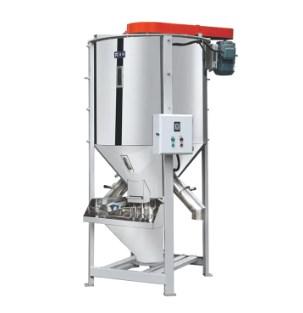
Introduction to Mixing Uniformity
Mixing uniformity is a crucial factor in many industrial processes, including plastics, food production, and chemical manufacturing. The Volumetric Ratio Mixer is designed to combine multiple components in precise proportions, ensuring consistent quality in the final product. However, achieving high uniformity is not solely dependent on machine design; it requires careful attention to operating parameters, material characteristics, and process optimization. Understanding these elements helps operators maximize performance and reduce material waste.
Importance of Material Consistency
One of the primary factors affecting mixing uniformity is the physical and chemical properties of the input materials. Differences in particle size, density, moisture content, or viscosity can cause segregation and uneven distribution within the mixer. Ensuring that materials are pre-processed to consistent sizes and conditions can significantly improve blend quality. For liquid components, maintaining similar viscosities and temperatures enhances homogeneity, allowing the Volumetric Ratio Mixer to distribute each component evenly throughout the batch.
Optimizing Mixing Time and Speed
The time and speed of mixing play a critical role in achieving uniform blends. If the mixing time is too short, components may not fully integrate, leaving pockets of uneven composition. Conversely, excessive mixing can cause material degradation or over-shearing, particularly for delicate powders or emulsions. Adjusting the rotation speed and processing duration based on the properties of the components ensures that the mixer achieves a thorough blend without compromising material integrity. Many modern volumetric mixers offer variable speed controls to fine-tune these parameters.
Proper Calibration and Settings
Calibration is essential for maintaining accurate volumetric ratios and uniform distribution. Periodically checking and adjusting the feed rates, hopper settings, and blade alignment ensures that each component is introduced in the correct proportion and distributed evenly. A well-calibrated Volumetric Ratio Mixer reduces inconsistencies between batches and guarantees repeatable results. Operators should also verify that the machine’s internal mixing chamber is free of residue or buildup, as uneven surfaces can disrupt the flow and compromise uniformity.
Advanced Mixing Techniques
In some cases, incorporating advanced mixing techniques can further enhance uniformity. Features such as multiple mixing zones, counter-rotating blades, or segmented chambers allow for more thorough integration of materials. Additionally, pre-mixing certain components before introducing them into the main mixer can reduce segregation and improve overall blend quality. Using these techniques strategically ensures that even challenging combinations of materials achieve consistent results.
Monitoring and Quality Control
To maintain high mixing uniformity, continuous monitoring and quality control are necessary. Sampling the output at different intervals allows operators to detect inconsistencies early and make adjustments promptly. Some Volumetric Ratio Mixers are equipped with sensors and automated feedback systems that monitor flow rates and mixing efficiency in real-time. This technology minimizes human error and ensures that the final product consistently meets quality standards.
Improving the mixing uniformity of a Volumetric Ratio Mixer involves a combination of material preparation, optimized machine settings, proper calibration, and strategic use of advanced mixing techniques. Attention to particle size, viscosity, and moisture content, along with careful control of mixing time and speed, ensures thorough blending. Implementing monitoring systems and quality control practices further enhances consistency across batches. By addressing these factors, manufacturers can maximize efficiency, reduce waste, and achieve high-quality, uniform products.
Fast, even mixing, low energy consumption, and high productivity.
Small footprint and is equipped with castors for movability.
The planet-cycloid reducer is durable and low-noise.
The safety switch ensures machines operate only when the lid is closed.
The lid and barrel bottom are formed for precise alignment and durability.
The timer can be set within 0-30 minutes.
 French
 English
 Arabic
 Spanish
 Portuguese
 Deutsch
 Turkish
 Dutch
Dutch
 Italiano
 Russian
 Romaian
 Portuguese (Brazil)
 Greek
Greek