


Solar Street Lights vs Conventional Street Lights: Expert Comparison
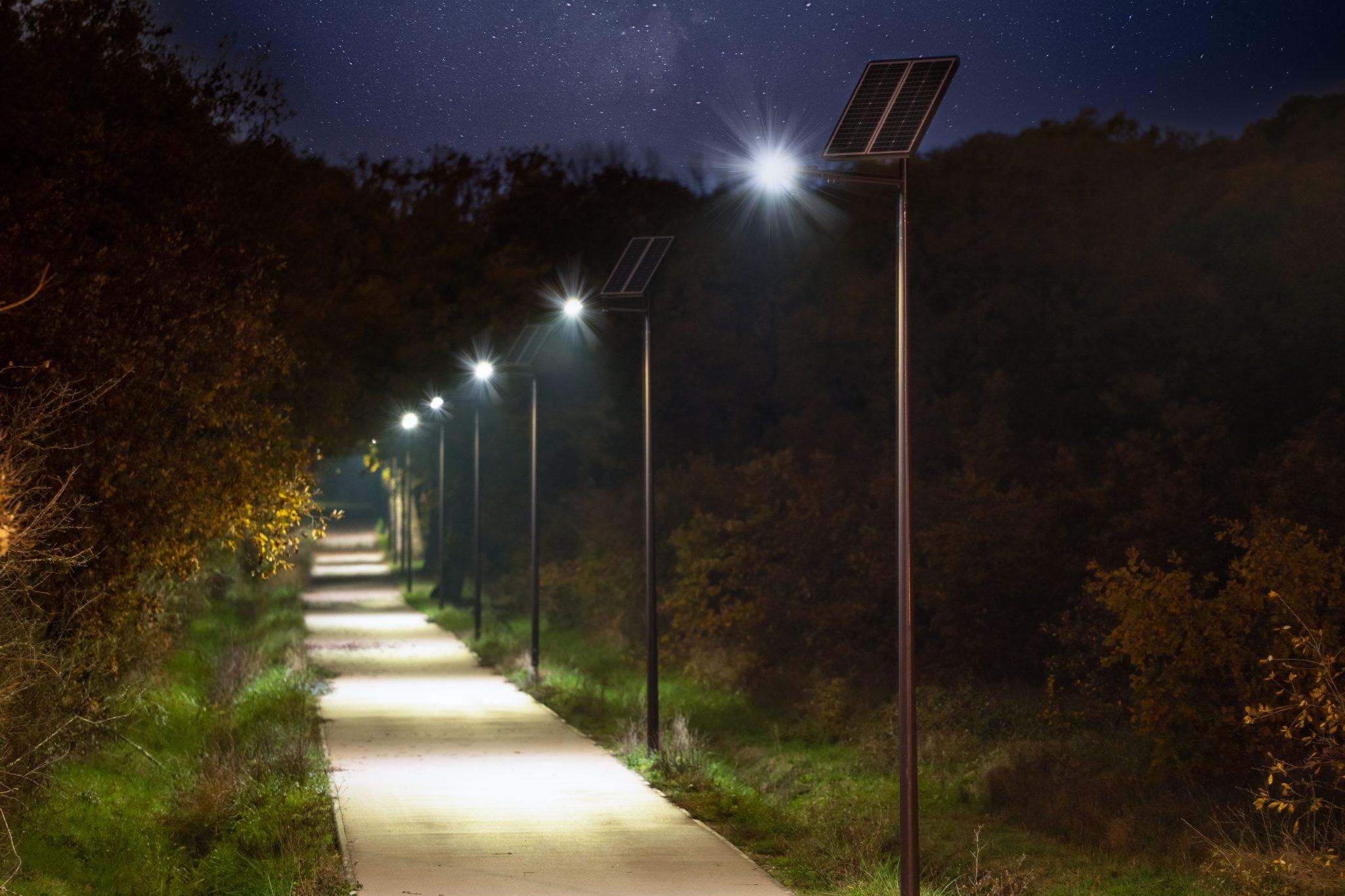
Cities are under pressure to cut energy costs, reduce emissions, and improve safety. In this context, solar street lights in dubai are no longer a niche option; they are a serious alternative to conventional grid‑powered lighting for roads, communities, and industrial sites.
However, switching an entire development or municipality from traditional poles to solar needs clear, practical comparison—not just marketing claims. This guide breaks down how both systems perform on cost, reliability, lighting quality, safety, and sustainability, so decision‑makers can choose confidently.
Yanvi Solar often supports clients who are evaluating new projects or considering retrofit programmes, and the same questions come up again and again. Let’s tackle them systematically.
How Each Technology Works
Solar street lights in Dubai – off‑grid and self‑contained
-
Each pole has its own PV panel, battery, charge controller, and LED luminaire.
-
The panel charges the battery during the day; at night, the stored energy powers the LED.
-
Smart controllers manage charging, discharging, dimming, and (optionally) motion sensing.
Key implication: No grid connection, trenching, or monthly energy bill for the light points themselves.
Conventional street lights – grid‑tied infrastructure
-
Poles are connected to the electrical grid via underground or overhead cables.
-
Power typically comes from fossil‑fuel‑based generation, unless the utility mix is heavily renewable.
-
Lamps may be high‑pressure sodium (HPS), metal halide, or increasingly LED on existing networks.
Key implication: Lower upfront fixture cost, but ongoing energy consumption and dependence on grid reliability.
Cost: CAPEX vs OPEX Over the Lifecycle
Upfront costs
-
Solar poles: Higher initial cost per point because they include PV panel, battery, controller, and a dedicated pole engineered for the solar hardware.
-
Conventional poles: Lower fixture cost, but new networks require trenching, cabling, distribution boards, and sometimes transformers—significantly increasing project CAPEX for greenfield areas.
For built‑up Dubai communities where civil works are disruptive and expensive, solar can often match or beat conventional total installed cost when trenching and grid extension are fully priced.
Operating and maintenance costs
-
Solar: Zero grid energy bill and minimal maintenance (periodic cleaning, visual checks, and eventual battery replacement).
-
Conventional: Ongoing electricity charges, lamp replacements (especially for HPS/metal halide), and maintenance on cables, switchgear, and controls.
Multiple analyses show that, over 10–20 years, the higher upfront cost of solar lights is typically offset by much lower operating costs, especially where electricity tariffs and labour costs are high.
Yanvi Solar usually models both CAPEX and OPEX over the full life of a scheme, not just first‑year budgets.
Reliability and Resilience
Grid‑dependent vs grid‑independent
-
Conventional lights go dark in power cuts, network faults, or if feeder circuits trip.
-
Solar systems operate independently of the grid, so they stay on even during outages or load‑shedding.
For critical roads, community security, and industrial sites in Dubai, this resilience is a major safety and operational advantage.
Failure modes
-
Traditional networks can suffer from “interdisciplinary weaknesses”—a single cable fault can take out many consecutive lights.
-
Solar poles are independent; a failure affects only one unit, simplifying troubleshooting.
Modern solar designs with LiFePO₄ batteries and quality LEDs routinely achieve 5+ years between major interventions, with LED lifetimes often exceeding 50,000–100,000 operating hours.
Lighting Quality and Technology
Light sources
-
Solar street lights almost always use LEDs today, offering high efficacy, good colour rendering, and long life.
-
Conventional networks may still use HPS or metal halide, producing yellowish light with lower colour rendering, although LED retrofits are growing.
Better colour rendering (CRI) from LED improves night‑time visibility and CCTV performance, important for both safety and security.
Optics, distribution, and controls
High‑quality solar street lights in dubai now offer:
-
Purpose‑designed optics for roads, pathways, and car parks.
-
Adaptive dimming profiles (e.g., full brightness during peak use, reduced levels late at night).
-
Motion sensing in low‑traffic areas, boosting brightness only when needed.
Conventional systems can also integrate smart controls, but doing so often requires more complex networking and control infrastructure.
For many Dubai communities, solar poles with built‑in smart control provide a neat package without separate control networks.
Safety, Civil Works, and Installation
Installation complexity
-
Solar: No live grid work, no underground cabling, limited civil scope (pole foundations only). Installation is simpler and faster, with lower HSE risk on site.
-
Conventional: Requires trenching, cable laying, junction boxes, and grid connections, involving more labour, machinery, permits, and safety precautions.
In constrained or already landscaped areas—like established communities, parks, or waterfronts—avoiding trenching and hard‑landscape reinstatement is a major advantage.
Electrical safety
-
Solar poles operate on low‑voltage DC within each unit; there are no long live AC cables underground, reducing electrocution risk and cable‑related accidents.
-
Conventional systems are tied to high‑voltage AC mains; damaged cables and faulty terminations can pose safety hazards if not properly managed.
For municipalities worried about vandalism or accidental third‑party damage, independent solar poles can simplify risk management.
Environmental Impact and ESG Objectives
Emissions and resource use
-
Solar: Runs on renewable energy, with effectively zero operational greenhouse gas emissions and no reliance on fossil‑fuel‑generated electricity.
-
Conventional: Consumes grid electricity, which globally is still largely produced from non‑renewable sources, generating CO₂ and other pollutants.
Some analyses suggest that converting large numbers of conventional lights to solar could reduce electricity consumption and CO₂ emissions dramatically at the global level.
Light sources and materials
-
HPS and metal halide lamps contain mercury and other hazardous materials that must be handled carefully at end of life.
-
LED‑based solar systems avoid these lamp chemistries and are increasingly designed with recyclable components—supporting circular‑economy goals.
For developers and authorities in Dubai with sustainability targets or green‑building ratings, solar lighting aligns well with ESG reporting and certification frameworks.
Where Conventional Street Lights Still Make Sense
Despite the advantages of solar street lights in dubai, grid‑powered systems still have appropriate use cases:
-
Heavily shaded avenues or under flyovers, where PV exposure is very limited.
-
Dense urban corridors with high mounting heights and very high illuminance requirements, where extremely high lumen packages are needed and pole‑top solar surface is limited.
-
Existing, robust grid infrastructure where the priority is quick LED retrofit of heads, not re‑engineering poles.
In such locations, upgrading conventional lamps to LED and adding smart controls may be a more pragmatic first step, with solar deployed in suitable adjacent areas.
Yanvi Solar can help clients evaluate hybrid strategies: using solar on open roads, new communities, and car parks, while retaining or upgrading grid‑fed lighting in difficult zones.
Practical Considerations for Dubai Projects
When engaging with solar lights suppliers in dubai, keep these practical points in mind:
-
Local climate design: Systems must handle high ambient temperatures, dust, and occasional sandstorms without premature failure.
-
Autonomy: Batteries should provide at least 2–3 nights of backup to handle cloudy/hazy conditions, especially in critical applications.
-
Maintenance access: Design should allow safe cleaning of panels and straightforward replacement of batteries when needed.
-
Standards and compliance: Ensure products meet relevant lighting, electrical, and structural standards, and are supported by local warranties.
Yanvi Solar typically pairs product selection with layout design, lux level checks, and lifecycle cost modelling, rather than just selling individual poles.
What About Smaller Projects That Buy Solar Outdoor Lights Online?
For small gardens, pathways, villa entrances, or temporary use, many clients buy solar outdoor lights online as a quick solution.
These can work well when:
-
Used for low‑criticality decorative or wayfinding lighting.
-
Purchased from reputable brands with clear specs (lumens, battery capacity, IP rating).
-
Deployed in locations with good solar exposure and realistic expectations.
Limitations:
-
Online products are often not engineered for road‑class lighting or professional community standards.
-
Specs can be optimistic, and after‑sales support may be limited.
For anything beyond small‑scale decorative use—especially roads, car parks, or shared community spaces—working with established solar lights suppliers in dubai like Yanvi Solar is safer than relying solely on online purchases.
E‑E‑A‑T: Why Work with a Specialist Partner
From an E‑E‑A‑T perspective (Experience, Expertise, Authoritativeness, Trustworthiness), an expert partner adds:
-
Experience: Real‑world Dubai and GCC projects in roads, communities, and industrial facilities using solar lighting.
-
Expertise: Ability to size PV, battery, optics, and pole specifications to meet required lux levels and operating hours.
-
Authority: Documented case studies and references; alignment with regional regulations and standards.
-
Trust: Clear warranties, honest performance expectations, and support throughout design, installation, and O&M.
Yanvi Solar can also internally link street‑lighting projects to complementary offerings such as rooftop solar for common areas or solar car‑shade structures, building an integrated solar strategy rather than isolated purchases.
Conclusion
For many new roads, communities, and industrial sites, solar street lights in dubai now outperform conventional systems on lifecycle cost, resilience, environmental impact, and ease of installation—especially where grid extension is expensive or disruptive.
Conventional grid‑powered lights still have a role in shaded or highly constrained corridors and where robust electrical infrastructure already exists, particularly when upgraded to LED. But the trend is clear: with modern LEDs, batteries, and controls, solar is rapidly becoming the default choice for new public and private lighting schemes.
By working with experienced solar lights suppliers in dubai such as Yanvi Solar, and resisting the temptation to just buy solar outdoor lights online for professional applications, developers and authorities can deliver safer, greener, and more economical lighting that meets today’s performance and sustainability expectations.
 Italiano
 English
 Arabic
 French
 Spanish
 Portuguese
 Deutsch
 Turkish
 Dutch
Dutch
 Russian
 Romaian
 Portuguese (Brazil)
 Greek
Greek