


How to Enhance Clinical Workflows with Smart Systems
Healthcare organizations are under constant pressure to deliver faster, safer, and more efficient care. Manual processes, fragmented data, and outdated technologies often slow down clinical operations. Understanding how to enhance clinical workflows with smart systems is becoming essential for hospitals and care providers aiming to improve outcomes and reduce operational strain.
What Are Smart Systems in Healthcare?
Smart systems combine digital tools such as artificial intelligence, automation, Internet of Things (IoT), and data analytics to support clinical decision-making and operational efficiency. These systems integrate seamlessly with existing healthcare infrastructure to enable real-time data access and intelligent task management.
Key Ways Smart Systems Enhance Clinical Workflows
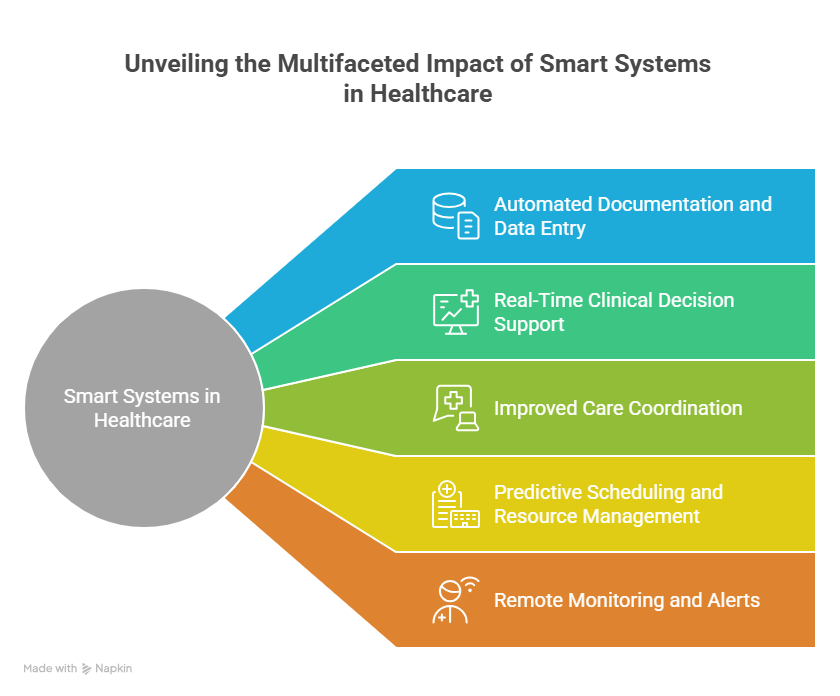
1. Automated Documentation and Data Entry
Smart systems reduce the administrative burden on clinicians by automating data capture from medical devices and electronic health records (EHRs). This allows healthcare professionals to spend more time with patients rather than on paperwork.
2. Real-Time Clinical Decision Support
AI-driven decision support tools analyze patient data instantly, helping clinicians identify risks, suggest treatment options, and reduce diagnostic errors during critical moments.
3. Improved Care Coordination
Integrated platforms enable smooth communication between departments, ensuring that lab results, imaging data, and patient updates are shared instantly. This minimizes delays and improves continuity of care.
4. Predictive Scheduling and Resource Management
Smart systems use data analytics to predict patient flow, optimize staff schedules, and manage bed availability. This reduces overcrowding and enhances patient experiences.
5. Remote Monitoring and Alerts
Connected devices continuously monitor patient vitals and send real-time alerts to care teams. Early detection of abnormalities helps prevent complications and reduces hospital readmissions.
Benefits for Healthcare Providers
Implementing smart systems leads to measurable improvements across clinical environments.
Key benefits include:
- Reduced clinician burnout
- Faster clinical decision-making
- Enhanced patient safety
- Lower operational costs
- Improved regulatory compliance
Challenges to Consider
While smart systems offer significant advantages, organizations must address challenges such as data security, system interoperability, and staff training. A well-planned implementation strategy ensures smoother adoption and long-term success.
Conclusion
Learning how to enhance clinical workflows with smart systems is crucial for modern healthcare delivery. By automating tasks, improving communication, and supporting smarter decisions, these technologies empower clinicians to deliver high-quality, patient-centered care in an increasingly complex healthcare landscape.
Hashtags
#SmartHealthcare
#ClinicalWorkflows
#HealthTechInnovation
#DigitalHealth
#HealthcareSystems
 Turkish
 English
 Arabic
 French
 Spanish
 Portuguese
 Deutsch
 Dutch
Dutch
 Italiano
 Russian
 Romaian
 Portuguese (Brazil)
 Greek
Greek