


Key Factors to Consider for Selecting a Microplate Reader
Microplate readers play a crucial role in colorimetric determination, particularly in applications like ELISA. The selection of an appropriate microplate reader involves considering various factors that impact its performance. Here, we explore key considerations in choosing a microplate reader for optimal colorimetric determination.
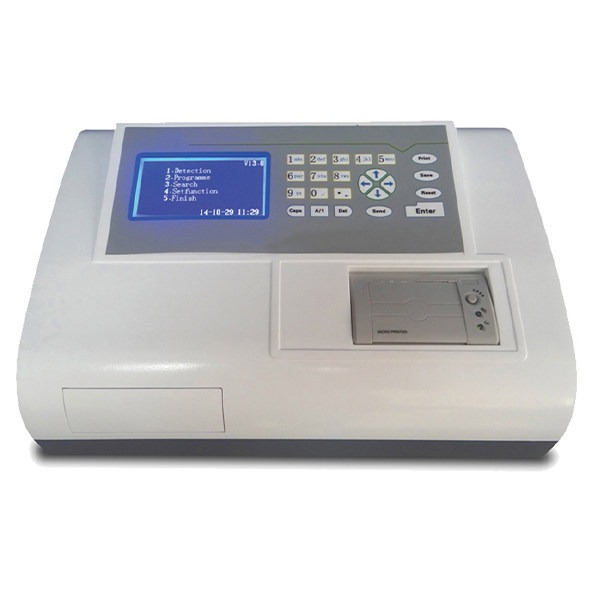
1. Determination of Wavelength
The determination wavelength of a microplate reader is pivotal for accurate colorimetric assessment. Typically falling between 400 and 750 nm, with an extension up to 800 nm, this range caters to the color determination needs of ELISA. Enzymes like horseradish peroxidase (HRP) and substrates such as tetramethylbenzidine (TMB) contribute to color development. Dual-wavelength colorimetry, involving 450 nm or 492 nm for color development and a less sensitive wavelength like 630 nm, enhances specificity in absorbance readings.
2. Measured Absorbance Range
The absorbance measurement range of a microplate reader is critical, with a general range of 0 to 2.5 covering ELISA requirements. Advancements now allow for ranges exceeding 3.5, ensuring improved precision and linearity in absorbance readings.
3. Detection Speed
The detection speed of a microplate reader directly impacts the precision of colorimetric determination. Faster detection minimizes variations in absorbance among micropores due to different determination times, enhancing overall accuracy.
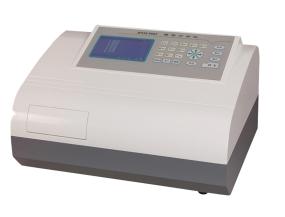
4. Shake Plate Function
The shake plate function is essential for uniform color distribution in ELISA plate holes before determination. This feature eliminates the need for manual shaking after the color reaction, streamlining the process and ensuring consistency.
5. Incubation Function
Microplate readers offer an incubation function, allowing precise control of internal temperature during ELISA measurements. This feature negates the need for an external thermostat, offering convenience based on laboratory conditions and requirements.
6. Software Function
The software function is a critical aspect, providing statistical analysis and reporting for ELISA qualitative determination. In situations where hardware differences are minimal, software becomes a key indicator of microplate reader quality. Robust software functions greatly assist users in practical work, with features like statistical calculation of positive judgment values, determination of the "cut-off" and "gray area," and curve regression equation calculations enhancing the practical value of the microplate reader.
In conclusion, selecting a microplate reader involves a comprehensive evaluation of factors such as determination wavelength, absorbance range, detection speed, shake plate function, incubation function, and software capabilities. These considerations collectively contribute to the effectiveness and reliability of colorimetric determination in various laboratory applications.
 Spanish
 English
 Arabic
 French
 Portuguese
 Deutsch
 Turkish
 Dutch
Dutch
 Italiano
 Russian
 Romaian
 Portuguese (Brazil)
 Greek
Greek