


How Does Anne Sexton Balance Confession and Form?
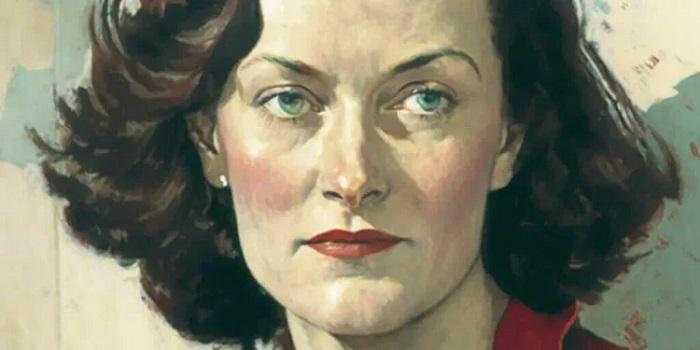
Anne Sexton stands as one of the most influential and controversial figures of twentieth-century American poetry. Frequently associated with the confessional movement, her work is often remembered for its frank engagement with mental illness, sexuality, family conflict, and mortality. Yet to read Anne Sexton solely as a poet of emotional exposure is to overlook the extraordinary discipline, technical awareness, and formal intelligence that structure her poems. What makes her work enduring is not confession alone, but the careful balance she achieves between deeply personal material and rigorous poetic form. Sexton’s poetry demonstrates how emotional vulnerability can coexist with, and even be strengthened by, formal constraint.
Confessional Poetry and Its Expectations
The Rise of the Confessional Mode
Confessional poetry emerged in the mid-twentieth century as a reaction against impersonal modernist aesthetics. Poets such as Robert Lowell, Sylvia Plath, and Anne Sexton began writing poems that drew explicitly from their own lives, incorporating autobiographical detail once considered inappropriate for serious poetry. Mental illness, trauma, sexuality, and family dynamics became central subjects rather than taboo ones.
Within this context, Sexton’s work appeared radical. Her poems spoke openly about psychiatric hospitalization, suicide attempts, motherhood, and female desire. Readers often experienced her poetry as shocking in its intimacy. However, this emphasis on content sometimes obscured the equally important question of form. Sexton did not abandon structure in favor of confession; instead, she used form as a means of containing, shaping, and intensifying personal experience.
The Misconception of Rawness
A common misconception about Anne Sexton’s poetry is that it represents unfiltered emotional outpouring. While her subject matter is intensely personal, her poems are carefully constructed artifacts. Meter, rhyme, stanza patterns, and metaphor are deployed with deliberation. This balance between exposure and control is essential to understanding her artistry.
Confession in Sexton’s work is not synonymous with chaos. It is staged, framed, and mediated through poetic techniques that allow the personal to achieve universality. The poem becomes a crafted space where emotion is both revealed and regulated.
The Role of Formal Structure
Traditional Forms as Emotional Containers
Anne Sexton frequently employed traditional poetic forms, including sonnets, ballad stanzas, and regular rhyme schemes. These forms act as containers for volatile subject matter. By placing intense emotion within predictable structures, Sexton creates a productive tension between what is said and how it is said.
This tension has a calming and clarifying effect. The reader senses that the speaker is not overwhelmed by emotion but actively shaping it. Formal structure provides a sense of order that counterbalances the instability often depicted in the poems. In this way, form becomes a tool of survival as well as artistry.
Meter and Musical Control
Sexton’s attention to meter and sound further demonstrates her commitment to craft. Even when her language appears conversational or direct, it is often governed by rhythmic patterns that guide the reader’s experience. The musicality of her lines tempers the intensity of her themes, allowing difficult material to be absorbed gradually rather than explosively.
This musical control also reinforces the authority of the poetic voice. The speaker may confess vulnerability, but the poem itself remains confident in its construction. The balance between emotional fragility and technical strength deepens the reader’s trust.
Confession as Performance, Not Exposure
The Crafted Poetic Persona
Although Anne Sexton draws heavily from her own life, the speaker in her poems is not identical to the biographical author. Sexton creates a poetic persona that selects, shapes, and sometimes exaggerates aspects of personal experience for artistic effect. This distinction is crucial to understanding how confession functions in her work.
Confession becomes a form of performance rather than mere disclosure. The poem is not a diary entry but a staged event, complete with tone, pacing, and audience awareness. This performative element allows Sexton to maintain distance from her material even as she explores it intimately.
Addressing the Reader
Many of Sexton’s poems adopt a direct, conversational tone that seems to speak personally to the reader. This intimacy is carefully managed. The reader is drawn into the speaker’s emotional world, but the poem’s formal boundaries prevent emotional excess. The result is a controlled intimacy that feels immediate without becoming overwhelming.
This balance ensures that confession serves communication rather than catharsis alone. The poem reaches outward, transforming private pain into shared experience.
Imagery and Metaphor as Mediating Tools
Symbolic Distance from Personal Trauma
Anne Sexton frequently uses vivid imagery and extended metaphor to create distance from painful subject matter. Personal experiences are translated into symbolic language, allowing the poet to approach trauma indirectly. This transformation is a key aspect of her formal control.
For example, bodily experiences may be rendered through surreal or mythic imagery, shifting the poem away from literal autobiography. This symbolic framing allows readers to engage with the emotional truth of the poem without being confined to specific biographical details.
Fairy Tales and Myth as Formal Frameworks
In later works, Sexton famously reimagined fairy tales and myths, particularly in collections such as Transformations. These retellings provide a ready-made structure within which confessional themes can be explored. The familiar narrative frameworks act as stabilizing forms, containing contemporary psychological struggles within traditional story shapes.
This strategy highlights Sexton’s understanding of form as flexible rather than restrictive. Myth and fairy tale become vessels for modern confession, demonstrating her ability to merge ancient structures with personal voice.
Gender, Voice, and Poetic Authority
Challenging Expectations of Female Expression
Anne Sexton’s balancing act between confession and form also carries a gendered dimension. At a time when women’s emotional expression was often dismissed as excessive or uncontrolled, Sexton asserted the legitimacy of female experience through disciplined craft. Her formal control counters stereotypes of emotionality as weakness.
By mastering poetic form, Sexton claims authority over her subject matter. The poems insist that personal experience, particularly female experience, deserves the same structural seriousness as any traditional theme.
Voice as Both Vulnerable and Commanding
The voice in Sexton’s poetry is often emotionally exposed, yet it never relinquishes control of the poem. This duality is central to her balance. Vulnerability becomes a source of strength rather than diminishment, precisely because it is articulated through form.
The reader encounters a speaker who is honest about pain but also capable of shaping it into meaning. This balance reinforces the poem’s emotional impact while preserving artistic integrity.
Conclusion: Balance as Artistic Achievement
Anne Sexton’s poetry demonstrates that confession and form are not opposing forces but complementary ones. Her work reveals how deeply personal material can be transformed through structure, rhythm, and metaphor into poetry of lasting power. Confession provides urgency and emotional truth, while form provides clarity, distance, and coherence.
By balancing raw self-revelation with disciplined craft, Anne Sexton expanded the possibilities of modern poetry. Her poems show that emotional honesty does not require the abandonment of structure, and that form itself can be a means of survival, understanding, and artistic excellence.
 Portuguese
 English
 Arabic
 French
 Spanish
 Deutsch
 Turkish
 Dutch
Dutch
 Italiano
 Russian
 Romaian
 Portuguese (Brazil)
 Greek
Greek