


When to Choose an Acousto-Optic Deflector (AOD) Over a Modulator (AOM)
Acousto-optic (AO) devices are the unsung heroes of photonics, enabling precise control over light with nothing but sound waves. Two of the most common are the Acousto-Optic Modulator (AOM) and the Acousto-Optic Deflector (AOD). While they work on the same core principle, choosing the wrong one can limit your system's performance. Let’s break down when your application needs the beam-steering power of an AOD.
The Core Difference: Modulation vs. Deflection
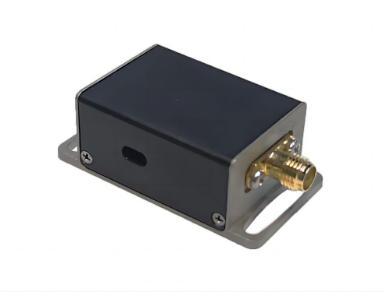
First, a quick refresher. Both devices use a piezoelectric transducer to launch a high-frequency sound wave (radio frequency, or RF) into a crystal. This creates a moving diffraction grating that interacts with a laser beam.
AOM (Modulator): Its primary function is to control the intensity of the diffracted laser beam. By varying the amplitude of the RF signal, you directly control the laser's power (on/off, pulsing). Its deflection angle is typically a fixed, secondary characteristic.
AOD (Deflector): Its primary function is to control the position of the diffracted beam. By varying the frequency of the RF signal, you change the grating period, which steers the beam to different angular positions. Intensity control is possible, but speed and precision in positioning are its raison d'être.
Key Decision Factors: Choose an AOD When...
1. You Need High-Speed, Random-Access Beam Steering.
This is the AOD’s superpower. If your application requires scanning a laser point across a plane—like in laser lithography, confocal microscopy, or additive manufacturing—an AOD is unmatched. It has no moving parts, so it can redirect a beam to a new position in microseconds, far faster than any galvo mirror. Need to jump non-sequentially between points? An AOD does it instantly.
2. Your Priority is Scan Speed Over Optical Throughput.
AODs are designed for a large scanning bandwidth (range of RF frequencies). This allows many resolvable spots. However, to achieve this wide angular scan, they often have a shorter interaction length in the crystal compared to AOMs. This can lead to a slightly lower diffraction efficiency (e.g., 70-80% vs. an AOM's >90%). If moving the beam fast is more critical than absolute power efficiency, the AOD wins.
3. You Require Multi-Axis Scanning from a Single Device.
By driving an AOD with multiple RF frequencies simultaneously, you can create multiple, independently controlled beamlets from a single laser source. This is invaluable for parallel processing applications like simultaneously drilling multiple holes or creating optical traps for multiple particles in biophysics.
4. You Are Building a Frequency-Shifted Feedback System.
While AOMs also frequency-shift light, AODs are inherently designed for frequency agility. In systems where the frequency shift needs to be dynamically tuned as part of the feedback loop—such as in certain laser cavity dumping or coherent beam combining setups—the AOD's design is more suitable.
When to Stick with an AOM:
Choose an AOM when your needs are simpler:
Pure intensity modulation: Simple laser gating, Q-switching, or amplitude stabilization.
Single, fixed-frequency operation: You need a consistent frequency shift (e.g., for heterodyne interferometry).
Maximum diffraction efficiency: You cannot afford any loss in beam power.
Cost sensitivity: For basic modulation tasks, AOMs are generally more cost-effective.
The Bottom Line
Think of it like this: an AOM is a light switch with a dimmer, while an AOD is a lightning-fast, programmable steering wheel.
Choose an AOD when your application's core challenge is getting a laser beam to specific X,Y coordinates at the highest possible speed, with precision and without inertia. The trade-off in efficiency is a worthy price for the unparalleled agility it provides.
 Portuguese (Brazil)
 English
 Arabic
 French
 Spanish
 Portuguese
 Deutsch
 Turkish
 Dutch
Dutch
 Italiano
 Russian
 Romaian
 Greek
Greek