


How Did Dylan Thomas Influence Twentieth-Century Poetry?
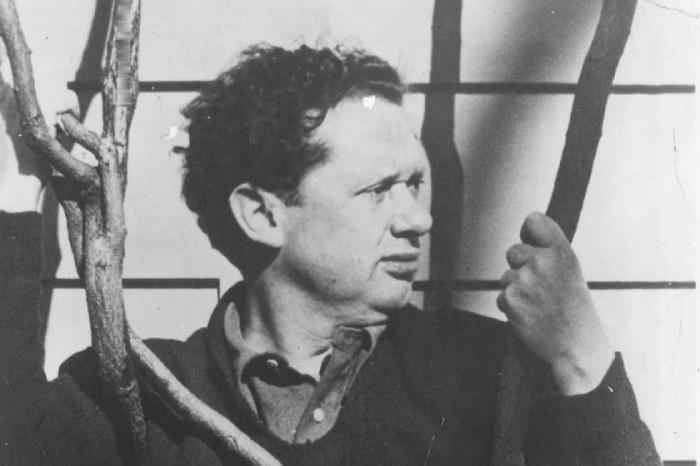
Dylan Thomas occupies a distinctive and enduring position in twentieth-century poetry. Emerging at a time when modernism emphasized fragmentation, restraint, and intellectual austerity, Thomas offered an alternative poetic vision grounded in musicality, emotional intensity, and symbolic richness. His work did not reject modernist innovation outright but reshaped it through a sensuous, lyrical approach that re-centered sound, myth, and the human life cycle. The influence of Dylan Thomas can be traced across poetic form, language, performance, and thematic ambition, shaping how poetry was written, read, and heard throughout the twentieth century and beyond.
Reasserting Musicality in Modern Poetry
Sound as a Primary Meaning-Maker
One of Dylan Thomas’s most significant contributions to twentieth-century poetry lies in his restoration of sound as a central element of meaning. At a time when much modernist poetry favored sparse diction and intellectual density, Thomas foregrounded rhythm, alliteration, internal rhyme, and assonance. Poems such as “Fern Hill” demonstrate how sound and sense operate together, creating an incantatory effect that immerses the reader in memory and emotion.
Thomas treated language as a physical medium, emphasizing how words feel when spoken aloud. This approach influenced later poets to reconsider the auditory dimensions of poetry, encouraging a renewed attention to cadence and musical structure even within free verse forms.
Reviving the Lyric Tradition
While modernism often distanced itself from overt lyricism, Dylan Thomas embraced it unapologetically. His poems frequently draw on traditional lyric impulses, including song-like repetition and emotional directness. In “Poem in October,” the rolling rhythms and lush imagery reflect a Romantic inheritance reimagined for a modern sensibility.
This reinvigoration of lyric poetry expanded the expressive range of twentieth-century verse. Thomas demonstrated that emotional richness and musical beauty could coexist with modern complexity, influencing poets who sought to balance innovation with accessibility.
Bold Subheading: Imagery, Symbolism, and Mythic Vision
Dense and Interwoven Imagery
Dylan Thomas’s imagery is famously dense, often layering multiple meanings within a single phrase. Rather than offering clear, singular symbols, his poems present clusters of images that resonate across emotional, biological, and cosmic levels. In “The Force That Through the Green Fuse Drives the Flower,” natural growth becomes a symbol for the same energy that drives human life and decay.
This approach influenced twentieth-century poets by legitimizing ambiguity as a poetic strength. Thomas’s imagery resists paraphrase, inviting readers into an interpretive process where meaning unfolds gradually through sound, repetition, and association.
Myth and the Cycle of Life
Thomas’s poetry is deeply concerned with birth, growth, decay, death, and renewal. These recurring themes give his work a mythic quality, connecting individual experience to universal cycles. Poems such as “And Death Shall Have No Dominion” frame mortality within a broader cosmic order, emphasizing continuity rather than annihilation.
This cyclical vision influenced poets who sought alternatives to the linear narratives of progress or despair common in early modernist writing. Thomas’s mythic sensibility offered a way to address existential questions without resorting to abstraction or detachment.
Challenging Modernist Austerity
Emotion as Intellectual Force
Much twentieth-century poetry, particularly in the high modernist tradition, emphasized emotional restraint and ironic distance. Dylan Thomas challenged this tendency by presenting emotion as a legitimate and powerful mode of knowledge. His poems do not shy away from grief, joy, fear, or wonder; instead, they explore these states with intensity and complexity.
In “Do Not Go Gentle into That Good Night,” emotion becomes a form of argument. The villanelle’s repetitive structure reinforces the poem’s plea for resistance against death, demonstrating how formal control can coexist with emotional urgency. This fusion influenced later poets who sought to reclaim passion without sacrificing craft.
Reimagining Formal Structures
Thomas’s use of traditional forms, particularly the villanelle and sonnet-like structures, showed that formal discipline could enhance rather than limit expressive power. His formal experiments encouraged poets to revisit inherited structures with fresh purpose, contributing to a broader twentieth-century reassessment of poetic form.
Poetry as Performance and Oral Art
The Poet’s Voice and Public Presence
Dylan Thomas played a crucial role in reshaping the public image of the poet. His powerful readings, rich Welsh accent, and dramatic delivery emphasized poetry as an oral and performative art. Unlike poets whose work seemed confined to the page, Thomas embodied the idea that poetry lives fully when spoken aloud.
This performative emphasis influenced the rise of poetry readings as cultural events and anticipated later spoken-word and performance poetry movements. By demonstrating the emotional and musical impact of live recitation, Thomas expanded poetry’s audience and cultural reach.
Accessibility Without Simplification
Despite the complexity of his language, Thomas’s emphasis on sound made his poetry accessible even when meanings were elusive. Audiences could respond emotionally to rhythm and tone before fully understanding semantic layers. This quality influenced poets interested in reaching broader audiences without reducing poetic sophistication.
Influence on Post-War and Confessional Poets
Emotional Intensity and Personal Myth
Post-war poets, particularly those associated with confessional poetry, were influenced by Dylan Thomas’s willingness to explore inner life with intensity and symbolic depth. While Thomas did not write confessionally in the autobiographical sense, his emotional openness and focus on formative experiences, such as childhood in “Fern Hill,” helped legitimize personal material as a source of poetic power.
His blending of personal memory with universal symbolism provided a model for poets seeking to transform individual experience into shared meaning.
Language as Sensory Experience
Thomas’s influence can also be seen in poets who prioritize sensory richness and linguistic texture. His belief that poetry should be felt as much as understood encouraged later writers to experiment with sound and imagery as primary vehicles of meaning.
International and Cross-Disciplinary Impact
Influence Beyond British Poetry
Although rooted in Welsh culture and English-language tradition, Dylan Thomas’s influence extended internationally. His work resonated with poets across Europe and America who were searching for alternatives to both strict formalism and stark modernist minimalism. His synthesis of lyricism, symbolism, and modern awareness proved adaptable across cultural contexts.
Impact on Other Arts
Thomas’s poetic style also influenced music, theater, and film. Composers have set his poems to music, drawn by their inherent rhythm and emotional sweep. His radio work, particularly Under Milk Wood, demonstrated how poetic language could shape narrative drama, further expanding the possibilities of poetic influence in the twentieth century.
Legacy and Lasting Influence
A Bridge Between Traditions
Dylan Thomas serves as a bridge between Romanticism and modernism, lyricism and experimentation, personal emotion and mythic scope. His influence lies not in founding a school but in expanding the range of what poetry could be during a century marked by upheaval and change.
Enduring Appeal and Relevance
The continued popularity of Thomas’s poems reflects their emotional immediacy and musical vitality. His influence persists in poets who value sound, intensity, and symbolic richness as essential elements of poetic expression.
Conclusion: Redefining the Poetic Voice of a Century
Dylan Thomas influenced twentieth-century poetry by reasserting the power of sound, emotion, and myth at a moment when poetry risked becoming overly cerebral or detached. Through his musical language, dense imagery, and performative presence, he expanded poetic possibility and challenged prevailing assumptions about restraint and accessibility.
His work demonstrated that poetry could be intellectually serious and emotionally passionate, formally disciplined and sensuously alive. As a result, Dylan Thomas remains a vital figure whose influence continues to shape how poetry is written, heard, and understood, securing his place as one of the defining poetic voices of the twentieth century.
 Portuguese
 English
 Arabic
 French
 Spanish
 Deutsch
 Turkish
 Dutch
Dutch
 Italiano
 Russian
 Romaian
 Portuguese (Brazil)
 Greek
Greek