


Understanding Loadcell Technology for Weighing
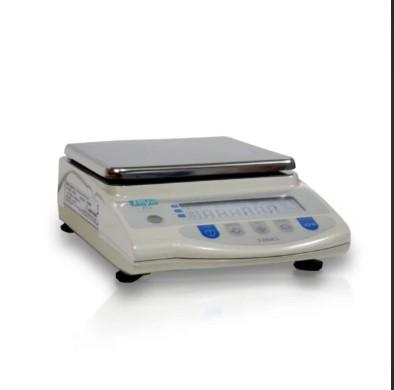
In modern industrial and commercial applications, precise measurement of weight and force is crucial. Loadcell technology for weighing has become the standard solution for achieving highly accurate measurements. But what exactly is a load cell, and how does it function?
What is Loadcell Technology?
A load cell is a type of transducer that converts mechanical force into a measurable electrical signal. This electrical output can then be used to calculate weight or force accurately. The core of this technology relies on the principles of strain measurement and electrical resistance.
How Load Cells Work
At the heart of loadcell technology is the strain gauge, a small sensor that deforms under mechanical pressure. When an object applies force to the load cell, the strain gauge experiences slight physical deformation. This deformation changes its electrical resistance. The change in resistance is directly proportional to the applied force.
The electrical signal generated by the strain gauge is very small, so it is amplified and processed through calibration equipment to convert it into standard units of weight, such as kilograms or pounds. This process ensures precision and consistency in weight measurement.
Types of Load Cells
There are several types of load cells used in weighing applications, including:
-
Strain Gauge Load Cells: The most common type, known for high accuracy and reliability.
-
Hydraulic Load Cells: Use fluid pressure to measure force and are ideal for harsh environments.
-
Pneumatic Load Cells: Utilize air pressure changes to determine weight, often used in explosion-prone areas.
-
Capacitive Load Cells: Measure changes in capacitance caused by pressure, offering high sensitivity.
Each type has its advantages and is selected based on the specific requirements of the weighing system.
Applications of Loadcell Technology for Weighing
Loadcell technology for weighing is widely used across multiple industries, including:
-
Industrial Manufacturing: Ensures precise material handling and quality control.
-
Logistics and Shipping: Accurately measures packages to streamline transport and reduce errors.
-
Retail and Commercial Scales: Provides reliable weight measurements for both consumer and commercial use.
-
Medical Equipment: Supports accurate dosing and patient weight monitoring.
The versatility of load cells makes them a critical component in any system where accurate weight measurement is essential.
Advantages of Loadcell Technology
Using load cells in weighing systems offers several benefits:
-
High Accuracy: Capable of measuring minute differences in weight.
-
Durability: Designed to withstand heavy loads and harsh conditions.
-
Flexibility: Can be integrated into various types of weighing systems.
-
Reliability: Consistently provides precise measurements with minimal error.
Conclusion
Loadcell technology for weighing is the backbone of modern measurement systems, providing unmatched accuracy and reliability. Whether for industrial, commercial, or medical applications, load cells ensure precise, dependable weight readings, making them indispensable in today’s technology-driven world. Understanding how these devices work helps industries implement efficient and accurate weighing solutions for a wide range of applications.
 Greek
Greek
 English
 Arabic
 French
 Spanish
 Portuguese
 Deutsch
 Turkish
 Dutch
Dutch
 Italiano
 Russian
 Romaian
 Portuguese (Brazil)