


Enhancing Material Characterization with Opto-Acoustic Modulation
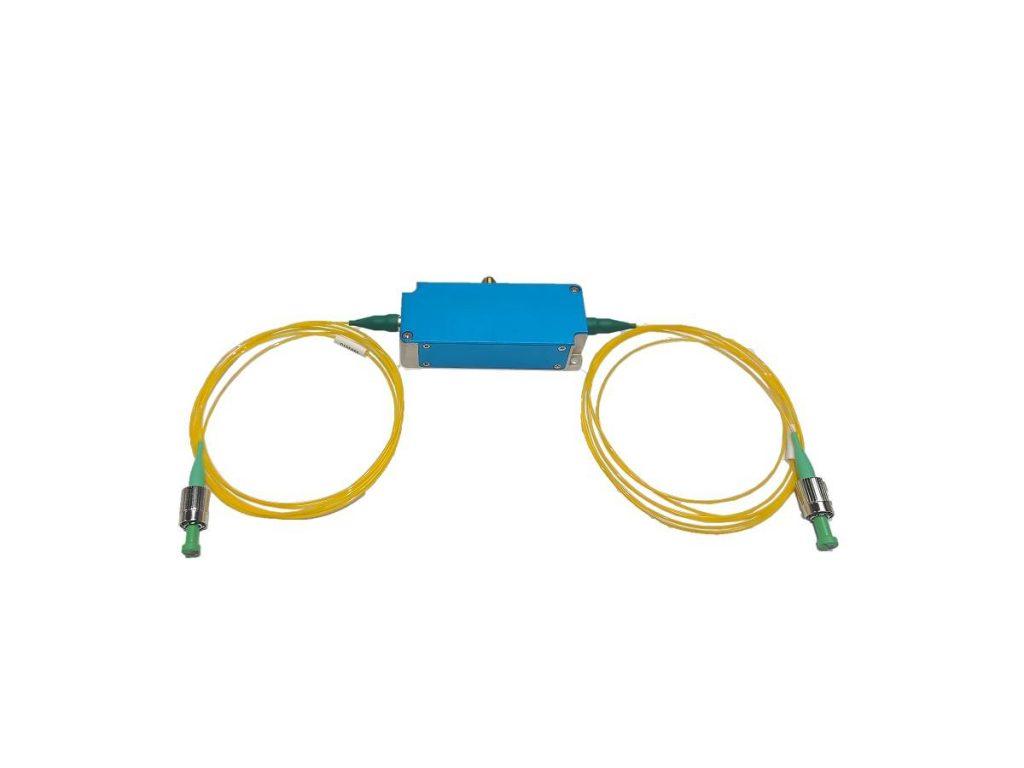
In the quest to understand what lies beneath the surface, engineers and scientists have long been limited. Optical methods see only the exterior, while traditional ultrasound often lacks the fine detail needed for modern materials. A powerful hybrid technology is bridging this gap: opto-acoustic modulation. By marrying the precision of light with the penetrating power of sound, it is redefining non-destructive testing and material analysis.
The Core Principle: Light Creates Sound
The process is elegantly simple yet sophisticated. A pulsed laser beam is directed at a material. Upon absorption, the light energy causes instantaneous, localized heating. This rapid thermal expansion generates a subtle ultrasonic wave within the material itself. This wave, often called a photoacoustic wave, travels outward and is detected at the surface. By analyzing the timing, frequency, and amplitude of these returning acoustic signals, a detailed picture of the material’s interior emerges.
Why This Hybrid Approach is a Game-Changer
The fusion of optics and acoustics delivers unique benefits that are transforming material characterization:
True Depth Profiling: It provides a layer-by-layer view, enabling 3D volumetric imaging of internal structures like no surface scan can.
Exceptional Resolution and Contrast: Achieve micrometer-scale resolution with outstanding differentiation between material phases, cracks, voids, and bonded layers.
Completely Non-Contact and Non-Invasive: In its most advanced forms, neither the laser source nor the acoustic detector needs to touch the sample, making it perfect for delicate, hot, or sterile components.
Broad Material Compatibility: From opaque metals and advanced composites to semi-transparent polymers and even biological tissues, the technique adapts across industries.
Transforming Industrial Applications
This technology is moving from advanced labs to the factory floor, solving real-world problems:
Aerospace & Automotive: Detecting hidden micro-delamination in carbon fiber composites, verifying thermal barrier coating thickness on turbine blades, and inspecting adhesive bond integrity.
Microelectronics & Semiconductors: Imaging subsurface defects in silicon wafers, assessing the quality of solder ball joints under chips, and measuring thin-film deposition uniformity.
Additive Manufacturing: Providing in-process or post-build analysis to identify internal voids, incomplete fusion, and residual stress in 3D-printed metal and polymer parts.
Pharmaceuticals & Biotech: Non-destructively analyzing the internal porosity of tablets and the uniformity of drug-eluting coatings.
The Path Forward
The integration of faster, more compact lasers, sensitive broadband detectors, and intelligent machine learning for signal analysis is making opto-acoustic systems more robust, automated, and affordable. For any industry where understanding internal quality is critical to performance and safety, opto-acoustic modulation is becoming an indispensable window into the heart of materials.
 Russian
 English
 Arabic
 French
 Spanish
 Portuguese
 Deutsch
 Turkish
 Dutch
Dutch
 Italiano
 Romaian
 Portuguese (Brazil)
 Greek
Greek