


What Flow Ranges Can Modern Mass Flow Meters Measure Accurately?
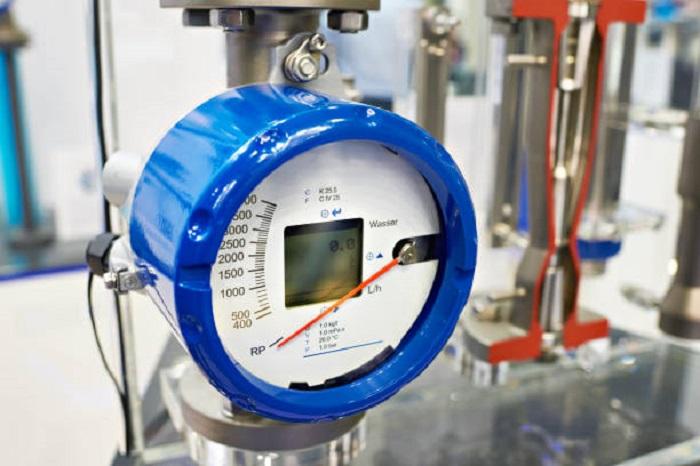
Modern industrial processes demand precise, reliable flow measurement across an increasingly wide range of operating conditions. From semiconductor manufacturing and pharmaceutical production to energy management and environmental monitoring, accurate flow data is essential for quality control, safety, and efficiency. Among the available technologies, Mass Flow Meters have become a preferred solution because they directly measure mass flow rather than inferring it from volume, pressure, or temperature. Understanding the flow ranges that modern mass flow meters can measure accurately is crucial for selecting the right instrument and ensuring dependable process performance.
Understanding Mass Flow Measurement Principles
Mass Flow Meters operate on principles that allow them to measure the actual mass of a fluid moving through a system. Unlike volumetric meters, their accuracy is largely independent of changes in temperature and pressure. This inherent advantage enables mass flow meters to maintain precision across a broad range of flow conditions.
The most common types include thermal mass flow meters and Coriolis mass flow meters. Each technology has distinct capabilities when it comes to measurable flow ranges, response time, and suitability for specific fluids.
Thermal Mass Flow Measurement Fundamentals
Thermal mass flow meters measure flow by analyzing how heat is transferred from a heated sensor to the flowing fluid. The rate of heat loss correlates directly with the mass flow rate. This method is particularly effective for gases and low-density fluids.
Thermal devices excel at measuring very low flow rates with high sensitivity, making them ideal for applications such as gas leak detection, laboratory research, and controlled dosing systems.
Coriolis Mass Flow Measurement Fundamentals
Coriolis mass flow meters use vibrating tubes to measure mass flow based on the Coriolis effect. As fluid moves through the vibrating tubes, the resulting phase shift is proportional to the mass flow rate.
This technology is highly accurate and suitable for liquids, gases, and slurries across a wide range of flow rates, from extremely low to very high, depending on meter size and design.
Low Flow Measurement Capabilities
One of the defining strengths of modern Mass Flow Meters is their ability to measure very low flow rates accurately. This capability is critical in industries where precise dosing or minimal consumption must be monitored closely.
Measuring Micro and Ultra-Low Flows
Thermal mass flow meters are especially effective at measuring microflows, often down to a few standard cubic centimeters per minute. In semiconductor fabrication, for example, precise control of process gases at extremely low flow rates is essential for product quality.
In pharmaceutical research, low-flow mass measurement ensures accurate delivery of active ingredients during formulation and testing. Modern sensors and digital signal processing have significantly improved noise reduction, allowing reliable readings even at near-zero flow conditions.
Stability and Repeatability at Low Flow
Accuracy at low flow is not just about sensitivity but also stability and repeatability. Modern mass flow meters are designed with advanced sensor materials and temperature compensation algorithms to maintain consistent performance over time.
This reliability allows operators to trust the data during startup, shutdown, or idle conditions, where traditional volumetric meters often struggle to provide meaningful readings.
Medium Flow Range Performance
Process Control and Industrial Applications
Medium flow ranges represent the most common operating conditions in many industrial processes. These ranges typically include flows from a few kilograms per hour to several tons per hour, depending on the application.
Mass Flow Meters are widely used in chemical processing, food and beverage production, and energy systems within this range. Their direct mass measurement ensures accurate batching, blending, and reaction control.
Accuracy Across Variable Conditions
In medium flow applications, process conditions such as temperature, pressure, and fluid composition may fluctuate. Volumetric meters often require compensation to maintain accuracy, while mass flow meters inherently account for these variations.
This characteristic allows mass flow meters to deliver consistent accuracy even as operating conditions change, supporting stable and predictable process outcomes.
High Flow Measurement Capabilities
Scaling Up Without Losing Precision
Modern Coriolis Mass Flow Meters are capable of measuring very high flow rates, particularly in larger pipe diameters. In industries such as oil and gas, water treatment, and bulk chemical transfer, these meters handle flows reaching hundreds or thousands of tons per hour.
Advancements in tube design, signal processing, and materials engineering have expanded the upper limits of measurable flow while preserving accuracy and durability.
Structural and Mechanical Considerations
High flow measurement introduces challenges such as increased pressure drop, vibration, and mechanical stress. Modern mass flow meters address these issues through reinforced construction and optimized flow paths.
By balancing mechanical robustness with sensor sensitivity, these meters provide accurate data even under demanding high-flow conditions.
Dynamic Range and Turndown Ratio
Wide Turndown Capabilities
One of the most important metrics when evaluating flow range capability is turndown ratio, which describes the ratio between the maximum and minimum measurable flow rates. Modern Mass Flow Meters often offer turndown ratios of 100:1 or higher, depending on technology and application.
This wide dynamic range allows a single meter to cover multiple operating scenarios, reducing the need for multiple instruments or frequent recalibration.
Benefits for Variable Processes
Processes with fluctuating demand benefit significantly from wide turndown capability. For example, in energy systems or gas distribution networks, flow rates may vary dramatically throughout the day.
Mass flow meters maintain accuracy across these variations, ensuring reliable data for monitoring, billing, and optimization.
Fluid Type and Flow Range Interaction
Gases Versus Liquids
The achievable flow range depends not only on meter technology but also on the type of fluid being measured. Gases, with their lower density, are typically measured over different ranges compared to liquids.
Thermal mass flow meters are particularly well-suited for low to medium gas flows, while Coriolis meters handle a broader range of liquids and gases with equal effectiveness.
Multiphase and Challenging Fluids
Some modern mass flow meters are designed to measure slurries or fluids with entrained gases. While these applications may narrow the effective flow range, advanced designs still provide reliable data where other technologies fail.
Understanding fluid characteristics is essential for selecting a meter that can operate accurately within the desired flow range.
Installation and System Design Considerations
Pipe Size and Meter Selection
Flow range capability is closely tied to pipe diameter and system design. Selecting the appropriate meter size ensures that the operating flow remains within the optimal measurement range.
Oversized meters may lack sensitivity at low flows, while undersized meters may experience excessive pressure drop at high flows. Proper sizing maximizes accuracy and extends instrument lifespan.
Environmental Factors Affecting Accuracy
Ambient temperature, vibration, and electromagnetic interference can influence measurement performance. Modern mass flow meters incorporate robust shielding, compensation algorithms, and diagnostic features to maintain accuracy across varying environments.
These enhancements allow reliable operation across the full specified flow range.
Advances in Digital Technology and Calibration
Smart Electronics and Signal Processing
Digital electronics have dramatically expanded the usable flow ranges of mass flow meters. High-resolution sensors and advanced algorithms improve signal clarity at both low and high extremes.
Real-time diagnostics alert operators to conditions that may compromise accuracy, supporting proactive maintenance and reliable measurement.
Calibration Across the Flow Spectrum
Modern calibration techniques ensure accuracy across the entire flow range rather than at a single operating point. Multi-point calibration enhances confidence in measurements under varying conditions.
This comprehensive approach supports applications where flow rates change frequently or unpredictably.
Conclusion: The Versatility of Modern Mass Flow Meters
Modern Mass Flow Meters are capable of accurately measuring an exceptionally wide range of flow rates, from ultra-low microflows to very high industrial transfer volumes. Advances in sensor technology, digital processing, and mechanical design have expanded their capabilities while maintaining precision and reliability.
Whether monitoring delicate laboratory processes or managing large-scale industrial systems, mass flow meters provide dependable performance across diverse flow ranges. Their ability to deliver accurate, real-time mass flow data under varying conditions makes them indispensable tools in modern process control and measurement.

 English
 French
 Spanish
 Portuguese
 Deutsch
 Turkish
 Dutch
Dutch
 Italiano
 Russian
 Romaian
 Portuguese (Brazil)
 Greek
Greek