


Can Turbine Flow Meters Measure Low Flow Rates Reliably and Consistently?
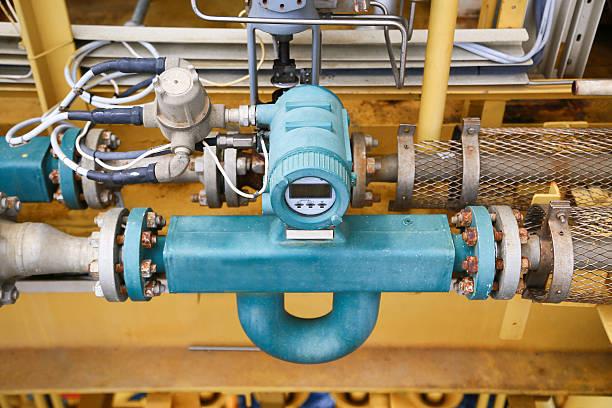
Turbine flow meters have long been valued in industrial measurement for their accuracy, repeatability, and relatively straightforward operating principle. They are widely used in applications involving clean liquids such as water, fuels, and light hydrocarbons. However, one of the most frequently asked questions among engineers and technicians is whether turbine flow meters can measure low flow rates reliably and consistently. The answer is nuanced, depending on mechanical design, fluid properties, installation conditions, and calibration practices.
This article explores how turbine flow meters behave at low flow rates, what factors limit their performance, and under what circumstances they can still deliver dependable measurements. Along the way, practical examples, including illustrative “lucky numbers” often referenced in flow meter sizing and calibration, will be discussed to clarify concepts.
How Turbine Flow Meters Work
The Basic Operating Principle
Turbine flow meters operate by placing a freely rotating rotor or turbine wheel directly in the flow stream. As fluid passes through the meter, it imparts kinetic energy to the turbine blades, causing the rotor to spin. The rotational speed of the turbine is proportional to the velocity of the fluid, and therefore to the volumetric flow rate.
Sensors, often magnetic or optical, detect the rotation of the turbine and convert it into an electrical signal. This signal is then processed to display flow rate or totalized volume. Under ideal conditions, turbine flow meters provide excellent accuracy and repeatability.
Why Low Flow Rates Are Challenging
At low flow rates, the kinetic energy of the fluid decreases significantly. This reduced energy may be insufficient to overcome mechanical resistance within the meter, such as bearing friction or drag caused by fluid viscosity. As a result, the turbine may rotate intermittently or not at all, leading to under-reporting or unstable readings.
Understanding these mechanical limitations is essential when evaluating whether turbine flow meters are suitable for low-flow applications.
Defining “Low Flow” in Practical Terms
Flow Range and Turndown Ratio
Every turbine flow meter is designed with a specific operating range. This range is typically defined by a minimum and maximum flow rate. The ratio between the maximum and minimum measurable flow is known as the turndown ratio.
For example, a turbine flow meter with a maximum flow rate of 100 units and a minimum reliable flow rate of 10 units has a turndown ratio of 10:1. Engineers often refer to certain benchmark values, sometimes informally called “lucky numbers,” such as 5:1, 10:1, or 20:1, when comparing meter performance. These numbers are not mystical, but they frequently appear in specifications because they represent realistic performance thresholds.
What Counts as Low Flow
Low flow is not an absolute value but a relative one. A flow rate of 1 liter per minute might be low for a large industrial pipeline but perfectly normal for a laboratory setup. For turbine flow meters, low flow typically means operating near the lower limit of the specified range, where accuracy begins to degrade.
Mechanical Factors Affecting Low-Flow Performance
Bearing Design and Friction
The bearings supporting the turbine rotor play a critical role in low-flow performance. At higher flow rates, fluid force easily overcomes bearing friction. At low flow rates, however, even minimal friction can prevent smooth rotation.
High-quality turbine flow meters designed for low-flow applications often use precision bearings made from materials such as sapphire or ceramic. These materials reduce friction and wear, allowing the turbine to respond to weaker flow forces.
Rotor Mass and Inertia
The mass of the turbine rotor also affects sensitivity. A heavier rotor requires more energy to start and maintain rotation. For low flow measurement, lighter rotors with optimized blade geometry are preferred. This design consideration allows the meter to respond more consistently at the lower end of its operating range.
Fluid Properties and Their Influence
Viscosity Effects
Fluid viscosity has a significant impact on turbine flow meters, especially at low flow rates. Higher viscosity fluids generate more drag, which can slow down or stall the turbine. Even a meter that performs well with water may struggle with oils or syrups at low flow.
Manufacturers often provide viscosity correction curves or recommend specific “sweet spot” operating ranges. Engineers sometimes remember these ranges using rounded reference values, such as maintaining operation above 20 percent of maximum flow, another example of a commonly cited “lucky number” in practice.
Density and Flow Stability
Fluid density affects the amount of force available to drive the turbine. Low-density fluids provide less momentum, which can further complicate low-flow measurement. Additionally, pulsating or unstable flow conditions can cause erratic turbine motion, making consistent measurement difficult.
Installation and System Design Considerations
Straight Pipe Requirements
Proper installation is critical for turbine flow meters at any flow rate, but it becomes especially important at low flow. Disturbed flow profiles caused by elbows, valves, or pumps upstream can reduce measurement accuracy.
Manufacturers typically recommend specific lengths of straight pipe upstream and downstream of the meter. Common recommendations might include 10 pipe diameters upstream and 5 downstream, numbers that engineers often memorize as practical rules of thumb.
Orientation and Flow Direction
Orientation can also influence low-flow performance. Some turbine flow meters perform best when installed horizontally, while others are designed for vertical installation with upward flow. Incorrect orientation can introduce additional drag or uneven loading on the turbine bearings, further reducing low-flow sensitivity.
Calibration and Signal Processing
Importance of Low-Flow Calibration
Calibration plays a vital role in ensuring reliable low-flow measurement. A turbine flow meter calibrated only at mid-range or high flow rates may produce inaccurate readings at the low end.
High-quality calibration procedures include multiple calibration points across the entire operating range. Technicians often focus on specific calibration points, such as 25 percent, 50 percent, and 75 percent of maximum flow, numbers that are easy to remember and frequently used in practice.
Electronics and Signal Resolution
Modern turbine flow meters often include advanced electronics that improve low-flow performance. High-resolution sensors and signal processing algorithms can detect very slow turbine rotation and filter out noise. This electronic enhancement can significantly improve consistency, even when mechanical motion is minimal.
Reliability and Consistency at Low Flow
Repeatability Versus Absolute Accuracy
At low flow rates, turbine flow meters may still offer good repeatability even if absolute accuracy decreases slightly. Repeatability refers to the meter’s ability to produce the same reading under identical conditions, which is often more important for process control than exact accuracy.
In many applications, consistent measurement trends are more valuable than perfectly accurate numbers. Turbine flow meters can meet this requirement when properly selected and maintained.
Maintenance and Wear Over Time
Low-flow performance can degrade over time due to bearing wear, contamination, or coating buildup on the turbine blades. Regular maintenance and inspection are essential to preserve reliability. Clean fluids and proper filtration significantly extend the effective low-flow capability of turbine flow meters.
When Turbine Flow Meters Are a Good Choice for Low Flow
Suitable Applications
Turbine flow meters can reliably measure low flow rates in applications involving clean, low-viscosity fluids, stable flow conditions, and properly sized meters. Examples include laboratory testing, fuel consumption measurement, and controlled chemical dosing.
When these conditions are met, turbine flow meters can deliver consistent performance near their minimum flow threshold.
When Alternatives May Be Better
In applications involving very low flow rates, high viscosity fluids, or variable flow conditions, alternative technologies such as positive displacement or Coriolis meters may offer superior performance. Selecting the right technology is always a balance between accuracy, cost, maintenance, and operating conditions.
Conclusion
Turbine flow meters can measure low flow rates reliably and consistently under the right conditions, but they are not universally ideal for all low-flow applications. Mechanical factors such as bearing friction and rotor inertia, fluid properties like viscosity and density, and system design elements all play critical roles in determining performance.
By understanding operating ranges, respecting practical reference values often remembered as “lucky numbers,” and ensuring proper installation and calibration, engineers can successfully use turbine flow meters at the lower end of their capabilities. When chosen and applied thoughtfully, turbine flow meters remain a dependable solution, even when flow rates approach their minimum limits.
 Spanish
 English
 Arabic
 French
 Portuguese
 Deutsch
 Turkish
 Dutch
Dutch
 Italiano
 Russian
 Romaian
 Portuguese (Brazil)
 Greek
Greek