


How Does Walt Whitman Explore Spirituality in His Work?
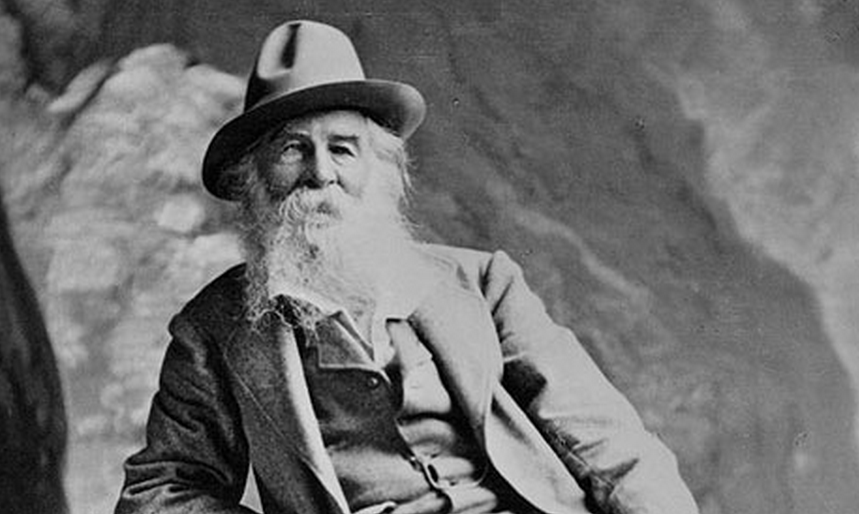
Walt Whitman stands as one of the most distinctive spiritual voices in American literature. Unlike poets who approach spirituality through formal doctrine, institutional religion, or inherited theology, Whitman constructs a deeply personal, democratic, and experiential vision of the sacred. His poetry does not separate body from soul, nature from humanity, or the individual from the cosmos. Instead, he presents spirituality as something lived, breathed, and encountered in everyday existence. Through his revolutionary style, inclusive philosophy, and profound engagement with selfhood and nature, Walt Whitman redefines what it means to speak spiritually in poetry.
This essay explores how Whitman engages spirituality across his work by examining his rejection of traditional religious boundaries, his celebration of the body and nature, his concept of the self, and his vision of universal connectedness.
Breaking from Traditional Religious Frameworks
Moving Beyond Institutional Religion
Walt Whitman does not position himself as an anti-religious poet, but he consistently resists confining spirituality within formal institutions or rigid creeds. In many of his poems, especially in Leaves of Grass, Whitman expresses skepticism toward organized religion’s tendency to mediate spiritual experience through hierarchy and doctrine.
Rather than rejecting faith, Whitman redirects it. He suggests that divine truth is not owned by churches or clergy but is accessible to every individual directly. Spiritual authority, in his vision, resides within the self and the natural world rather than external systems.
A Democratic Spiritual Vision
Whitman’s spirituality mirrors his political and social ideals. Just as he envisions democracy as inclusive and participatory, he imagines spirituality as universally available. Every person, regardless of background, profession, or status, possesses spiritual worth and access to transcendence.
This democratization of spirituality challenges traditional distinctions between sacred and profane. In Whitman’s work, no aspect of life is excluded from spiritual significance.
The Sacredness of the Self
The “I” as Spiritual Center
One of the most striking features of Whitman’s poetry is the prominence of the first-person voice. The poetic “I” in Whitman is not merely autobiographical; it functions as a spiritual symbol. By celebrating himself, Whitman celebrates humanity as a whole.
This self-focus is not narcissistic but expansive. The self becomes a gateway to understanding the universe. Whitman suggests that by knowing oneself deeply, one encounters the divine presence that exists in all beings.
Individual Experience as Revelation
For Whitman, spirituality emerges from lived experience rather than abstract belief. Moments of insight arise from walking, observing, loving, laboring, and reflecting. These ordinary experiences become revelations because they reveal the interconnectedness of life.
This approach transforms spirituality from something distant and transcendent into something immediate and embodied.
The Body as a Spiritual Entity
Reuniting Body and Soul
Whitman’s treatment of the body is central to his spiritual vision. In contrast to traditions that view the body as a hindrance to spiritual purity, Whitman insists that the body is sacred. Physical sensation, desire, and vitality are not obstacles to spirituality but expressions of it.
By affirming the body, Whitman dismantles the dualism that separates flesh from spirit. The soul is not elevated above the body; the two exist in harmony.
Sexuality and Sacred Energy
Whitman’s frank engagement with sexuality further illustrates his spiritual philosophy. He presents sexual energy as a creative and unifying force, one that reflects the generative power of the universe itself.
This perspective was controversial in Whitman’s time, but it underscores his belief that spirituality encompasses the full range of human experience, including desire and intimacy.
Nature as a Spiritual Teacher
The Natural World as Revelation
Nature plays a crucial role in Whitman’s spiritual imagination. Grass, leaves, animals, oceans, and stars are not merely scenic elements but carriers of spiritual meaning. Whitman treats nature as a text that can be read, contemplated, and learned from.
Rather than portraying nature as separate from humanity, he emphasizes continuity. Humans are part of nature’s rhythms, not above or outside them.
Learning Through Observation and Presence
Whitman’s engagement with nature emphasizes attentiveness rather than control. He observes rather than dominates, listens rather than explains. This posture encourages humility and wonder, qualities central to his spirituality.
Nature becomes a space where the boundaries between self and world dissolve, revealing a deeper unity.
Universal Connection and Cosmic Unity
Interconnectedness of All Life
A defining feature of Whitman’s spirituality is his belief in the interconnectedness of all existence. Individuals are not isolated beings but participants in a vast, living network. This sense of unity extends across time, space, and even death.
Whitman frequently addresses future readers, imagining spiritual communion across generations. His poetry reaches outward, dissolving barriers between selves.
The Divine as Immanent
Whitman’s conception of the divine is immanent rather than distant. God is not a remote authority figure but a presence woven into every aspect of reality. This divine presence manifests in people, landscapes, and shared experience.
Such a view encourages reverence for everyday life, as every moment becomes potentially sacred.
Death, Immortality, and Spiritual Continuity
Reimagining Death
Whitman’s treatment of death reflects his spiritual optimism. Rather than fearing death as an end, he views it as a transformation. Death is a continuation of life’s energy in another form, part of a larger cosmic cycle.
This perspective offers comfort and continuity, framing mortality as meaningful rather than tragic.
Endurance Beyond the Individual
Whitman often suggests that individuals persist through influence, memory, and participation in the ongoing life of the universe. The self dissolves but does not disappear. This vision aligns with his broader emphasis on connection and unity.
Spirituality, in this sense, is not about escaping the world but becoming fully part of it.
Poetic Form as Spiritual Expression
Free Verse and Spiritual Freedom
Whitman’s use of free verse is itself a spiritual statement. By breaking away from traditional poetic forms, he enacts the freedom he advocates spiritually. His long lines, catalogues, and rhythmic repetition mirror the expansiveness of his vision.
Form and content work together to express a spirituality that resists confinement.
Voice as Invocation
Whitman’s poetic voice often feels like an invocation or chant, inviting readers into shared awareness. His repetition and direct address create a sense of participation rather than observation.
The poem becomes a communal spiritual experience rather than a private reflection.
Legacy of Whitman’s Spiritual Vision
Influence on Modern Spiritual Thought
Walt Whitman’s approach to spirituality has influenced generations of writers, thinkers, and seekers. His emphasis on personal experience, inclusivity, and embodiment resonates strongly with modern spiritual movements that prioritize authenticity over doctrine.
His work continues to speak to readers seeking meaning beyond institutional boundaries.
An Ongoing Invitation
Whitman’s poetry does not offer final answers but open invitations. Readers are encouraged to explore their own spirituality through attention, presence, and connection.
This openness ensures that his spiritual vision remains dynamic and relevant.
Conclusion
Walt Whitman explores spirituality not as a system of beliefs but as a way of being fully alive. Through his celebration of the self, the body, nature, and universal connection, he constructs a vision of the sacred that is inclusive, embodied, and deeply human. His poetry invites readers to recognize the divine not in distant heavens but in themselves and the world around them.
By redefining spirituality as an expansive, lived experience, Walt Whitman reshapes the possibilities of religious expression in poetry. His work continues to inspire readers to encounter the sacred in ordinary life, reminding us that spirituality begins not with doctrine, but with awareness, wonder, and connection.
 Turkish
 English
 Arabic
 French
 Spanish
 Portuguese
 Deutsch
 Dutch
Dutch
 Italiano
 Russian
 Romaian
 Portuguese (Brazil)
 Greek
Greek