


Why Ultrasonic Edge Sensors Excel with Dusty and Transparent Materials
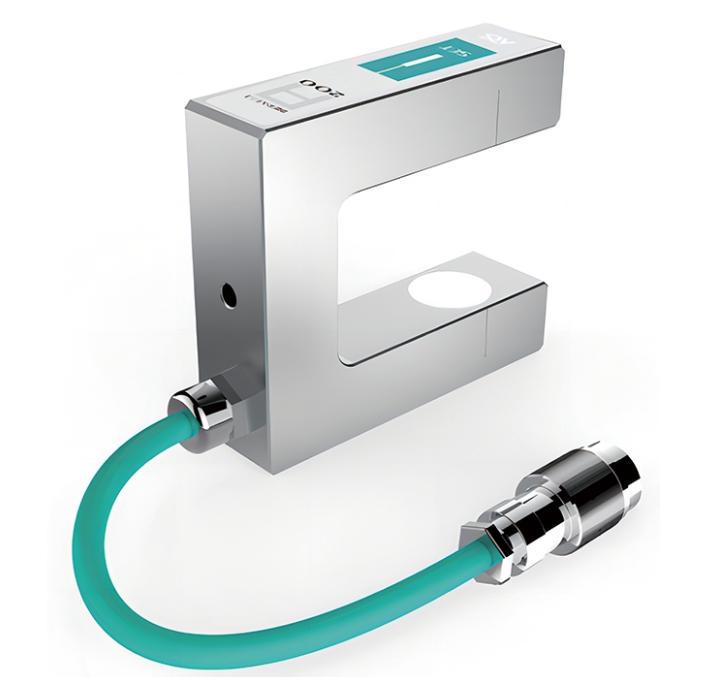
In industrial guiding and edge detection, not all materials are created equal. Two of the most notorious challenges for traditional optical sensors are dusty environments and transparent substrates like clear film or glass. In these demanding scenarios, ultrasonic edge sensors emerge as the superior solution, offering reliable performance where others fail.
The Principle Behind the Advantage
Unlike optical sensors that rely on light reflection or transmission, ultrasonic sensors operate by emitting high-frequency sound waves and measuring the time it takes for the echo to return. This fundamental difference in technology is the key to their resilience.
Conquering Dusty Environments
In industries like paper converting, textile manufacturing, or wood processing, airborne dust and debris are inevitable. Optical sensors struggle here, as particles can scatter or block the light beam, causing false readings, loss of detection, and frequent production stops.
Sound Penetration: Ultrasonic waves can penetrate non-solid accumulations of dust, smoke, or light fog. The sound energy reflects off the solid material edge underneath, ensuring the sensor "sees" the target, not the contamination.
Consistent Performance: This leads to dramatically reduced false triggers, fewer machine stoppages for cleaning, and much more stable guiding control, directly boosting productivity and material yield.
Detecting the "Invisible"
For clear films, thin glass, or shiny metallic surfaces, optical sensors face a different battle. Transparent materials may allow light to pass through entirely, while reflective surfaces can deflect beams away from the receiver.
Material Agnostic: Ultrasonic sensors detect the physical surface of an object based on its acoustic reflectivity and distance. Color, transparency, and optical reflectivity are irrelevant. A clear polyester film is as detectable as a sheet of black rubber.
Reliable on All Finishes: Whether dealing with glossy, matte, transparent, or opaque materials, the ultrasonic sensor provides a consistent and reliable edge or presence signal, simplifying sensor selection and application setup.
Additional Robust Benefits
The advantages extend beyond just handling difficult materials:
Insensitivity to Ambient Light: Factory lighting, sunlight, or total darkness have no effect, allowing for flexible installation.
Effective Range: They offer a generous sensing range, allowing for larger stand-off distances from the material web, which can be crucial in high-speed or space-constrained applications.
Conclusion
When application challenges involve contaminated atmospheres or tricky material properties, ultrasonic edge sensors provide a robust and reliable answer. By leveraging sound instead of light, they ensure continuous, accurate detection—turning problematic applications into routine operations and safeguarding both throughput and product quality.
 French
 English
 Arabic
 Spanish
 Portuguese
 Deutsch
 Turkish
 Dutch
Dutch
 Italiano
 Russian
 Romaian
 Portuguese (Brazil)
 Greek
Greek