


Small vs. Large Waste Oil Distillation Plants: Choosing the Right Scale for Your Business
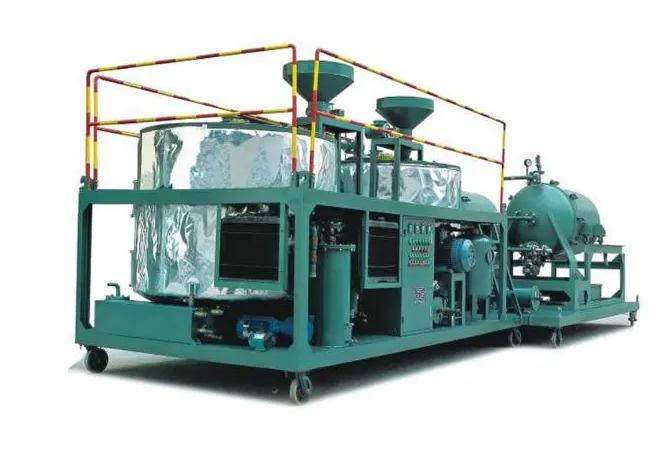
In the thriving market of waste oil recycling, distillation is the cornerstone technology for transforming used motor oil, hydraulic fluid, and other hydrocarbons back into valuable base oils and fuels. A critical decision for any entrepreneur or company entering this space is scale. Should you invest in a compact, skid-mounted unit or a large, continuous industrial plant? The choice isn't just about budget; it's about strategy, feedstock, and operational goals. Let's break down the key comparisons.
1. Capacity & Throughput: The Core Difference
Small Plants: Typically process 50 to 500 liters per batch, with daily outputs ranging from a few hundred to 2,000 liters. Operation is usually batch-based: you fill, heat, distill, cool, and empty the system in cycles.
Large Plants: Designed for continuous processing, handling 5,000 to 50,000+ liters per day. Feedstock is constantly fed in, and products are continuously drawn off, enabling non-stop operation.
2. Capital Investment & Footprint
Small Plants: The clear winner for low initial investment. Costs can range from tens of thousands to low hundreds of thousands. Their compact, often containerized or skid-mounted design means they can be installed in a small warehouse, auto shop yard, or even on a trailer for mobility.
Large Plants: Require significant capital (millions) and a major facility commitment. They need a large industrial plot, substantial foundation work, and extensive auxiliary systems (large tanks, advanced automation buildings).
3. Operational Complexity & Labor
Small Plants: Generally semi-automated. One or two trained operators can manage the entire process. The learning curve is shorter, and hands-on involvement is higher.
Large Plants: Fully automated with sophisticated PLC/SCADA control systems. They require a smaller operational crew per liter produced but demand highly skilled engineers, technicians, and constant monitoring for optimal performance.
4. Feedstock & Product Flexibility
Small Plants: Highly flexible. You can easily switch between different types of waste oil (e.g., from gasoline engines one batch, diesel the next). Ideal for businesses collecting from diverse, local sources like repair shops and farms.
Large Plants: Built for consistency and volume. They perform best with a large, steady supply of pre-treated, homogeneous feedstock. Switching product specs or feedstock types often requires costly and time-intensive process adjustments.
5. Economic & Market Model
Small Plants: Enable a decentralized, localized business model. You can serve a regional radius, reducing collection logistics costs. Profitability is achieved through lower overhead, serving niche markets, and selling directly to local users (e.g., as heating fuel or industrial burner fuel).
Large Plants: Economies of scale drive down the cost per liter produced. They supply bulk buyers, refineries for further processing, or large-scale distributors. Their profitability hinges on high-volume throughput and strategic, long-term supply contracts.
The Verdict: It’s About Fit, Not Just Size
Choose a SMALL Plant if: You are a startup, a medium-sized waste collector, or a large operation looking for a satellite unit. Your goals are low risk, flexibility, serving a local market, and you have a dispersed or variable feedstock supply.
Choose a LARGE Plant if: You are an established corporation with guaranteed high-volume feedstock (e.g., from a national collection network). Your goal is to dominate a regional market, supply bulk raw materials, and you have the capital and infrastructure for a long-term industrial project.
Conclusion:
There is no universally "better" option. The small plant is an agile, accessible tool for creating circular economies at the community level. The large plant is an industrial powerhouse for processing waste streams at a national scale. By carefully evaluating your available feedstock, capital, target market, and business ambitions, you can select the distillation scale that turns your waste oil recycling vision into a profitable, sustainable reality.
 Deutsch
 English
 Arabic
 French
 Spanish
 Portuguese
 Turkish
 Dutch
Dutch
 Italiano
 Russian
 Romaian
 Portuguese (Brazil)
 Greek
Greek