


Simple Ways ITIL Improves Ticket Handling
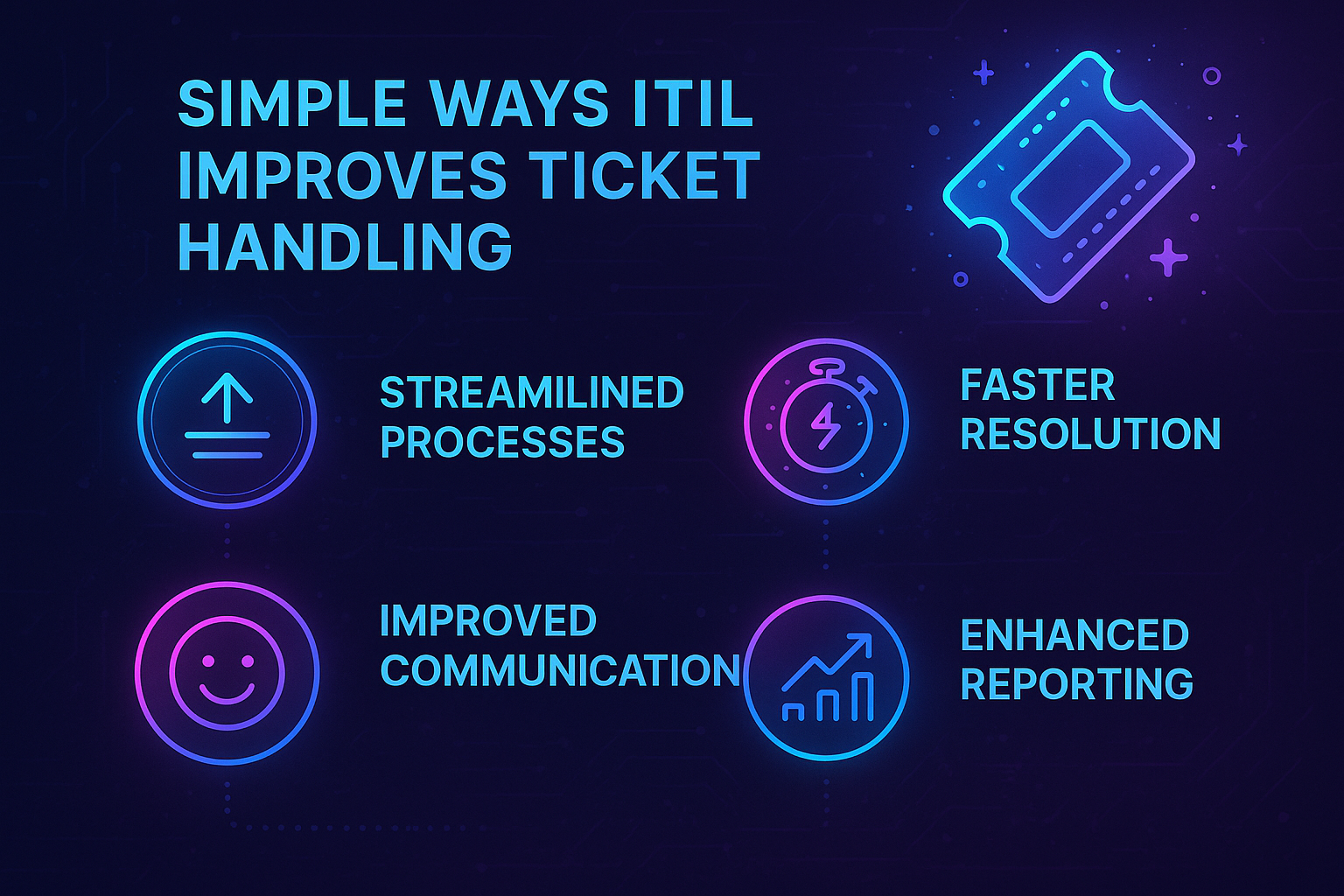
Efficient ticket handling is the backbone of a smooth IT support operation. Whether it’s a password reset, a system glitch, or a service request, the way your team manages incoming tickets directly impacts user satisfaction and overall IT performance. This is where ITIL brings unmatched value. With its structured practices and clear guidelines, ITIL helps organizations streamline workflows, reduce delays, and improve service quality without overcomplicating processes.
1. Brings Standardization to Ticket Handling
One of the biggest strengths of ITIL is its focus on standard procedures. With defined steps for logging, categorizing, prioritizing, and resolving tickets, teams avoid confusion and guesswork. This ensures each request is handled consistently, regardless of who is working on it. The result? Faster responses and fewer escalations.
2. Enhances Prioritization and Transparency
ITIL encourages prioritizing tickets based on business impact and urgency. Instead of “first come, first served,” tickets are evaluated logically—something that significantly reduces backlog frustration. Stakeholders also get improved visibility into the status, SLAs, and progress of their requests, which builds trust and accountability.
3. Improves Communication Between Teams
Many delays in ticket resolution happen because information is scattered across teams. ITIL promotes better collaboration through well-defined roles—service desk, technical teams, incident managers, and more. Shared insights and structured communication channels help teams resolve issues quicker while reducing repeat tickets.
4. Enables Faster Resolution Through Knowledge Management
A key ITIL principle is knowledge reuse. With a central knowledge base capturing known errors, solutions, and workarounds, support teams spend less time troubleshooting. This empowers even new team members to resolve tickets faster and enhances the overall self-service experience for users.
5. Supports Automation and Smarter Workflows
Modern organizations often integrate ITIL practices through advanced tools like Service Request Management Software, which automates routing, approvals, and escalations. By combining ITIL guidance with technology, teams achieve greater accuracy and reduce manual effort—freeing them to focus on high-value tasks.
6. Improves Service Quality Through Continuous Improvement
ITIL encourages teams to regularly analyze ticket trends, resolution times, and customer feedback. These insights help IT leaders identify gaps and implement improvements in both processes and tools. Over time, this leads to measurable gains in operational efficiency and service quality.
7. Empowers Teams Through Learning and Certification
Professionals who undergo ITIL 4 Foundation or pursue higher levels of ITIL Certification gain a practical understanding of how to design and manage value-driven IT workflows. This knowledge directly enhances ticket handling capability within organizations, creating a more skilled and aligned support team.
Implementing ITIL isn’t just about frameworks—it’s about enabling IT teams to deliver faster, smarter, and more reliable support. By adopting even a few of these practices, organizations can transform their ticket handling experience and deliver consistent value to users.
 Turkish
 English
 Arabic
 French
 Spanish
 Portuguese
 Deutsch
 Dutch
Dutch
 Italiano
 Russian
 Romaian
 Portuguese (Brazil)
 Greek
Greek