


How Do Vibration and Pulsation Affect Bourdon Tube Pressure Gauges?
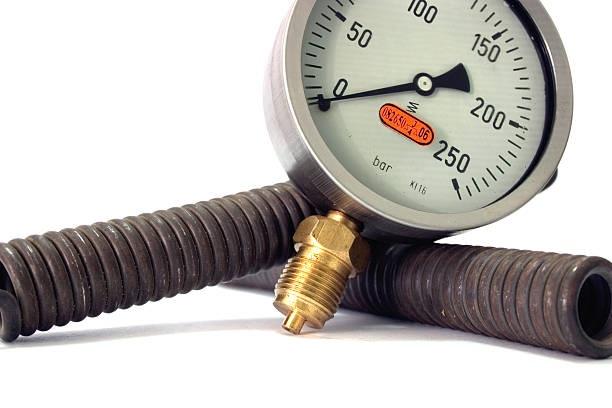
Bourdon tube pressure gauges appear simple, yet they depend on delicate mechanical motion. These devices use an elastic metal tube that straightens slightly when pressure rises. This movement transfers to a mechanical linkage and pointer. Because the system relies on precision, small disturbances in the environment can create large measurement errors. Two of the most common disturbances are vibration and pulsation. These forces influence the gauge differently, but both can reduce accuracy, damage internal components, and shorten operational lifespan. This article examines how vibration and pulsation affect Bourdon tube pressure gauges, why these effects occur, and how industries work to reduce them.
The Mechanical Nature of Bourdon Tube Gauges
How the Bourdon Tube Responds to Pressure
The Bourdon tube is a curved, flattened metal tube sealed at one end and connected to the process at the other. When pressure increases, the tube tries to straighten. This straightening is small, yet it is enough to move a gear mechanism that rotates the pointer. The tube’s motion is therefore proportional to pressure. Because the metal flexes, its movement must remain smooth and consistent. Any external force that shakes the tube can distort this motion.
In normal conditions, the tube deforms predictably. The pointer responds steadily. Readings remain accurate. However, the tube’s elasticity makes it vulnerable to mechanical interference. When the environment around the gauge vibrates or when the fluid feeding it pulses, the tube no longer moves smoothly. Instead, it shakes, oscillates, or overreacts. This instability introduces error.
Why the Gauge Mechanism Is Sensitive
Inside Bourdon tube pressure gauges, small linkages, pivots, and gears work together. These components must maintain alignment. They depend on friction at controlled levels. They rely on balanced movement to convert the tube’s expansion into the pointer’s sweep. If vibration disturbs these parts, the pointer may jump or shake. If pulsation repeatedly forces rapid pressure swings into the tube, it causes excessive movement. Over time, repeated motion creates wear.
The pointer itself is long, thin, and light. It is meant to glide, not tremble. When the environment introduces unwanted movement, the pointer can no longer reflect only the pressure. It begins to show motion influenced by outside forces.
Effects of Vibration on Gauge Performance
How Vibration Distorts Pointer Movement
Vibration affects Bourdon tube pressure gauges by shaking the entire assembly. This shaking causes the pointer to flutter. The flutter makes it difficult for an operator to read pressure. The pointer may blur across several degrees of the dial. In extreme vibration, the pointer can jump so wildly that the gauge appears to malfunction.
Because vibration affects the body of the gauge, not the process pressure, the pointer’s motion does not reflect real pressure changes. It reflects mechanical disturbance. This leads to misinterpretation. Operators may assume pressure is unstable when in fact the process is steady. This confusion can lead to improper adjustments. In industrial systems, especially in steam plants or process loops, incorrect decisions based on false readings may create safety risks.
Damage Caused by Long-Term Vibration
Continuous vibration gradually damages internal components. The gear mechanism may loosen. Linkage pins may wear. The Bourdon tube itself may fatigue. This fatigue results from rapid oscillation around a neutral position. While the tube is designed to flex from pressure, it is not designed to flex from shaking.
Repeated vibration may cause permanent deformation known as metal fatigue. This fatigue reduces accuracy because a fatigued tube does not return fully to its original shape. In severe cases, vibration can cause the pointer to detach or the linkage to misalign.
Another consequence is movement wear. The movement is the heart of the gauge. It is made of small mechanical parts. Vibration accelerates friction. Over time, parts grind against each other. The pointer becomes sticky. The motion becomes uneven. The gauge may lag behind the pressure changes. This lag introduces error and reduces reliability.
Effects of Pulsation on Gauge Function
Why Pulsation Causes Continuous Oscillation
Pulsation is different from vibration. Instead of shaking the gauge, pulsation rapidly varies the process pressure itself. Pumps, compressors, and reciprocating equipment create pressure waves. These waves travel through the fluid and force the Bourdon tube to expand and contract rapidly.
Because the tube responds immediately to pressure, it cannot remain still in pulsating conditions. It oscillates. The pointer oscillates. The reading becomes unstable. Instead of showing a single value, the pointer swings across a range. The swing may be small or large, depending on the strength of the pressure waves.
Pulsation therefore causes the gauge to reflect real pressure fluctuations, but the fluctuations are not representative of average system pressure. They are part of the mechanical rhythm of the machinery. Operators may see the pointer oscillate and assume pressure surges exist that require control. This leads to unnecessary adjustments.
Wear and Damage from Repeated Pulsation
Constant oscillation forces the Bourdon tube to move far more frequently than under steady pressure. The metal tube bends repeatedly. This accelerates fatigue. Internal mechanisms also wear faster because they must move continuously with each oscillation.
A long-term pulsation environment leads to increased pointer backlash. Backlash is the looseness between gear teeth. When backlash increases, pointer stability decreases. Eventually, the pointer may settle at inaccurate positions because the gears slip.
Extreme pulsation may cause the gauge to fail prematurely. The tube may crack at stress points. The movement may jam. The pointer may stick. Because gauges are often used in critical systems, these failures can result in unsafe operating conditions.
Combined Effects of Vibration and Pulsation
How Dual Forces Compound Error
In many industrial systems, vibration and pulsation occur simultaneously. Pumps create pulsation. Machinery creates vibration. When both forces act together, Bourdon tube pressure gauges experience two types of disturbance. The gauge shakes from vibration. The tube oscillates from pulsation. This combination amplifies pointer instability.
The pointer may bounce erratically. The reading may become meaningless. Operators must struggle to interpret any useful value. Safety systems that depend on accurate readings may lose reliability.
Accelerated Mechanical Deterioration
The combination of both forces accelerates wear far more than either force alone. The tube experiences both fatigue from bending and impact from vibration. The movement experiences friction from vibration and continuous motion from pulsation. Wear becomes exponential. The lifespan of the gauge decreases dramatically.
In such environments, standard Bourdon tube pressure gauges cannot maintain accuracy for long. They require frequent replacement or specialized damping features.
Mitigation Strategies and Industrial Solutions
Why Damping Mechanisms Are Necessary
To reduce the effects of vibration and pulsation, industries often use liquid-filled gauges. Glycol or glycerin inside the gauge dampens the motion of the pointer. The liquid absorbs vibration. It slows pointer movement. It stabilizes readings. This technique protects internal components and extends gauge lifespan.
For strong pulsation, snubbers or restrictors are installed. These devices reduce the intensity of pressure waves entering the gauge. They help convert pulsating pressure into a smoother signal. While the gauge still responds to changes, the response becomes slower and more stable.
Proper Installation Helps Reduce Disturbances
Mounting gauges on remote lines, using flexible tubing, or isolating them from machinery reduces vibration. Correct installation reduces mechanical stress. A gauge placed directly on a pump will fail faster than one installed on a remote panel.
Industrial plants often use combinations of techniques. Liquid-filled gauges, snubbers, and proper mounting together create stable readings even in harsh environments.
Conclusion
Vibration and pulsation significantly affect the accuracy and longevity of Bourdon tube pressure gauges. Vibration shakes the gauge and disturbs the pointer. Pulsation forces rapid pressure swings. Both disturbances introduce error, fatigue components, and reduce reliability. When combined, they create severe instability. Industries address these challenges using damping fluids, snubbers, and careful installation design. Understanding how these forces operate helps engineers choose appropriate gauges for demanding environments and ensures accurate pressure measurement across industrial systems.
 French
 English
 Arabic
 Spanish
 Portuguese
 Deutsch
 Turkish
 Dutch
Dutch
 Italiano
 Russian
 Romaian
 Portuguese (Brazil)
 Greek
Greek