


How does Edward Lear explore fantasy in his poetry?
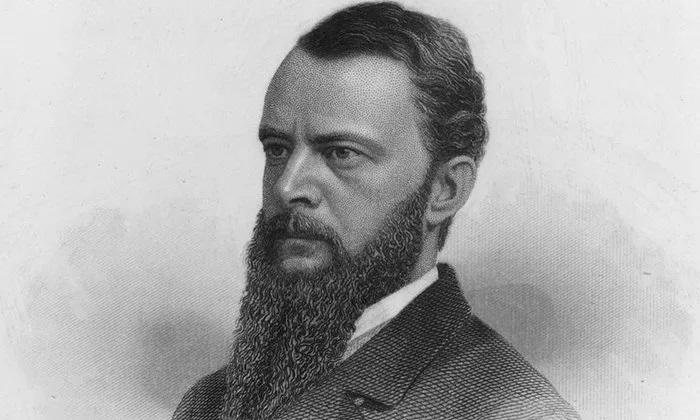
Edward Lear remains one of the most beloved figures in English literature, known primarily for his exuberant nonsense poetry that delights readers with linguistic invention, surreal landscapes, and whimsical characters. Yet beneath the playfulness lies a sophisticated and intentional exploration of fantasy as both escape and reflection, as imaginative liberation from the constraints of ordinary logic, and as a subtle commentary on the world Lear inhabited. His poems create universes governed by dreamlike rules, where language bends into impossible shapes and creatures flourish in the spaces between the ridiculous and the sublime. Understanding how Edward Lear explores fantasy in his poetry requires an examination of how he constructs imaginary worlds, how he stretches and reshapes language, and how his fantasy serves emotional, psychological, and philosophical purposes.
The Construction of Fantastical Worlds
Imaginary Geographies and Dreamlike Places
One of the central ways Edward Lear develops fantasy is through the invention of entirely new settings, places that defy conventional geography yet feel vivid and complete within the poetic experience. These locations, such as the Bong-tree forest in “The Owl and the Pussycat” or the distant territories visited by the Jumblies, exist beyond the boundaries of the known world. They resemble dreamscapes where the improbable becomes reasonable, where a pea-green boat sails effortlessly to romantic horizons, and where travelers never succumb to danger despite their apparent recklessness.
Lear’s landscapes are not mere background scenery; they actively generate the logic of the poem. The geography shapes the story’s emotional and imaginative tone, allowing readers to experience a world where possibility is unlimited. His fantasy rejects realism but never becomes disorienting, offering instead a coherent but alternative logic that follows the patterns of children’s imaginative play. Each invented place invites readers to suspend ordinary expectations and embrace a mode of perception in which wonder supersedes rationality.
Surreal Characters as Guides into Fantasy
Lear’s fantastical worlds come alive through the creatures who inhabit them. Many of these characters blend human qualities with animal or invented features, reflecting a playful disruption of natural categories. Figures such as the Quangle Wangle, the Yonghy-Bonghy-Bò, and the Dong with a Luminous Nose represent the essence of Lear’s fantasy: beings who are at once bizarre, charming, and deeply sympathetic.
These characters often act as guides into the realm of fantasy. They embody the imaginative freedom at the heart of Lear’s poetic universe, encouraging readers to accompany them on impossible adventures. In doing so, they challenge assumptions about normalcy, beauty, or propriety. Lear’s fantasy therefore becomes subtly subversive, using absurd characters to question the boundaries imposed by Victorian social conventions.
The Role of Language in Creating Fantasy
Nonsense as a Linguistic Gateway
Perhaps the most distinctive feature of Edward Lear’s fantasy lies in his mastery of nonsense language. Lear’s neologisms, playful rhyme schemes, and rhythmic cadences create an aural texture that dissolves the limitations of ordinary speech. Nonsense words such as “runcible spoon” or “bong-tree” have no literal meaning, yet they evoke vivid sensory impressions. This technique allows Lear to expand the imaginative range of the poem, enabling readers to experience meaning in ways that bypass strict interpretation.
Nonsense does not represent a lack of meaning; instead, it generates a new mode of understanding rooted in sound, rhythm, and emotional resonance. Lear therefore uses linguistic fantasy to create a parallel reality where language feels alive and unrestrained. By transforming the very building blocks of expression, he invites readers to inhabit a world where imagination is not limited by semantic rules.
Rhythm, Sound, and Musicality
In addition to invented vocabulary, Lear’s attention to rhythm and sound further enhances the fantastical quality of his poetry. Many of his poems rely on repeating patterns, lilting beats, and musical phrasing that evoke nursery rhymes or folk songs. This musicality immerses readers in a sensory experience that feels simultaneously familiar and otherworldly.
The cadence of Lear’s poetry often mirrors the motion of travel or adventure, echoing the journeys undertaken by his characters. Sound becomes a form of movement, carrying the reader deeper into the imaginative landscape. Fantasy arises not only from what is described but from how the language itself behaves, creating a dynamic relationship between rhythm and meaning.
Fantasy as Emotional and Psychological Expression
Escaping Loneliness and Isolation
For all their humor, Lear’s poems often hint at deeper emotional undercurrents. Scholars have long noted the loneliness and personal struggles that shaped much of his inner life, including his poor health, difficulty forming lasting relationships, and lifelong sense of displacement. Fantasy, in this context, becomes a form of emotional refuge.
Through whimsical journeys, improbable friendships, and idyllic landscapes, Lear constructs spaces where companionship and belonging flourish. The Owl and the Pussycat find love across species. The Jumblies persevere joyfully despite the world’s criticism. These narratives suggest a desire for connection beyond typical social boundaries, using fantasy to articulate emotional truths that may have been difficult for Lear to express directly.
The Affirmation of Joy and Wonder
Despite the melancholic undertones that occasionally surface, Lear’s fantasy remains profoundly joyful. The exuberance of his language, the delight he takes in the absurd, and the childlike openness to imaginative possibility reveal a philosophy of life that embraces play as essential to the human experience. His poems celebrate wonder as an antidote to rigidity, encouraging readers to retain a sense of curiosity and creative freedom.
In this way, fantasy becomes not merely escapist but restorative. It affirms that joy can be found in the unexpected, that beauty can arise from the bizarre, and that imagination is a legitimate—even necessary—way of engaging with the world.
The Philosophical Dimensions of Lear’s Fantasy
Challenging Logic and the Boundaries of Reality
While Lear’s nonsense poems appear whimsical, they also contain sophisticated reflections on the nature of logic and perception. By constructing worlds where contradictions coexist peacefully and where impossible events unfold with complete normality, Lear prompts readers to question the assumptions underlying everyday reality. Fantasy thus becomes a philosophical tool, demonstrating that alternative forms of order and meaning can exist.
In Lear’s poetic universe, the improbable is not dismissed but embraced. This openness challenges the rationalist mindset of Victorian society, suggesting that imagination offers insights inaccessible through reason alone. Lear uses fantasy to remind readers that human experience is multifaceted, and that creativity can reveal truths beyond factual understanding.
Reinventing Social Norms Through Absurdity
Many of Lear’s poems subtly critique social norms by presenting absurd alternatives that highlight the arbitrariness of convention. The Jumblies are mocked for their dangerous travels but continue joyfully, demonstrating resilience in the face of social scorn. The characters who defy expectation are often those who thrive, while those who enforce rigid norms appear foolish or narrow-minded.
The absurdity of Lear’s fantasy exposes the constraints of societal expectations while offering imaginative alternatives. By exaggerating the ridiculousness of certain social patterns, he invites readers to reconsider their own assumptions about propriety, conformity, and identity.
Conclusion: The Enduring Fantasy of Edward Lear’s Poetry
Edward Lear’s exploration of fantasy in his poetry reveals a rich interplay of imagination, emotion, and philosophical reflection. His invented worlds, whimsical characters, and musical nonsense create spaces where reality dissolves into playful invention, inviting readers to experience language and existence with renewed wonder. Fantasy in Lear’s work is not merely entertainment; it is a deeply expressive mode that reflects personal desires, challenges cultural expectations, and expands the boundaries of what poetry can accomplish.
Through the joyful strangeness of his verse, Lear encourages readers of all ages to embrace creativity as a vital part of life. His fantasy remains enduring not because it ignores reality, but because it reimagines it—offering pathways into worlds where laughter, curiosity, and imagination flourish without limit.

 English
 French
 Spanish
 Portuguese
 Deutsch
 Turkish
 Dutch
Dutch
 Italiano
 Russian
 Romaian
 Portuguese (Brazil)
 Greek
Greek