


What does Walt Whitman’s poetry reveal about American identity?
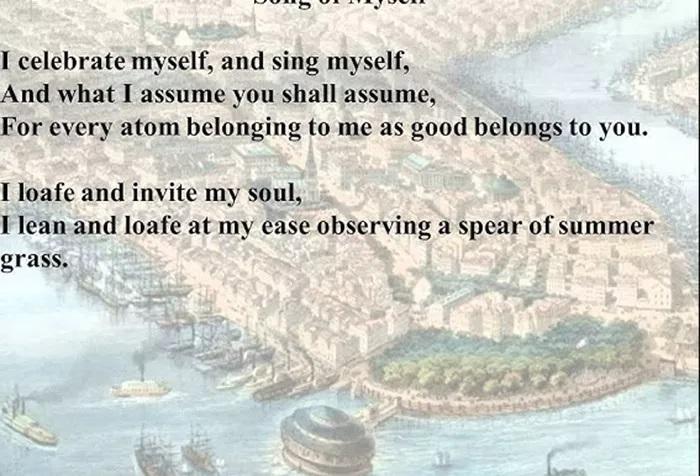
Walt Whitman stands as one of the most influential poetic voices in shaping how the nation understands itself. Through his revolutionary style, expansive themes, and bold reimagining of poetic form, Whitman defined American identity not as a fixed idea but as a living, breathing, ever-changing expression of humanity. His poetry does more than describe the nation; it embodies it. With an open embrace of diversity, a fearless celebration of the self, and a deep faith in democracy, Walt Whitman carved a poetic space where America could see its reflections—its contradictions, its hopes, its struggles, and its promise.
Whitman’s Poetic Vision as a Mirror of American Democracy
The Democratic Impulse
At the heart of Walt Whitman’s poetry lies an unwavering belief in democracy as both a political system and a spiritual force. For Whitman, democracy was not merely a structure of governance but a way of relating to one another. His celebratory catalogues of voices—sailors, mothers, carpenters, enslaved people, immigrants, politicians, factory workers—demonstrate his conviction that every individual contributes to the nation’s collective character.
In “Song of Myself,” Whitman does not place himself above the people he writes about. Instead, he merges with them, declaring that he contains multitudes. This conceptual blending reveals a core tenet of American identity: the tension and harmony between individuality and unity. Whitman’s poetry suggests that America’s greatness lies in the recognition that each voice matters and that the nation’s identity emerges from its people’s shared experiences.
Equality and Participation
Whitman believed that poetry could elevate democratic ideals by celebrating the dignity of all individuals. He wrote at a time when American society was fractured by slavery, economic inequality, and political unrest, yet he insisted on portraying democracy as a living ideal worth striving toward. His poems encourage readers to participate fully in civic life, to see themselves reflected in others, and to understand the nation as an evolving experiment rather than a completed project.
In this way, Whitman’s work doesn’t idealize America blindly; instead, it reveals a deep yearning for a democracy that fulfills its promise. His poetry insists that American identity becomes more authentic when citizens engage with one another compassionately and actively.
The Celebration of the Individual
The Self as a Microcosm of the Nation
Walt Whitman’s focus on the self is not an expression of ego but an exploration of what it means to exist within a larger collective. He believed that understanding one’s inner world creates the foundation for understanding the world at large. The individual becomes a microcosm of America—diverse, contradictory, expansive, and full of potential.
In “Song of Myself,” Whitman’s expansive “I” is both personal and universal. By presenting the self as boundless, fluid, and interconnected, he reflects the American belief in personal freedom and self-determination. Yet he also tempers individuality with empathy, urging readers to see themselves in others. This dual emphasis forms the core of his vision of American identity: a balance between self-expression and interconnectedness.
Embodied Experience and Physical Presence
Another distinctive aspect of Whitman’s portrayal of American identity is his celebration of the human body. He rejects puritanical restraints and shame, instead offering images of the body as sacred, powerful, and worthy of honor. This physicality symbolizes a nation grounded in real experiences—work, pleasure, sweat, movement, desire.
Whitman unites body and spirit, suggesting that American identity is both earthly and transcendent. His embrace of sensuality challenges restrictive moral codes and offers a more liberated, holistic vision of what it means to be human. In doing so, he aligns America with openness, vitality, and expressive freedom.
The American Landscape as a Symbolic Force
Vastness and Diversity
Whitman’s poetry roams across rivers, forests, plains, and cities, capturing the expansiveness of the American landscape. This wide, varied geography becomes a metaphor for an identity that refuses to be confined. The vastness of the land mirrors the vastness of possibility—especially the idea that American identity is continually unfolding.
Whitman does not limit his depiction of America to pastoral scenes or idealized nature. He includes the noise of industry, the energy of crowded streets, and the harshness of labor. This blending of natural and industrial landscapes reflects the complex transformation the country underwent during his lifetime. Through these images, Whitman suggests that American identity derives strength from diversity, motion, and change.
Movement and Expansion
The theme of movement is central to Whitman’s poetic philosophy. His long, flowing lines, rhythmic repetitions, and expansive lists mimic the restless energy of America as it grew, explored, migrated, and reinvented itself. Movement represents freedom, possibility, and aspiration—qualities deeply embedded in American identity.
Whitman also recognized the darker side of expansion, acknowledging tensions and contradictions. Yet even in these complexities, he saw the potential for growth and self-revision. America, in his vision, is a place where new beginnings are always possible and where identity is never static.
The Collective Human Experience
Unity in Diversity
Walt Whitman’s poetry offers one of the most inclusive visions of American identity in literary history. He opens his arms to every race, class, gender, and profession. He refuses to privilege one voice over another, building instead a chorus of equal worth. This inclusiveness reflects his belief that the nation thrives when it recognizes the value of all people.
His ability to empathize with strangers, workers, and people at society’s margins reveals a spirituality deeply connected to human experience. Whitman’s notion of equality is not theoretical; it is emotional, embodied, and profoundly present in the connections he draws between himself and the people he encounters.
Shared Suffering and Shared Joy
Whitman wrote during the era of the Civil War, a period of profound suffering and division. In works such as “Drum-Taps,” he documents the devastation of war while honoring the shared humanity of soldiers on both sides. Through this, he reinforces the idea that American identity is forged not only through triumph but through collective grief and compassion.
His poems suggest that unity arises when people see the humanity in one another, regardless of differences. This belief forms one of the most enduring aspects of his legacy: that the nation is strongest when it recognizes its shared emotional and spiritual core.
Conclusion: Whitman’s Enduring Vision of America
Walt Whitman reveals a dynamic, inclusive, and spiritually rich vision of American identity—one that embraces contradiction, celebrates individuality, honors democracy, and recognizes the interconnectedness of all people. His poetry serves as both a reflection and a shaping force of the nation’s evolving character. In his expansive lines and compassionate voice, Whitman offers a blueprint for an America that is endlessly diverse, ever-changing, and profoundly united by its shared humanity.
Through his work, readers see that American identity is not a fixed concept but an ongoing creation—one built from the lives, dreams, and experiences of all who call the nation home.
 Dutch
Dutch
 English
 Arabic
 French
 Spanish
 Portuguese
 Deutsch
 Turkish
 Italiano
 Russian
 Romaian
 Portuguese (Brazil)
 Greek
Greek