


What Can Modern Readers Learn from Jacob’s Transformation?
The story of Jacob in the Bible offers one of the most compelling narratives of personal change, spiritual growth, and human struggle. His life is filled with conflict, fear, deception, perseverance, and eventually deep transformation. Because of this, modern readers can learn many lessons from his journey. This article explores how Jacob’s experiences speak to people today and how his spiritual development still inspires reflection and growth. The discussion uses simple clauses, clear explanations, and structured headings so that the meaning remains accessible.
Jacob’s Early Life and Its Lessons
A life shaped by conflict
Jacob’s story begins with conflict. He struggles with his twin brother Esau even before birth. His early life shows tension within family relationships. Modern readers see a person shaped by rivalry and insecurity. Jacob acts from fear and desire. He seeks blessings by his own strength. His choices create strained relationships. This helps readers consider how early influences shape decisions. It also encourages self-reflection on motives and desires.
The consequences of deception
Jacob uses deception to gain Esau’s birthright and Isaac’s blessing. He acts with cunning and haste. These choices force him to flee his home. He lives in fear and uncertainty. His story shows that deceptive actions create long-term consequences. Modern readers can reflect on the cost of dishonesty. They can consider how shortcuts may offer temporary gain but also bring long-lasting tension. Jacob’s early actions highlight the danger of manipulation and the value of integrity.
Jacob’s Encounter with God at Bethel
A moment of divine reassurance
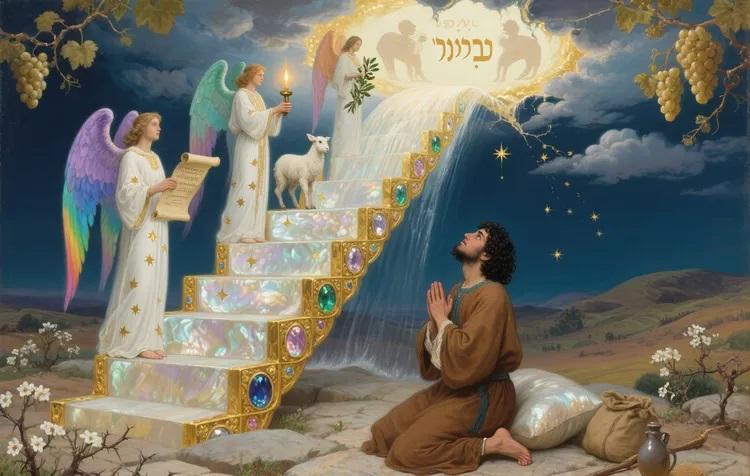
On his journey away from home, Jacob stops at Bethel. He sleeps on a stone. He dreams of a ladder reaching from earth to heaven. Angels ascend and descend. God speaks to him. God offers promises. God reassures him that he is not alone. This moment marks the beginning of Jacob’s transformation. For modern readers, this story shows that divine help often appears in times of vulnerability. It shows that spiritual awakening may occur when life feels uncertain.
A new sense of identity and purpose
God promises Jacob land, descendants, and protection. God assures him of a future. God gives him a new direction. Jacob responds with awe and commitment. He sets up a stone as a memorial. He vows to follow God. His experience at Bethel shows that purpose can emerge from crisis. Modern readers learn that identity can shift when a person encounters truth, hope, or divine calling. Transformation often begins with a moment of recognition and commitment.
Jacob’s Years of Hardship and Growth
Learning patience and endurance
Jacob spends many years working for his uncle Laban. He faces deception similar to his own earlier actions. He must work long years before marrying Rachel. He must endure unfair treatment. He must wait and persevere. His hardship shapes his character. Modern readers see that growth often requires time. Hard seasons teach patience. Challenges refine motives. Jacob becomes a person who works diligently, trusts God more deeply, and learns humility.
Developing responsibility
As Jacob gains wives, children, and flocks, he develops responsibility. He becomes a leader of a household. He guides workers. He manages property. He cares for others. His life shows that responsibility grows through experience and commitment. Modern readers learn that transformation requires practical maturity. It requires careful choices. It requires a willingness to care for others. Jacob’s story demonstrates that personal development includes responsibility as well as spiritual growth.
Jacob’s Return Home and His Fear of Esau
Facing past mistakes
When God calls Jacob to return home, he fears meeting Esau. He remembers his past wrongs. He worries about consequences. He sends gifts. He divides his family. He prays for protection. His fear shows that unresolved mistakes continue to influence life. Modern readers can see the importance of addressing past harm. True transformation includes the courage to face one’s history. Jacob teaches readers to seek reconciliation rather than escape.
Seeking strength from God
Jacob prays deeply before meeting Esau. He shows vulnerability. He expresses fear honestly. He seeks divine help. His prayer is simple and sincere. Modern readers can learn the value of honest prayer. They can learn to seek strength beyond themselves. Jacob shows that humility and dependence open the door to real change.
Jacob’s Wrestling with the Angel
A mysterious encounter
On the night before meeting Esau, Jacob wrestles with a mysterious figure. The struggle lasts until dawn. Jacob refuses to let go. He asks for a blessing. The figure touches Jacob’s hip and wounds him. Yet Jacob holds on. This strange encounter symbolizes deep internal struggle. Modern readers see that transformation often includes wrestling with fears, identity, and faith.
Receiving a new name
The figure blesses Jacob and gives him a new name: Israel. This name means “one who struggles with God.” The new name marks a new identity. Jacob moves from grasping and deceiving to persevering and trusting. This shows modern readers that new identity can emerge from struggle. True growth often follows a long period of inner conflict. A person becomes stronger when they refuse to surrender to fear or despair.
Living with change
Jacob leaves the encounter limping. His physical weakness reminds him of the struggle. His limp becomes a sign of transformation. Modern readers learn that significant change often leaves marks. Growth can involve weakness. Transformation may include humility. Jacob’s limp shows that the strongest people sometimes carry signs of their struggles.
Jacob and Esau’s Reconciliation
A powerful moment of forgiveness
When Jacob meets Esau, something unexpected happens. Esau embraces him. Esau forgives him. Esau shows grace. This moment reveals the power of reconciliation. Jacob sees the face of forgiveness. Modern readers learn that healing can occur even after years of conflict. Relationships can be restored. Grace can overcome fear and guilt.
A restored relationship
Jacob offers gifts and honor to Esau. Esau offers kindness. Their reunion shows mutual respect. It shows renewed trust. Modern readers learn the importance of humility and generosity in repairing broken relationships. Forgiveness creates peace. Reconciliation creates closure.
Jacob’s Legacy and Its Meaning Today
A journey of transformation
Jacob’s life begins with struggle and ends with blessing. He becomes the father of a great nation. His children form the tribes of Israel. His story shows that flawed people can grow. It shows that change is possible. Modern readers can see that transformation is a journey, not a moment. People learn slowly. People grow through experience. Jacob’s story gives hope to anyone seeking change.
A model of perseverance
Jacob perseveres through fear, hardship, conflict, and loss. He never gives up. He seeks God even in darkness. Modern readers can learn perseverance from Jacob. His story shows that determination and faith are essential for growth.
Conclusion: Why Jacob’s Transformation Still Matters
The transformation of Jacob offers timeless lessons. His story teaches honesty, perseverance, humility, responsibility, and forgiveness. It shows that personal change often begins in weakness. It shows that struggle can lead to blessing. Modern readers can find deep encouragement in Jacob’s journey. His life reminds them that transformation is possible for anyone who seeks truth, faces fear, and walks with faith.
 Dutch
Dutch
 English
 Arabic
 French
 Spanish
 Portuguese
 Deutsch
 Turkish
 Italiano
 Russian
 Romaian
 Portuguese (Brazil)
 Greek
Greek