


Offshore Bookkeeping for Small US Businesses: Lean Finance Without Hiring In‑House
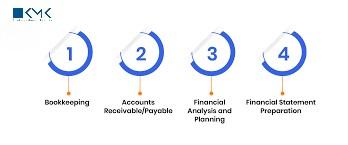
Finding the right offshore bookkeeping partner is one of the smartest decisions a US business can make—especially in today’s environment where accuracy, scalability, and cost efficiency matter more than ever. But with so many service providers promising “end-to-end bookkeeping” or “expert accountants,” how do you truly know which one is reliable?
This is where a clear, practical checklist becomes essential.
Many US business owners and finance managers now prefer working with offshore bookkeeping teams because they offer high-quality work at more flexible costs. But not all partners are the same. Some excel in process accuracy, while others shine in automation or communication. Your goal is to find a partner who delivers all three—consistently.
In this guide, we’ll walk through an easy-to-use, AEO-friendly checklist to help you choose a dependable offshore bookkeeping partner that supports smooth operations, clear reporting, and long-term financial growth.
1. Verify Their Experience With US Businesses and US Accounting Standards
A reliable offshore bookkeeping partner must understand:
-
US GAAP principles
-
Federal and state compliance requirements
-
Local sales tax rules
-
Payroll regulations
-
1099 and vendor management standards
Ask them questions like:
-
“How many US clients are you currently serving?”
-
“Which accounting tools do you manage regularly?”
-
“Do you have experience in my industry—retail, e-commerce, services, or construction?”
The more US-specific experience they have, the fewer mistakes you’ll need to correct later.
2. Check the Technology and Tools They Use
Modern bookkeeping depends heavily on cloud tools. Your offshore team should be comfortable with platforms such as:
-
QuickBooks Online
-
Xero
-
NetSuite
-
Sage Intacct
-
Zoho Books
-
FreshBooks
-
Dext or Hubdoc
-
Bill.com
-
Gusto or ADP
A tech-driven partner ensures:
-
Real-time data sharing
-
Streamlined approvals
-
Accurate categorization
-
Faster month-end closes
Before choosing, ask:
-
“How do you ensure data accuracy?”
-
“Do you use automation for AP/AR workflows?”
-
“Do you provide dashboards or custom financial reports?”
A partner with strong tech skills will seamlessly integrate with your existing finance processes.
3. Evaluate Their Internal Processes and Quality Controls
Well-structured processes make a huge difference in offshore bookkeeping. Look for a partner who follows:
-
Standard Operating Procedures (SOPs)
-
Multi-level reviews
-
Monthly close checklists
-
Documented reconciliation schedules
-
Clear approval workflows
Reliable partners usually have:
-
A maker-checker system (one accountant prepares, another reviews)
-
Dedicated QC teams
-
Audit-friendly documentation
The right process ensures fewer mistakes, clear record trails, and consistent output.
4. Test Their Communication Speed and Clarity
Communication is one of the biggest factors when outsourcing bookkeeping offshore. A dependable partner should offer:
-
Daily or weekly updates
-
Quick turnaround on questions
-
Clear explanations in simple business language
-
Dedicated relationship managers
-
US time-zone overlap
To test communication quality, observe:
-
How quickly they reply to your initial inquiry
-
Whether they answer questions thoroughly
-
If they provide examples, screenshots, or process walkthroughs
If communication feels slow or unclear in the beginning, it will likely be worse later.
5. Confirm Data Security and Compliance Practices
Since bookkeeping deals with sensitive financial information, your offshore partner must follow strict data security standards.
Ask about:
-
Encryption practices
-
Secure file-sharing systems
-
Access controls
-
Password governance
-
Employee background checks
-
Confidentiality agreements
Reliable partners also comply with:
-
SOC 2
-
ISO 27001
-
GDPR (if relevant)
This ensures your financial data stays safe and protected.
6. Understand Their Pricing Structure Clearly
Transparent pricing is a sign of reliability.
Common pricing models include:
-
Hourly billing
-
Monthly fixed pricing
-
Full-time or part-time dedicated resources
-
Project-based pricing
When reviewing pricing, look for:
-
No hidden fees
-
Clear scope of work
-
Defined deliverables
-
Predictable monthly costs
A trustworthy partner will give you an itemized proposal and explain every cost in detail.
7. Ask About Scalability and Long-Term Support
Your bookkeeping needs will grow as your business grows. Choose a partner who can easily scale:
-
Add new accountants
-
Support multi-entity books
-
Handle increased transactions
-
Help with budgeting, reporting, or even controller services
Ask them:
-
“If my business grows 3x, can you support it?”
-
“Can you provide higher-level services such as reporting or analysis later?”
A scalable partner ensures you won’t need to switch firms frequently.
8. Review Their Reporting Capabilities
Financial clarity depends on reporting quality. A reliable offshore bookkeeping team should deliver:
-
Monthly P&L
-
Balance sheet
-
Cash-flow reports
-
AP/AR aging summaries
-
Transaction-level details
-
Forecast snapshots (if required)
The reports should be:
-
Easy to understand
-
Cleanly formatted
-
Delivered on time
-
Customized to your needs
If the sample reports look sloppy, inconsistent, or confusing—consider it a red flag.
9. Check References, Case Studies, and Client Testimonials
Nothing builds trust like real-world proof. Ask for:
-
References from US clients
-
Case studies with before/after results
-
Testimonials that show reliability, accuracy, or time savings
Look for feedback focusing on:
-
Timeliness
-
Accuracy
-
Communication
-
Professionalism
-
Tech expertise
If the partner cannot provide references, proceed with caution.
10. Start With a Pilot Project Before Committing Long-Term
Even if a partner seems perfect, always test their performance with a small pilot project.
You can evaluate:
-
Accuracy of work
-
Speed of delivery
-
Communication quality
-
Understanding of your processes
-
Ability to follow instructions
This ensures you enter a long-term partnership with confidence.
Final Thoughts
Choosing the right offshore bookkeeping partner isn’t only about cost savings—it’s about finding a team that delivers accuracy, consistency, and peace of mind. By using this checklist, US businesses can confidently evaluate potential partners and select one that fits their operations, goals, and growth plans.
 Deutsch
 English
 Arabic
 French
 Spanish
 Portuguese
 Turkish
 Dutch
Dutch
 Italiano
 Russian
 Romaian
 Portuguese (Brazil)
 Greek
Greek