


Casting & Foundry Practice for Stainless Steel CF3M Castings
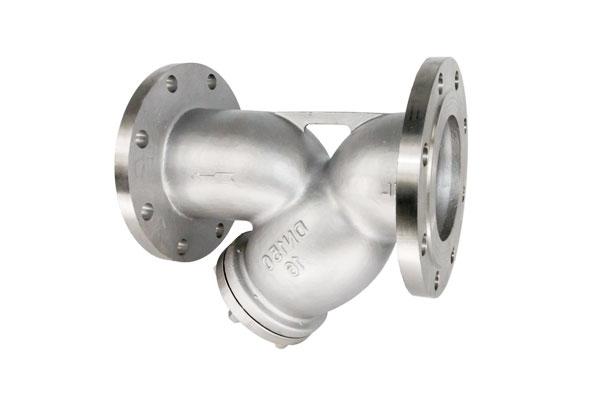
1. Executive summary
CF3M is the low-carbon, molybdenum-containing cast austenitic stainless steel commonly specified where chloride-bearing fluids or marine exposure are present and where cast geometry (complex ports, thin ribs, integral bosses) is preferred.
The low carbon minimizes carbide precipitation (sensitization) around grain boundaries, the molybdenum improves pitting resistance, and the austenitic matrix keeps the material ductile and tough.
When produced with proper melt cleanliness and casting practice (vacuum/degassing, filtration, appropriate investment/shell or sand systems), CF3M castings combine corrosion durability with practical cast mechanical strength.
2. Metallurgical identity — what CF3M stainless steel is
- Family: Cast austenitic stainless steel (nickel-stabilized, FCC austenite).
- Principal purpose of the “3M” designation: indicates the low carbon (the “3” nomenclature) and molybdenum alloying (the “M”) that distinguishes it from CF3/CF8 family members. Practically, CF3M is the cast counterpart to 316L wrought stainless.
- Key attributes: low susceptibility to intergranular corrosion after welding, improved pitting resistance in chloride media relative to 304/304L (CF8/CF3), good toughness and ductility, reasonable castability for moderate-complexity parts.
3. Practical, Foundry-Grade Guidance
Producing reliable stainless steel CF3M castings is as much a metallurgy and process-control exercise as it is a pattern/part design exercise.
CF3M’s chemistry gives good corrosion resistance, but to realize corrosion, pressure and fatigue performance in service the foundry must control melt chemistry, cleanliness, solidification and post-cast processing.
Melting & charge control
- Preferred melting methods: vacuum induction melting (VIM) or well-controlled induction melting with rigorous charge discipline. Electric arc furnaces (EAF) and induction furnaces are used in some shops, but VIM gives the best control of dissolved gases and tramp elements for critical CF3M parts.
- Target pour temperature: typically ~1450–1550 °C for austenitic CF3M melts (confirm with alloy datasheet). Avoid excessive superheat that promotes metal-investment reaction and slag formation.
- Charge practice: use low-sulfur, low-phosphorus scrap and correct master-alloys. Control Ni, Cr and Mo levels to hit specification; maintain low C (≤0.03 wt% target). Track lot traceability and produce a CMTR per heat.
- Deoxidation & fluxing: use appropriate fluxes to remove oxides and scum. Skim dross regularly and avoid reintroducing contaminated ladle metal.
- Degassing: argon or argon/hydrogen degassing reduces dissolved gases and reduces gas porosity risk in castings. In-line rotary degassers or argon bubbling help for large melts.
Melt cleanliness & filtration
- Filtration: ceramic foam or granular ceramic filters in the ladle/runner are strongly recommended for CF3M castings, especially pressure parts or thin-wall components. Filters remove oxide films and non-metallic inclusions that act as crack initiators and corrosion nucleation sites.
- Ingot/cast charge control: segregated or contaminated input stock increases inclusion levels; use clean charge and monitor tramp elements (e.g., Ti, Pb, Bi, Sn) which can degrade toughness/corrosion performance.
- Sampling & analysis: sample each heat and document composition, oxygen and nitrogen (if measured). Keep samples for metallography and mechanical testing.
Melt atmosphere & vacuum practice
- Vacuum melting/pouring: for the highest-integrity CF3M castings (pressure fittings, critical seawater parts), vacuum induction melting and vacuum/inert pouring minimize dissolved gases and metal-investment reaction and reduce alpha-case formation on reactive alloys. Use vacuum equipment when component criticality justifies the cost.
- Inert handling: where vacuum is not available, use argon cover gas in ladle and transfer to minimize oxidation.
Mold systems & core practice
- Mold choices:
- Investment / lost-wax (precision) — ideal for small, complex CF3M parts requiring excellent surface finish and thin walls. Use high-temperature phosphate or alumina/zircon reinforced investments for stainless.
- Shell mold — good for medium complexity and better finish than green sand; suitable for many CF3M parts.
- Resin sand / green sand — used for large/simple parts where finish and tight tolerances are less important. Use higher-strength binders compatible with pour temperature.
- Core materials: ceramic cores (silica / zircon / alumina based) are standard for internal passages; ensure core permeability and green strength. Use chaplets to support cores and design them to avoid gas entrapment.
Gating, risering & directional solidification
- Directional solidification: design gating and risers to promote directional feeding from the liquid reservoir toward the last solidifying section. Solidification should move away from critical sealing faces and cavity walls.
- Riser sizing: use riser volume typically 10–20% of part volume for critical cavity feed (varies with geometry). For pressure parts, over-design feeders rather than relying on post-cast impregnation.
- Gates & runner design: minimize turbulence during fill — turbulence traps oxides and air. Use well-streamlined gates, pour at sufficient temperature and consider bottom or submerged gates for sensitive geometries.
- ** chills:** local chills help control hot spots and reduce shrinkage in heavy sections but must be used with experience to avoid increased thermal gradients and cracking.
Pour practice & shell temperature
- Pour rate & handling: pour smoothly at recommended temperature; avoid splashing. Pour transfers should be short and closed or under argon where possible.
- Shell preheat / mold temperature: typical shell preheat depends on system—350–800 °C common for stainless casting—ensures uniform filling and reduces cold shuts; heavier shells require longer soak. Confirm with foundry process data.
- Avoid metal-investment reaction: choose investment/binder systems and shell preheat that minimize aggressive reaction with molten stainless; zircon/alumina washes or barrier layers are used where reaction risk exists.
Porosity control & common defect mitigation
- Gas porosity (hydrogen / air): minimize moisture in molds, dry cores and veddewax thoroughly. Degas melt and use vacuum assist for sensitive parts.
- Shrinkage cavity: use appropriate risering and directional solidification. Avoid abrupt section changes and thick islands.
- Inclusions & slag: filtration, clean charge and skimming reduce inclusions. Maintain ladle/casting tooling cleanliness.
- Hot tearing / cracking: reduce restraint, add fillets, moderate section transitions, and control cooling rates. Use adequate ferrite control: a controlled small ferrite fraction in cast austenitics can reduce hot tearing susceptibility — monitor ferrite number (FN) as needed.
Ferrite control & solidification microstructure
- Ferrite in cast austenitics: a small controlled ferrite content is common and often desirable to reduce hot-cracking (solidification cracking). Foundries manage composition and solidification rate to target an appropriate ferrite number (FN); specify FN limits if critical to application.
- Segregation: CF3M castings may show microsegregation of alloying elements in heavy sections — solution annealing (if specified) can homogenize the microstructure.
Heat treatment & solution anneal
- When to apply: solution annealing (~1 040–1 120 °C followed by rapid quench) is used when welding has occurred, for heavy sections with segregation, or where maximum corrosion and toughness are required. Not every CF3M casting needs solution anneal — it adds cost and risk of distortion. Specify requirement on PO.
- Stress relief: if dimensional stability is critical, controlled stress relief cycles can be considered but must be balanced against sensitization concerns (low C helps).
Cleaning, finishing & passivation
- Cleaning: remove sand, investment residues and scale via shot-blasting (steel/ceramic grit) and chemical cleaning (pickling) where required.
- Pickling & passivation: standard nitric or citric passivation per customer spec (e.g., ASTM A967 style practices) to remove free iron and restore passive film. For CF3M in seawater service electropolishing or citric passivation can improve performance.
- Machining allowances: specify machining windows (typical 0.5–2.0 mm) for sealing faces, threads and datums; machine critical faces after casting and heat treatment as required.
Inspection & quality control
- Material traceability & CMTR: require heat-numbered CMTR with composition, mechanical tests and heat treatment records.
- Chemical verification: perform PMI or OES checks on first article and periodic lots.
- Mechanical testing: tensile and impact coupons from representative castings or test bars from the same heat/runner system.
- Microstructure & ferrite number: metallography (grain structure, inclusion analysis) and FN measurements for castings where ferrite balance matters.
- NDT: radiography or CT for internal porosity and shrinkage in pressure cavities; ultrasonic testing for thicker sections; dye-penetrant for surface cracks. Sampling rate depends on criticality; 100% NDT is recommended for the first article on pressure-critical parts.
- Hydrostatic / pressure testing: perform proof/leak tests as specified (e.g., proof at 1.5× working pressure for production checks; burst tests for qualification samples). Document test curves and acceptance criteria.
- Acceptance criteria: define maximum allowable porosity, inclusion size, and NDT acceptance levels on drawings and purchase orders.
Packaging, storage & handling
- Temporary corrosion protection: for export or storage use VPI oils, temporary coatings or sealed packaging to avoid flash rust.
- Handling: fragile cores or thin sections require protective packing to avoid distortion or damage.
4. Conclusion
CF3M stainless steel (UNS S31603) is a low-carbon, molybdenum-alloyed austenitic stainless steel that balances corrosion resistance, weldability, and toughness. Its strict carbon control eliminates intergranular corrosion, while molybdenum enables chloride tolerance—making it indispensable for safety-critical applications in chemical, marine, and oil & gas sectors.
By adhering to ASTM standards for composition, casting, and testing, CF3M ensures consistency and reliability. While more expensive than 304/CF3, its performance justifies the cost in aggressive environments. For engineers, CF3M represents a “sweet spot” between corrosion resistance, manufacturability, and versatility—making it a benchmark for austenitic stainless steel performance.
 Dutch
Dutch
 English
 Arabic
 French
 Spanish
 Portuguese
 Deutsch
 Turkish
 Italiano
 Russian
 Romaian
 Portuguese (Brazil)
 Greek
Greek