


Which Type of Solar Panel Works Best for Dubai’s Extreme Heat?
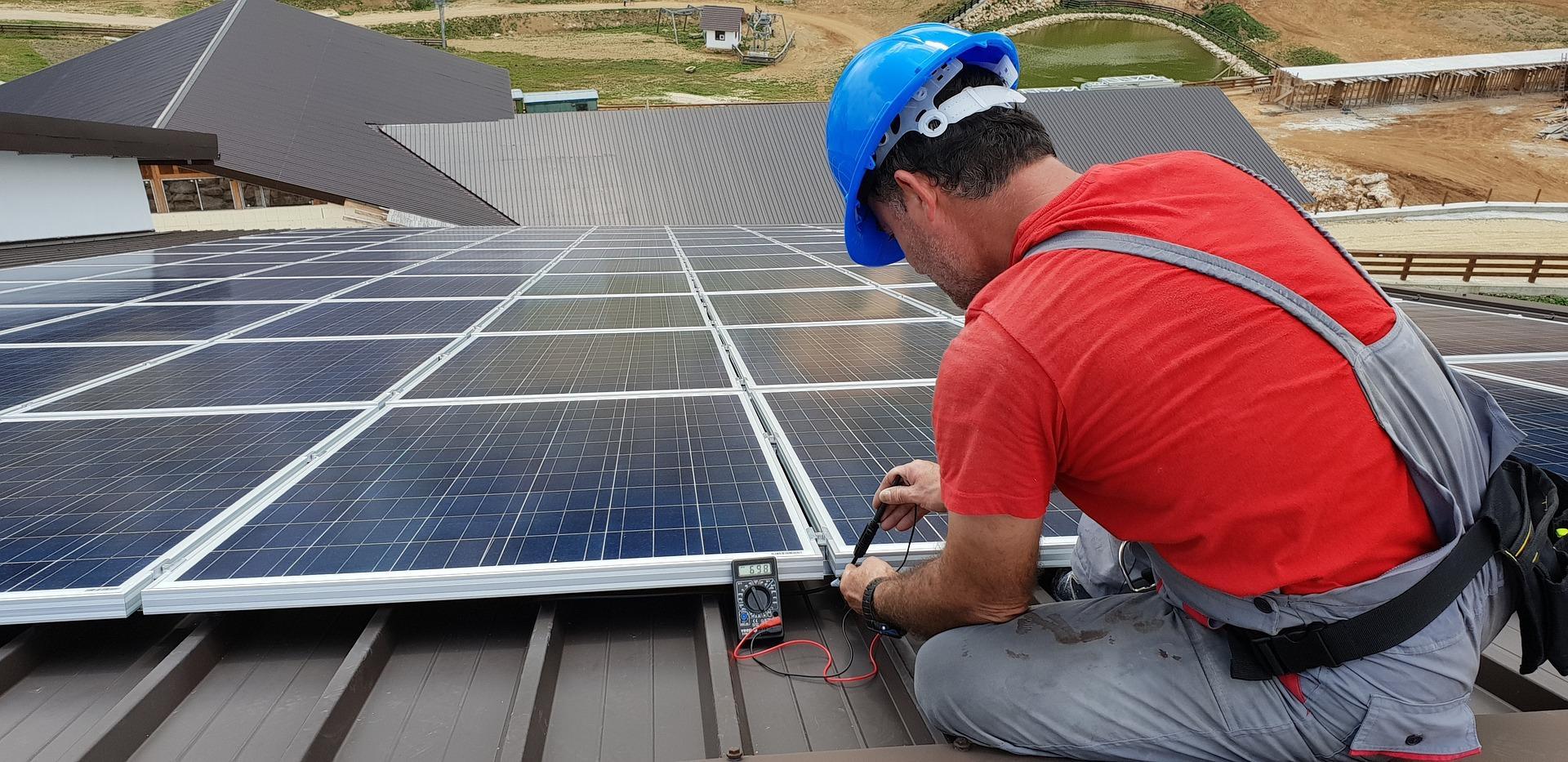
Choosing the right module technology for Solar panels installation in Dubai is not just about the highest efficiency on paper. In Dubai’s desert climate, panels sit under 40–50°C air temperatures, and their cell temperature can climb above 70°C on rooftops, cutting power output by 10–16% compared to standard test conditions. Add dust and UV, and the wrong choice can degrade faster, deliver less energy, and stretch your payback by years.
This guide explains which panel types cope best with Dubai’s extreme heat, what to ask from Solar panel system suppliers in Dubai, and how Yanvi Solar or any serious EPC should design a Solar system installation in Dubai that keeps producing reliably in harsh conditions.
How Heat Actually Affects Solar Panels
Most datasheets quote module efficiency at 25°C, but real‑world Dubai roofs rarely see that temperature. Cell temperatures often exceed 60–70°C, especially on low‑tilt, low‑clearance installations.
Two key points:
-
Each 1°C rise above 25°C reduces panel output by roughly 0.25–0.45% depending on technology (the temperature coefficient of Pmax).
-
In desert climates, daily module temperatures can exceed 90°C, accelerating thermal and UV‑driven degradation modes.
A 400 W panel with a −0.35%/°C coefficient operating at 70°C (45°C above STC) can lose about 15–16% of its nominal power in the middle of a summer day. Choosing lower‑loss technologies and designing for cooling are therefore essential.
Main PV Technologies You’ll See in Solar Panels Installation in Dubai
When you speak with Solar panel system suppliers in Dubai, you’ll typically hear about:
-
Monocrystalline PERC (P‑type)
-
Polycrystalline silicon
-
Newer N‑type technologies (TOPCon, HJT, IBC)
-
Thin‑film (mainly CdTe in utility‑scale projects)
Each behaves differently under high temperature, dust, and long‑term desert exposure.
Monocrystalline PERC – The Current Workhorse
Monocrystalline PERC panels dominate residential and commercial Solar system installation in Dubai because they:
-
Offer high efficiency (20–22%) and good power density.
-
Lower BOS costs (fewer modules for the same kW).
-
Are widely available from DEWA‑approved manufacturers.
However, in heat:
-
Typical PERC temperature coefficient is around −0.34 to −0.38%/°C.
-
Studies in hot climates show significant real‑world losses at high module temperatures, with PERC efficiency dropping sharply above ~65–70°C.
Put simply, PERC works well but isn’t the most heat‑resilient option.
Best use:
-
Constrained rooftops that need maximum kW in limited area.
-
Projects where CAPEX is a tighter constraint than absolute lifetime yield.
Polycrystalline – Once Common, Now Mostly Legacy
Polycrystalline silicon modules historically offered lower cost and slightly different thermal behaviour. Some industry measurements suggest poly modules can retain a bit more relative efficiency at very high cell temperatures in specific tests. Other comparative studies still show monocrystalline generally outperforming poly under high‑irradiance real‑world conditions.
Given price drops in mono PERC, most serious Solar panel system suppliers in Dubai are phasing poly out for new rooftop projects. Poly remains in older installations and some utility plants, but:
-
Its lower STC efficiency increases roof area required.
-
Gains under heat, if any, are often offset by lower baseline performance.
Best use:
-
Only if budget is extremely tight and roof area is abundant (and if modules are DEWA‑approved).
-
For most new Dubai rooftops, mono or N‑type mono is a better long‑term choice.
N‑Type TOPCon and HJT – Better Suited to Desert Heat
Newer N‑type technologies (TOPCon and HJT) are increasingly relevant for Solar panels installation in Dubai:
-
TOPCon (Tunnel Oxide Passivated Contact): temperature coefficient around −0.30%/°C.
-
HJT (Heterojunction): best‑in‑class coefficients as low as −0.25%/°C.
In hot climates:
-
Case studies from desert projects show TOPCon arrays delivering ~3–4% higher annual generation than comparable PERC systems due to lower thermal losses.
-
HJT can outperform PERC by 4–6% annually where module operating temperatures stay high for long periods.
Over a 25‑year life, that extra 3–6% yield can be more valuable than small extra upfront cost, especially for commercial Solar system installation in Dubai where returns are tightly modelled.
Best use:
-
Villa roofs, warehouses, and carports where long‑term performance in heat is a priority.
-
Projects with investors focused on lifecycle LCOE rather than just module price.
Thin‑Film (CdTe etc.) – Niche but Interesting
Thin‑film technologies like CdTe show:
-
Lower temperature coefficients than crystalline silicon (e.g. −0.28 vs. −0.35%/°C in some studies).
-
Better tolerance to certain soiling patterns in arid climates.
However:
-
Availability from Solar panel system suppliers in Dubai is limited for rooftops.
-
Lower efficiency requires significantly more area, which is difficult on typical Dubai villas and buildings.
Best use:
-
Large utility or industrial projects with plenty of ground area and specialist EPCs.
-
Not usually the first choice for standard rooftop Solar panels installation in Dubai.
Beyond Technology: Key Specs to Check for Dubai Heat
When you’re comparing modules for Solar system installation in Dubai, don’t just ask “mono or poly?” Focus on five practical points.
1. Temperature Coefficient of Pmax
This tells you how much power you lose for each °C above 25°C.
-
Good PERC: around −0.34 to −0.36%/°C.
-
TOPCon: around −0.29 to −0.31%/°C.
-
HJT / advanced N‑type: as low as −0.25%/°C.
Lower is better. In Dubai, a difference of 0.05–0.1%/°C can mean several percentage points more energy every year.
2. NOCT or Operating Temperature Range
Check the datasheet for:
-
Nominal Operating Cell Temperature (NOCT).
-
Maximum operating temperature.
Panels designed and tested for hot desert conditions (as DEWA’s R&D is now pushing toward dedicated desert test standards ) are preferable. Some module families are explicitly marketed and certified for hot‑climate durability.
3. PID, LeTID and UV Resistance
Desert testing shows:
-
Light‑ and elevated temperature‑induced degradation (LeTID) and UV‑induced degradation (UV‑TID) can accelerate in Dubai’s high UV and heat.
-
Potential‑induced degradation (PID) risk can be higher in dusty, occasionally humid environments if modules and system design are not robust.
Ask suppliers about:
-
Anti‑PID cell and encapsulant design.
-
Results from desert or hot‑climate field tests.
-
Certifications or third‑party reports for long‑term desert exposure.
Design Choices That Matter as Much as Panel Type
Even the best panel struggles if the design ignores heat. A credible Solar system installation in Dubai should address:
4. Mounting and Ventilation
-
Maintain adequate gap between rooftop and modules to allow airflow.
-
Avoid overly low‑tilt “flush” arrays that trap hot air.
-
Keep inverters in shaded, ventilated locations to avoid thermal derating.
These steps can reduce module temperature several degrees, recovering a couple of percentage points of efficiency.
5. Soiling and Cleaning Strategy
Dust and sand:
-
Can cut output by 1% per day in soiling‑prone zones if panels are not cleaned.
-
Raise module temperature further by absorbing more heat.
Ask your EPC (such as Yanvi Solar):
-
How often should my panels be cleaned on this site?
-
Is the layout allowing safe access for cleaning?
-
Are any anti‑soiling coatings or self‑cleaning solutions available?
An optimized cleaning plan in UAE conditions can significantly improve lifetime yield.
What to Ask Solar Panel System Suppliers in Dubai
When meeting suppliers or EPCs, use these practical questions:
-
Which technologies do you offer (PERC, TOPCon, HJT), and what are their temperature coefficients?
-
Do you have experience with these modules in Dubai or similar desert climates?
-
How do you design mounting systems to help with cooling and cleaning?
-
Can you share any field data or case studies for performance in summer?
-
How does your proposed module handle PID, LeTID, and UV‑related degradation?
A company like Yanvi Solar should be comfortable answering these without buzzwords, and willing to translate technical specs into what they mean for your roof and your energy bill.
Matching Panel Type to Project Type in Dubai
Here’s a simple way to think about it:
-
Small villas and homes
-
Limited roof area, moderate budgets.
-
High‑efficiency mono PERC or N‑type TOPCon/HJT is ideal.
-
Large villas / low‑rise buildings
-
More roof area, long‑term ownership.
-
N‑type panels with low temperature coefficients become very attractive.
-
Commercial warehouses, factories, carports
-
Big roofs, high cooling loads, long project horizons.
-
Well‑ventilated structures, N‑type modules, and robust O&M maximize long‑term yield.
In all cases, the best Solar panels installation in Dubai is the one that balances:
-
Heat resilience (temperature coefficient).
-
Long‑term degradation behaviour.
-
Roof constraints and shading.
-
Your budget and payback expectations.
Conclusion: Choosing the Right Panel for Dubai’s Heat
No panel can escape physics—every module loses some efficiency in Dubai’s extreme heat—but some technologies handle those conditions better than others. For most rooftop Solar panels installation in Dubai today:
-
Mono PERC remains a solid baseline where budget is tight.
-
N‑type TOPCon and HJT increasingly stand out for their lower temperature coefficients and higher hot‑climate yield.
-
Good design, ventilation, and cleaning can narrow the gap between datasheet and reality.
When you work with experienced Solar panel system suppliers in Dubai and a capable EPC like Yanvi Solar, you’re not just buying a panel type—you’re getting a complete Solar system installation in Dubai tailored to desert conditions. Ask about temperature coefficient, desert field data, and design details, and you’ll end up with a system that keeps performing long after the peak summer sun has tested it again and again.
 Romaian
 English
 Arabic
 French
 Spanish
 Portuguese
 Deutsch
 Turkish
 Dutch
Dutch
 Italiano
 Russian
 Portuguese (Brazil)
 Greek
Greek