


How Did Walt Whitman Revolutionize American Poetry?
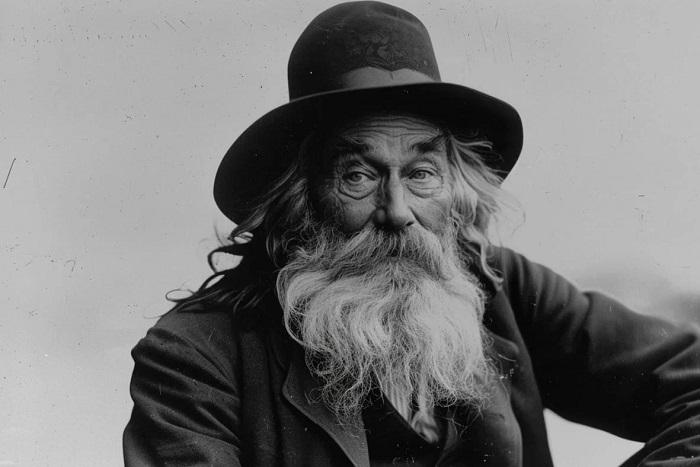
Walt Whitman transformed the landscape of American poetry. He broke away from traditional forms. He broke away from European conventions. He created a uniquely American voice. He embraced democracy, individuality, and nature. He embraced the human body, the common laborer, and the urban experience. His work celebrates inclusivity. His work celebrates the ordinary. His work celebrates the spiritual in everyday life. This essay explores how Walt Whitman revolutionized American poetry through style, theme, and vision.
Breaking Traditional Poetic Forms
Free Verse and Rhythmic Innovation
One of Walt Whitman’s most notable innovations is free verse. Traditional poetry relied on strict meter and rhyme. Whitman abandoned these conventions. He created long, flowing lines. He allowed natural speech rhythms to shape his poetry. This freed poetry from rigid forms. It reflected the vastness of the American landscape. It reflected the expansiveness of American experience.
His use of repetition and parallelism enhanced musicality. These techniques replaced rhyme with rhythm. They gave his poetry a unique cadence. Readers encounter waves of sound. They experience an internal pulse. The effect is meditative, democratic, and inclusive. Free verse allowed poetry to breathe. It allowed poetry to become more personal. It allowed poetry to include ordinary people and ordinary experiences.
Cataloging and Lists
Walt Whitman also revolutionized content through cataloging. He used lists to celebrate diversity. He named people, professions, and places. He named workers, sailors, mothers, and soldiers. Cataloging becomes a democratic tool. Every individual gains acknowledgment. Every occupation receives attention. Poetry becomes a mirror of society. The lists give Whitman’s work expansiveness. They make his poems inclusive and nationalistic.
Embracing Democracy and the Common Individual
A Voice for the People
Walt Whitman believed poetry should reflect democracy. He wrote for the common individual. He celebrated laborers, farmers, and soldiers. He recognized the dignity of ordinary lives. His poetry gives every person worth and significance. By doing this, he broke from elitist traditions. Classical poetry often focused on the heroic or mythological. Whitman focused on the everyday. This approach democratized American poetry. It opened doors for voices outside the elite or educated classes.
Unity of the Nation
Whitman also envisioned a united America. His work celebrates the multiplicity of voices. He portrays regional diversity. He portrays urban and rural life. He portrays North and South. He portrays workers and leaders. He envisions a cohesive nation bound by shared experience. His democratic approach reflects a new, inclusive literary ideal. Poetry becomes a tool to explore civic identity. Poetry becomes a tool to express national consciousness.
Exploring the Human Body and Sensuality
A Radical Celebration of Physicality
Walt Whitman’s treatment of the human body marked a revolutionary shift. Earlier poetry often shied away from sensuality. Whitman embraced it openly. He celebrated the body as sacred. He celebrated sexual love, labor, and physical labor. The human form becomes a symbol of divine beauty. The body becomes a site of spiritual experience. This treatment shocked contemporaries. It challenged social and religious conventions. It expanded the scope of acceptable poetic subjects.
Integration of Mind and Body
Whitman connected body and mind. Physical experiences are spiritual experiences. Labor is worship. Movement is meditation. Sensuality is a path to transcendence. He removes the traditional separation between the sacred and the profane. This holistic approach makes poetry experiential. Readers feel the body as well as the mind. Poetry becomes an embodied art form.
Nature as a Source of Inspiration
The American Landscape
Walt Whitman used nature to reflect human life. He described rivers, cities, fields, and oceans. The natural world mirrors democratic principles. Nature becomes inclusive. Every element matters. The poet observes patterns, growth, and continuity. Nature is not only a backdrop but also a participant in human experience. Poetry becomes a dialogue between people and their environment.
Connection to Transcendentalism
Whitman drew on transcendentalist ideas. He emphasizes individuality and spiritual connection. The self is inseparable from the world. The body and soul reflect the cosmos. Nature becomes a teacher. Humanity becomes part of the larger universe. Poetry expands into philosophy. Whitman’s work shows that American poetry can address universal truths while remaining grounded in local experience.
Innovating Themes of Democracy and Spirituality
Inclusivity and Equality
Walt Whitman’s poetry embraces diversity. He writes about all classes, genders, and races. His work celebrates immigrants, workers, and soldiers. Every person has inherent value. Poetry becomes a vehicle for social consciousness. It promotes equality. It challenges social hierarchies. This thematic inclusivity is revolutionary for his time.
Spirituality Without Doctrine
Whitman presents a spiritual vision that is not strictly religious. God is present in the human body, in labor, in nature. Sacredness exists outside church walls. Everyday experiences become holy. Spirituality is democratic. Everyone can experience the divine. This approach expands the spiritual dimensions of poetry. Whitman’s vision creates a uniquely American sacredness.
Influence on Later American Poetry
Legacy and Imitation
Walt Whitman influenced generations of poets. He shaped modernist and contemporary poetry. Poets embraced free verse, inclusivity, and bodily awareness. His work inspired experimentation. He encouraged new forms, new themes, and new voices. The impact extends globally. American poetry gains its distinctive voice through his innovations.
Encouraging Authentic Expression
Whitman’s example encourages authenticity. Poets explore selfhood without constraint. Poetry becomes a mirror of lived experience. It becomes expressive, unorthodox, and personal. Writers realize they can address the ordinary, the sensual, the spiritual, and the civic all at once. Whitman demonstrates that poetry can capture the totality of life.
Conclusion
Walt Whitman revolutionized American poetry by breaking formal conventions. He embraced free verse. He celebrated ordinary lives and labor. He linked the body, mind, and spirit. He expanded the scope of subject matter to include nature, democracy, and sensuality. He created a uniquely American voice. His work bridges individuality and national identity. His poetry invites readers to experience life in fullness. Whitman’s innovations shape not only his era but also generations to come. Through his vision, American poetry became inclusive, democratic, and alive, reflecting the vast diversity and energy of the nation itself.
 Portuguese
 English
 Arabic
 French
 Spanish
 Deutsch
 Turkish
 Dutch
Dutch
 Italiano
 Russian
 Romaian
 Portuguese (Brazil)
 Greek
Greek