


The food import/export services market is expanding due to rising global demand for diverse food options, the growth of the middle-class population in emerging economies, and the rapid development of cold-chain infrastructure. As consumers seek specialty, ethnic, and organic foods, retailers and distributors increasingly rely on international sourcing partners with strong capabilities in compliance, temperature-controlled logistics, and supply chain optimization. Market growth is also supported by collaboration among traders, freight forwarders, cold-storage providers, and certifying bodies, along with the adoption of real-time tracking systems and automation to improve efficiency. Regulatory frameworks, tariffs, and trade agreements continue to shape business strategies, encouraging investment in sustainable sourcing, fair-trade initiatives, and carbon-reduction practices. Ultimately, these services enable greater food diversity, improved global market access, and smoother cross-border movement of food products.
Building a Profitable Food Import/Export Services Business Plan for Global Trade Success
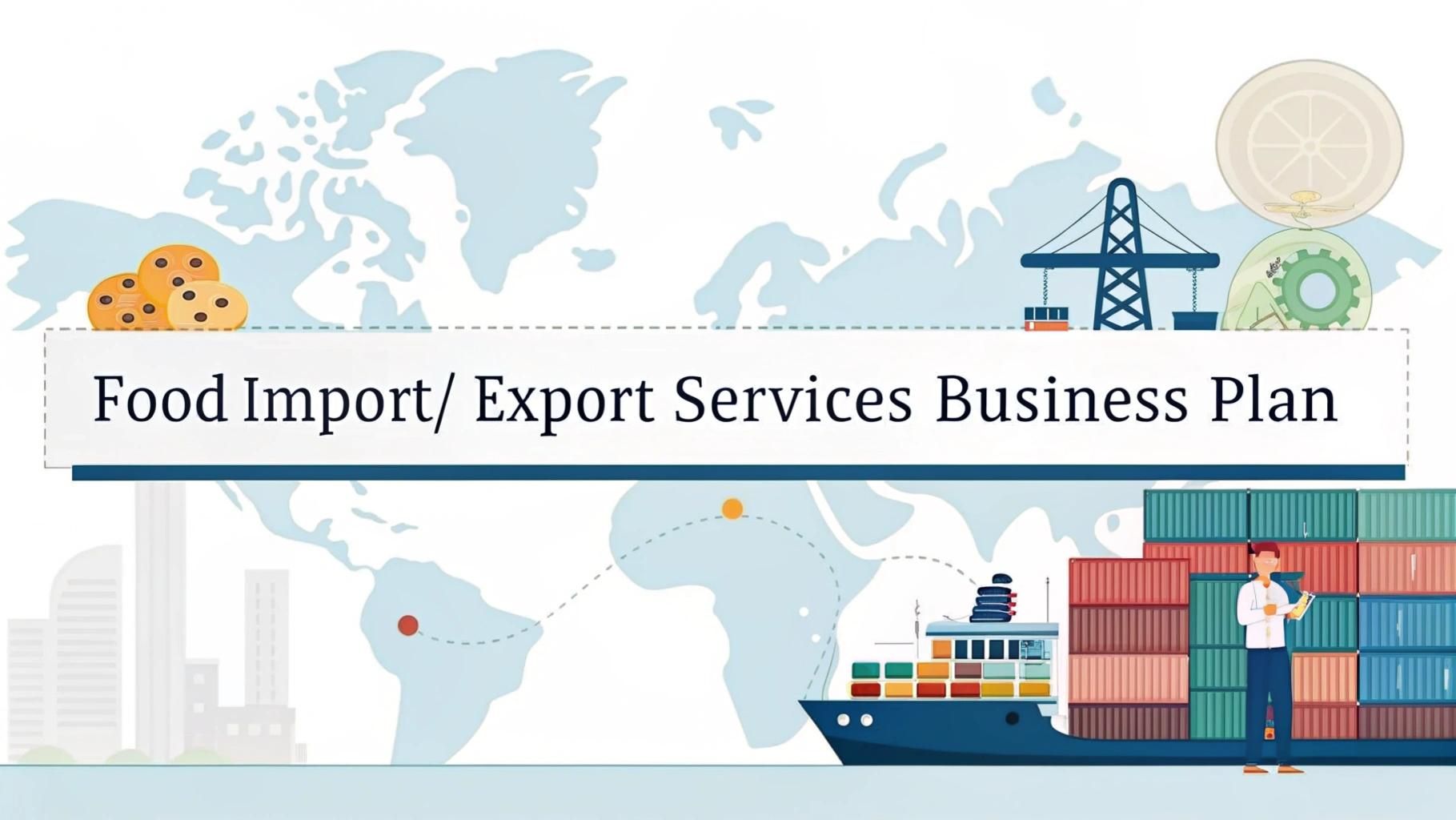
IMARC Group's "Food Import/Export Services Business Plan and Project Report 2025: Industry Trends, Business Setup, Revenue Model, Investment Opportunities, Income, Expenses, and Profitability," provides a complete roadmap for setting up a food import/export services facility. The critical areas, including market trends, investment opportunities, revenue models, and financial forecasts, are discussed in this in-depth report and are therefore useful resources to entrepreneurs, consultants and investors. Whether evaluating the viability of a new venture or streamlining an existing one, the report gives an in-depth analysis of all the ingredients that make it successful, starting with business formation and profitability over time.
What is Food Import/Export Services?
Food import and export services involve managing and coordinating the international movement of food products, ingredients, agricultural goods, and other perishables while meeting diverse market and regulatory requirements. These services cover a wide range of activities, including supplier and product sourcing, market research, quality assurance, regulatory compliance, certification support, customs documentation, warehousing, distribution, and cold-chain logistics. Providers must understand global food laws—such as FDA, FSIS, HACCP standards, EU regulations, labeling rules, and phytosanitary requirements—to ensure safe and compliant trade. They also handle refrigerated transport, cold storage facilities, customs brokerage, food safety testing, certifications like ISO 22000, BRC, and IFS, and the use of food traceability systems. With increasing demand for exotic, organic, specialty, and year-round seasonal foods, the sector now relies heavily on technologies such as blockchain, IoT temperature sensors, digital documentation, and automated customs processes to reduce spoilage and enhance transparency.
What is Driving the Food Import/Export Services Market?
Request for a Sample Report: https://www.imarcgroup.com/food-import-export-services-business-plan-project-report/requestsample
Report Coverage
The Food Import/Export Services Business Plan and Project Report includes the following areas of focus:
- Business Model & Operations Plan
- Technical Feasibility
- Financial Feasibility
- Market Analysis
- Marketing & Sales Strategy
- Risk Assessment & Mitigation
- Licensing & Certification Requirements
The comprehensive nature of this report ensures that all aspects of the business are covered, from market trends and risk mitigation to regulatory requirements and enterprise-focused customer acquisition strategies.
Key Elements of Food Import/Export Services Business Setup
Business Model & Operations Plan
A solid business model is crucial to a successful venture. The report covers:
- Service Overview: A breakdown of international food sourcing and supplier identification, regulatory compliance and certification coordination, customs documentation and clearance services, cold chain logistics and temperature-controlled transportation, quality inspection and food safety testing, warehousing and inventory management, labeling and repackaging services, market entry strategy and distribution channel development, trade finance facilitation, traceability and documentation management, and ongoing supply chain optimization services offered.
- Service Workflow: How each client needs assessment and product specification, supplier identification and vetting, quality verification and sampling, regulatory compliance coordination and certification, shipment booking and logistics arrangement, customs clearance and documentation, cold chain monitoring and delivery, and post-delivery support and feedback process is managed.
- Revenue Model: An exploration of the mechanisms driving revenue across multiple food import/export services and value-added trade facilitation offerings
- SOPs & Service Standards: Guidelines for consistent food safety compliance, cold chain integrity protocols, regulatory adherence practices, quality assurance standards, and client satisfaction.
This section ensures that all operational and food trade management aspects are clearly defined, making it easier to scale and maintain service quality.
Technical Feasibility
Setting up a successful business requires proper food trade infrastructure and logistics capability planning. The report includes:
- Location Selection Criteria: Key factors to consider when choosing office locations, proximity to ports and airports, cold storage facility access, and target market coverage
- Space & Costs: Estimations for required office space, cold storage and warehouse facilities, inspection areas, documentation processing centers, and associated costs
- Equipment & Systems: Identifying essential cold storage units, refrigerated transportation fleet, temperature monitoring systems, food safety testing equipment, barcode and tracking systems, customs clearance software, and inventory management platforms
- Facility & Infrastructure Setup: Guidelines for creating temperature-controlled warehouse facilities, food-grade storage environments, and compliant food handling operations centers
- Utility Requirements & Costs: Understanding the refrigeration power requirements, backup generator systems, temperature control infrastructure, food safety utilities, and operational resources necessary to run food import/export operations
- Human Resources & Wages: Estimating staffing needs, roles, and compensation for food trade managers, regulatory compliance specialists, quality assurance inspectors, customs clearance coordinators, cold chain logistics managers, warehouse supervisors, business development executives, and administrative support staff.
This section provides practical, actionable insights into the technical infrastructure needed for setting up your business, ensuring food safety excellence and international trade service delivery capability.
Financial Feasibility
The Food Import/Export Services Business Plan and Project Report provides a detailed analysis of the financial landscape, including:
- Capital Investments & Operating Costs: Breakdown of initial and ongoing investments
- Revenue & Expenditure Projections: Projected income and cost estimates for the first five years
- Profit & Loss Analysis: A clear picture of expected financial outcomes
- Taxation & Depreciation: Understanding tax obligations and equipment depreciation
- ROI, NPV & Sensitivity Analysis: Comprehensive financial evaluations to assess profitability
This in-depth financial analysis supports effective decision-making and helps secure funding, making it an essential tool for evaluating the business's potential.
Request For Customization: https://www.imarcgroup.com/request?type=report&id=44330&flag=E
Market Insights & Strategy
Market Analysis
A deep dive into the food import/export services market, including:
- Industry Trends & Segmentation: Identifying emerging trends and key market segments across fresh produce import/export, frozen food and seafood trading, specialty and ethnic food sourcing, organic and health food distribution, bulk commodity trading, processed and packaged food imports, and restaurant and foodservice supply chain solutions
- Regional Demand & Cost Structure: Regional variations in food demand patterns and cost factors affecting trade operations
- Competitive Landscape: An analysis of the competitive environment including established international food trading companies, specialized fresh produce importers, cold chain logistics providers, ethnic food distributors, and commodity trading houses
Profiles of Key Players
The report provides detailed profiles of leading players in the industry, offering a valuable benchmark for new businesses. It highlights their strategies, product portfolios, supplier networks, geographic specializations, cold chain capabilities, and market positioning, helping you identify strategic opportunities and areas for differentiation.
Capital & Operational Expenditure Breakdown
The report includes a comprehensive breakdown of both capital and operational costs, helping you plan for financial success. The detailed estimates for facility development, equipment, and operating costs ensure you're well-prepared for both initial investments and ongoing expenses.
- Capital Expenditure (CapEx): Focused on office and warehouse facility lease or purchase, cold storage infrastructure installation, refrigerated vehicle fleet acquisition, temperature monitoring systems, food safety testing equipment, customs clearance software licenses, inventory management systems, and security infrastructure
- Operational Expenditure (OpEx): Covers ongoing costs like staff salaries and benefits, warehouse rent and cold storage utilities, transportation and fuel costs, refrigeration maintenance and energy expenses, customs duties and clearance fees, food safety certification and testing costs, insurance (cargo, liability, spoilage), marketing and business development expenses, regulatory compliance fees, and quality control operations
Financial projections ensure you're prepared for cost fluctuations, including adjustments for commodity price volatility, fuel and refrigeration cost changes, exchange rate fluctuations affecting international trade, seasonal demand variations, and competitive market pressures over time.
Profitability Projections
The report outlines a detailed profitability analysis over the first five years of operations, including projections for:
- Total revenue from trading margins and commissions, logistics service fees, warehousing and storage charges, regulatory consulting services, value-added processing and repackaging, and market access facilitation fees, expenditure breakdown, gross profit, and net profit
- Profit margins for each revenue stream and year of operation
- Revenue per client projections and market penetration growth estimates
These projections offer a clear picture of the expected financial performance and profitability of the business, allowing for better planning and informed decision-making.
About Us
IMARC Group is a leading global market research and management consulting firm. We specialize in helping organizations identify opportunities, mitigate risks, and create impactful business strategies.
Our expertise includes:
- Market Entry and Expansion Strategy
- Feasibility Studies and Business Planning
- Company Incorporation and Import/Export Services Setup Support
- Regulatory and Licensing Navigation
- Competitive Analysis and Benchmarking
- Industry Partnership Development
- Branding, Marketing, and Enterprise-Focused Customer Strategy
Contact Us:
IMARC Group
134 N 4th St. Brooklyn, NY 11249, USA
Email: sales@imarcgroup.com
Tel No:(D) +91 120 433 0800
United States: (+1-201971-6302)
 Greek
Greek
 English
 Arabic
 French
 Spanish
 Portuguese
 Deutsch
 Turkish
 Dutch
Dutch
 Italiano
 Russian
 Romaian
 Portuguese (Brazil)