


Adapting Cutting Systems to Varying Roll Dimensions
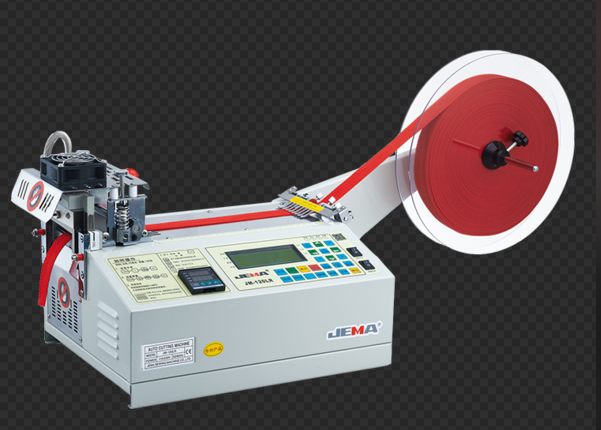
Introduction to Dimensional Adaptability
The ability to handle different widths and lengths of elastic roll materials is an essential performance requirement for modern cutting equipment. Manufacturers frequently deal with roll goods that vary greatly in size due to different product specifications, supply conditions, or customer customization needs. Whether these rolls are made of rubber, spandex, foam, silicone sheets, or soft composite materials, adaptability determines production flexibility, cost efficiency, and final product consistency. Understanding how the Elastic Cutting Machine accommodates such variations provides insight into its engineering sophistication, control precision, and material-handling capabilities.
Structural Flexibility for Width Adjustment
One of the primary design considerations for cutting roll materials is the capability to adjust the working width. Machines that can only process fixed widths limit their applicability, especially in industries where product formats constantly change. Many modern systems incorporate adjustable guide rails, movable cutting heads, and flexible positioning mechanisms that enable smooth transitions between narrow and wide materials. These designs allow operators to adapt the cutting lane simply by repositioning mechanical components or using automated adjustment modules. In addition, sensors can detect the roll’s actual width to prevent misalignment or edge drift, ensuring stable and precise processing even when switching between significantly different roll sizes.
Handling Variable Roll Lengths with Stable Feeding Control
Roll length variations present another challenge, particularly when processing extremely long or short rolls in high-throughput environments. The machine must maintain consistent tension, avoid stretching, and prevent slippage throughout the cutting cycle. Advanced control systems use servo-driven unwinders, dynamic tension feedback loops, and synchronized feeding rollers to accommodate both short production batches and large industrial rolls. These mechanisms allow the Elastic Cutting Machine to maintain consistent cutting accuracy regardless of roll length. Short rolls benefit from quick-change mounting, while long rolls rely on steady unwinding and controlled accumulation to prevent material shocks that could disrupt precision.
Importance of Material Support and Alignment
Different roll widths and lengths require appropriate support to maintain alignment. Narrow rolls may wobble or shift off-line if not properly stabilized. Wide rolls, on the other hand, need reinforced support frames to prevent sagging or lateral movement. Machines designed for dimensional adaptability often include modular support bars, adjustable clamping arms, or automatic centering systems that ensure smooth feeding. Laser alignment tools or optical edge-detection sensors further improve accuracy by continuously monitoring the material’s lateral position. These features play a crucial role in ensuring consistent alignment for both minimal-width materials and oversized rolls.
Blade Reach and Cutting Path Configuration
To cut rolls of diverse dimensions effectively, the cutting head must cover the entire available working area without losing precision or speed. Machines equipped with multi-axis motion control, extended cutting beams, or modular blade carriers allow operators to adapt the cutting path to different material widths. When working with wide rolls, the extended reach ensures that cutting lines remain straight and uniform. For narrow rolls, the system limits blade travel to reduce unnecessary motion and increase efficiency. These technical considerations allow the Elastic Cutting Machine to operate with consistent accuracy across a broad range of roll dimensions.
Software and Parameter Adaptation
Software flexibility is equally essential for handling different material sizes. Operators can input roll width, length, thickness, and tension requirements to generate cutting programs tailored to the material. Automated recipes minimize setup time and reduce the risk of configuration errors. With intelligent parameter mapping, the machine can adjust feed rates, cutting force, and path coordinates automatically based on the roll’s dimensions. This optimizes performance and ensures that both long and short rolls, as well as wide and narrow ones, are processed under ideal conditions.
Cutting length (mm): 20-9999
Maximum cutting width (mm): 10-50
Cutting speed (p/min): 90
Voltage (v): 110/220
Frequency (Hz): 50/60
Rated power (kW): 0.26
Package size L × W ×H)(mm ): 560 × 420 × 405
Weight (kg): 24/29
Packing rate (sets): 1
 Portuguese (Brazil)
 English
 Arabic
 French
 Spanish
 Portuguese
 Deutsch
 Turkish
 Dutch
Dutch
 Italiano
 Russian
 Romaian
 Greek
Greek