


Designing AOM Drivers for Multi-channel Beam Steering Applications
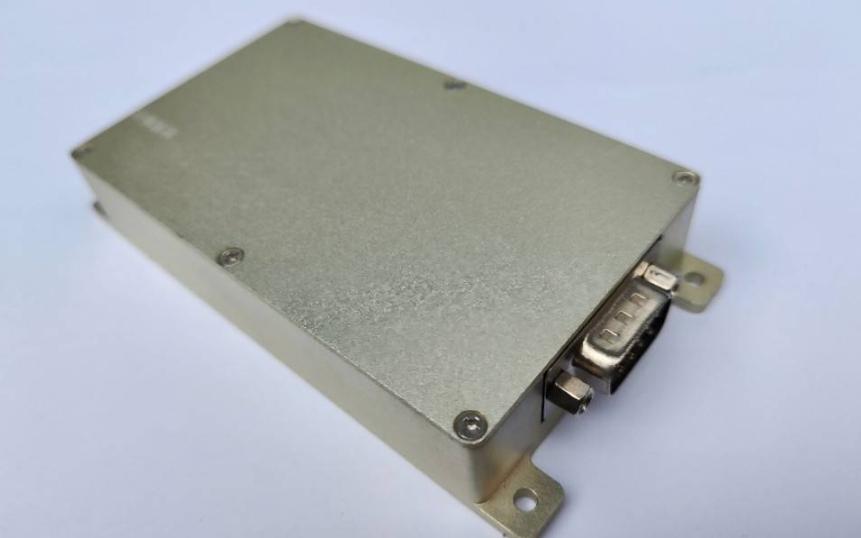
Beam steering technology has become central to applications ranging from free-space optical communication to LiDAR and biomedical imaging. Acousto-Optic Modulators (AOMs), controlled by advanced drivers, play a pivotal role in steering beams with high speed and accuracy. Designing AOM drivers for multi-channel beam steering requires balancing scalability, synchronization, and precision across multiple RF channels.
Multi-channel Synchronization Challenges
One of the primary challenges in multi-channel driver design is synchronization. Each AOM channel must operate in harmony with others to ensure accurate beam positioning. Any phase drift or delay between channels can cause beam misalignment. Engineers address this by using centralized clock distribution systems and phase-coherent RF sources, ensuring all channels remain tightly locked to a reference.
Scalability and Modular Architectures
Beam steering applications often demand dozens of channels. A scalable driver design is crucial. Modular driver architectures, where each unit handles a subset of channels, provide flexibility. These modules can be interconnected through high-speed digital buses, maintaining both compact form factors and precise timing. Such modularity also allows for system upgrades without redesigning the entire platform.
Frequency Agility and Beam Control
In beam steering, frequency agility translates into steering speed. AOM drivers must switch frequencies rapidly while maintaining output stability. High-resolution direct digital synthesis (DDS) technology enables fast, programmable frequency control across multiple channels. This agility supports real-time beam scanning, essential in applications such as LiDAR mapping or optical trapping in biophysics.
Power Distribution and Thermal Management
With multiple channels operating simultaneously, power efficiency and heat dissipation become critical. AOM crystals and RF amplifiers can generate significant heat, impacting performance. Designing drivers with distributed power regulation, efficient cooling solutions, and active monitoring systems ensures stable operation even under demanding beam steering workloads.
Application Scenarios
Multi-channel AOM drivers are transforming diverse fields. In LiDAR, they enable rapid, precise scanning for autonomous navigation. In optical communication, they allow dynamic beam switching to optimize data transmission. In biomedical imaging, multiple beams can be steered simultaneously to capture high-resolution images at different depths. Each of these applications benefits directly from advanced driver design.
Conclusion
Designing AOM drivers for multi-channel beam steering is a complex but essential task in modern photonics. Success requires careful attention to synchronization, scalability, frequency agility, and thermal management. By mastering these challenges, engineers can create systems that push the limits of optical control, unlocking new possibilities in communication, navigation, and imaging technologies.
 Turkish
 English
 Arabic
 French
 Spanish
 Portuguese
 Deutsch
 Dutch
Dutch
 Italiano
 Russian
 Romaian
 Portuguese (Brazil)
 Greek
Greek