


What are the Distinctions Between High-strength Bolts and Ordinary Bolts
Bolts are ubiquitous in both industrial production and daily life. The performance grade of bolts, particularly in steel structure connections, encompasses a range of more than ten grades, including 3.6, 4.6, 4.8, 5.6, 6.8, 8.8, 9.8, 10.9, 12.9, and others.
Bolts rated 8.8 and above are crafted from low carbon alloy steel or medium carbon steel and undergo heat treatment processes like quenching and tempering. These are generally referred to as high-strength bolts, while the remainder are termed ordinary bolts.
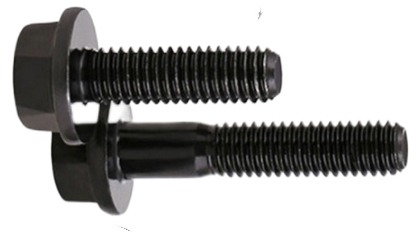
The Principle of High-Strength Bolt Connections
High-strength bolt connections offer several advantages, including straightforward assembly, robust mechanical performance, disassembly capability, resistance to fatigue, and stability under dynamic loads.
The high-strength bolt connection process involves tightening the nut with a specialized wrench to generate substantial and controlled pre-tension in the bolt. This pre-tension is transmitted uniformly to the connected components through the nut and backing plate. Under the influence of this pre-tension, a substantial frictional force arises along the surfaces of the connected components. As long as the axial force remains below this frictional force, the components will not slip, and the connection remains intact. This forms the fundamental principle of high-strength bolt connections.
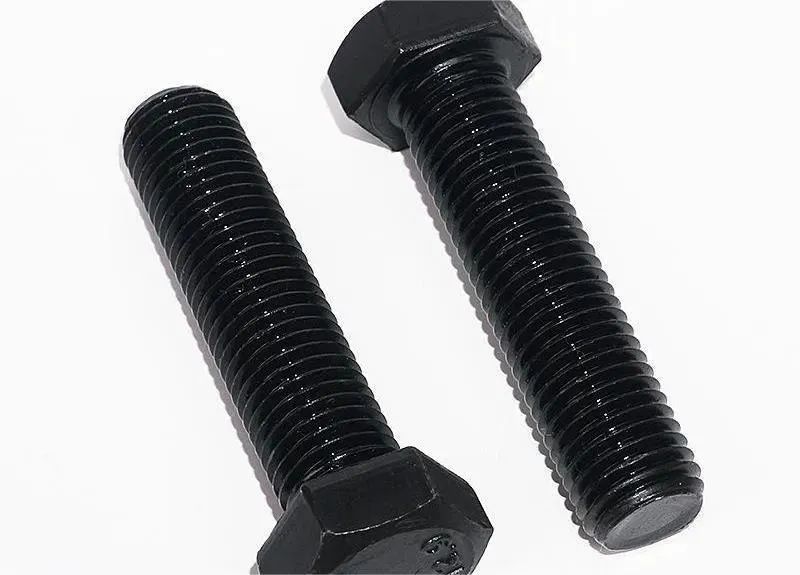
Distinguishing High-Strength Bolts from Ordinary Bolts
1. Material Difference
High-strength bolts can bear greater loads than their ordinary bolt counterparts of the same specification, primarily due to differences in material strength.
Ordinary Bolts: These are typically composed of Q235 (A3) material.
High-Strength Bolts: High-strength bolts are manufactured from high-quality materials, such as 35# steel or other superior materials. Following fabrication, they undergo heat treatment to enhance their strength.
2. Strength Level Difference
High-strength bolts come equipped with higher strength levels compared to ordinary bolts.
High-Strength Bolts: Commonly utilized grades include 8.8s and 10.9s, with 10.9 being the more prevalent choice.
Ordinary Bolts: Ordinary bolts exhibit lower strength levels, typically ranging from 4.4, 4.8, 5.6 to 8.8.
3. Stress Characteristics Difference
The stress distribution and transfer mechanisms vary between high-strength bolts and ordinary bolts.
High-Strength Bolts: High-strength bolts operate by inducing pre-tension and transferring external forces through friction. In addition to their superior material strength, high-strength bolts generate significant pre-tension forces, resulting in the compression of connecting members and the creation of substantial friction forces perpendicular to the screw direction.
Ordinary Bolts: Ordinary bolt connections rely on the shear strength of the bolt rod and the pressure against the hole wall to transmit shear forces. When the nut is tightened, the pre-tension generated is minimal and can be disregarded in its impact.

4. Usage Perspective
The choice between high-strength bolts and ordinary bolts depends on the specific application and structural requirements.
High-Strength Bolts: High-strength bolts are commonly employed for critical components in building structures. They are often used for permanent connections, with two primary types—friction-type, applied with torque wrenches to achieve specified pre-stress, and pressure-type, which are unscrewed using special tools.
Ordinary Bolts: Ordinary bolts, with their lower shear performance, find application in secondary structural components. These bolts only require tightening and can be reused. Conversely, high-strength bolts are not reusable due to their pre-stressed nature.
In summary, understanding the distinctions between high-strength bolts and ordinary bolts is crucial for selecting the appropriate fasteners for different structural and load-bearing requirements in construction and engineering applications.
 Portuguese
 English
 Arabic
 French
 Spanish
 Deutsch
 Turkish
 Dutch
Dutch
 Italiano
 Russian
 Romaian
 Portuguese (Brazil)
 Greek
Greek