


What Are Some Features to Consider When Choosing a PCR Plate?
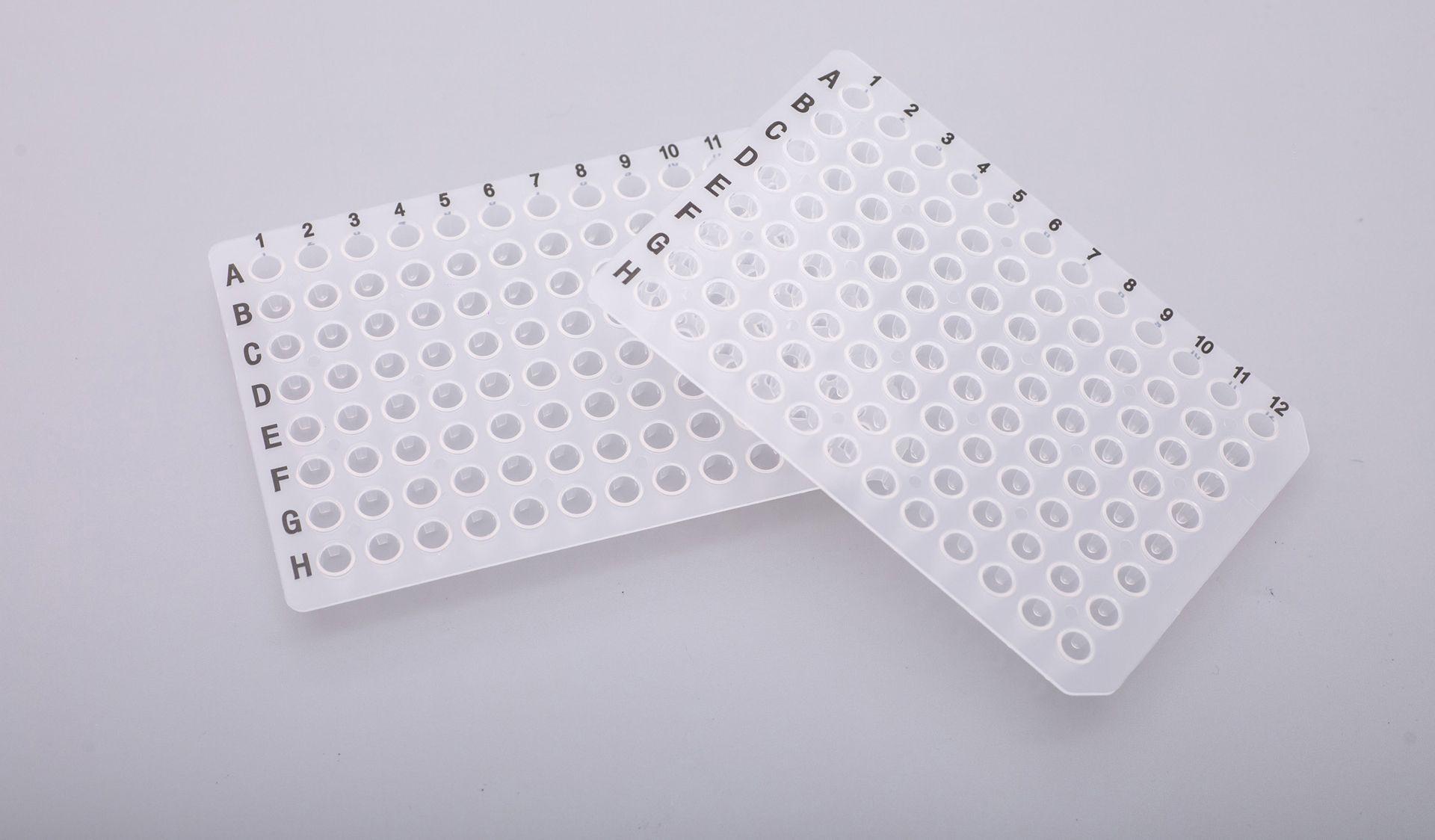
Selecting the most suitable PCR plate for your experiment requires considering several factors to ensure optimal performance and workflow efficiency. Here are some key aspects to keep in mind:
Compatibility
1. Thermal Cycler: Ensure the plate format (number and shape of wells) is compatible with your thermal cycler block. Different cyclers may have specific size requirements for the plates they accommodate.
2. Liquid Handling Systems: If you plan to use automated liquid handling robots for pipetting, verify the plate format is compatible with the gripper arms and pipetting tips used by your system. Some robots might have limitations on well size or plate skirt design.
Reaction Volume
1. Standard Volume (20-50 µL): Most PCR reactions typically utilize reaction volumes between 20 and 50 microliters per well. Standard 96-well PCR plates offer sufficient well volume for these applications.
2. Low Volume PCR: For reactions requiring smaller volumes (e.g., less than 10 µL), specific low-volume PCR plates with shallower wells are available. These plates minimize evaporation and ensure efficient use of precious samples.
3. High Volume PCR: For reactions needing larger volumes (e.g., exceeding 100 µL), some manufacturers offer plates with deeper wells to accommodate these requirements.
Optical Clarity
1. Standard PCR: For basic PCR applications, standard PCR plates with good clarity suffice.
2. Quantitative PCR (qPCR): If you're performing qPCR, which relies on fluorescence detection, opt for plates with exceptional optical clarity. This ensures minimal light scattering and accurate measurement of fluorescent signals emitted during the reaction.
Sterilization
1. Pre-sterilized Plates: These plates offer convenience, as they arrive ready to use without the need for autoclaving. This is particularly helpful for labs with limited autoclave availability or for time-sensitive experiments.
2. Non-sterilized Plates: These plates are a more economical option if your lab has autoclave facilities for sterilization. However, factor in the additional time and resources required for autoclaving before using these plates.
By carefully considering these factors and matching them to your specific needs, you can choose the most appropriate PCR plate for successful and efficient PCR experiments. There is more information about PCR plates like: Sealing the Deal: Optimizing PCR Plate Performance With the Right Seal and Technique. If you are interested in it please click it to read.
 Portuguese
 English
 Arabic
 French
 Spanish
 Deutsch
 Turkish
 Dutch
Dutch
 Italiano
 Russian
 Romaian
 Portuguese (Brazil)
 Greek
Greek