


From Quartz to Spring Drive: Inside the Seiko Revolution
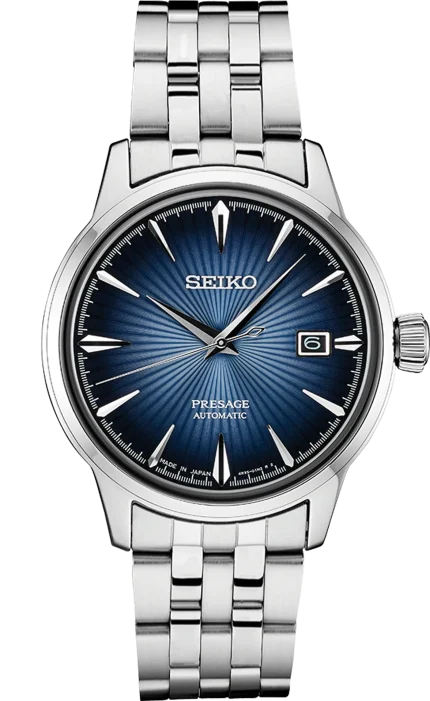
When we talk about revolutionary moments in watchmaking, Seiko stands at the center of some of the most transformative innovations in horological history. From pioneering the quartz movement that reshaped the entire industry to developing the Spring Drive technology that perfectly fuses mechanical tradition https://seikowatch.co.uk/ with electronic precision, Seiko has continuously set benchmarks that others follow.
This is the story of how Seiko evolved from being a traditional watchmaker to an innovation powerhouse that redefined timekeeping.
The Dawn of the Quartz Revolution
In the late 1960s, mechanical watches dominated the industry. Accuracy was measured in seconds per day, and fine Swiss movements were considered the pinnacle of precision. Then came 1969, the year Seiko introduced the Quartz Astron, the world’s first quartz wristwatch.
This breakthrough changed everything. The Astron offered an accuracy of ±5 seconds per month, compared to the daily variations of mechanical watches. It also introduced a completely new power source—a battery-driven quartz oscillator—which consumed far less energy than mechanical components.
The Quartz Astron wasn’t just a technological leap; it was a revolution. It democratized accuracy, making high-precision timekeeping accessible to millions. While Swiss brands resisted at first, the shift to quartz eventually became global. The event is now famously known as the Quartz Crisis, as many traditional watchmakers struggled to adapt—while Seiko thrived.
The Rise of Kinetic Energy Technology
Seiko’s spirit of innovation didn’t stop with quartz. In 1988, the brand launched Kinetic technology, which combined the best of both worlds: the self-winding principle of mechanical watches with the accuracy of quartz. Instead of a traditional battery, Kinetic watches used the wearer’s movement to generate energy, storing it in a rechargeable battery. This meant quartz-level precision without frequent battery changes, appealing to eco-conscious and tech-savvy consumers alike.
The Birth of Spring Drive: A New Era of Precision
If quartz revolutionized the 20th century, Spring Drive marked Seiko’s crowning achievement in the 21st. After over 20 years of research and development, Seiko unveiled Spring Drive in 1999, a unique movement that seamlessly merged mechanical engineering with electronic regulation.
Unlike traditional mechanical watches that rely on an escapement, Spring Drive uses a Tri-synchro regulator, which combines three types of energy: mechanical (from the mainspring), electrical (generated by the glide wheel), and electromagnetic (to regulate timekeeping). This results in ±1 second per day accuracy—a remarkable improvement over conventional mechanical watches.
What truly sets Spring Drive apart is its glide-motion second hand, which moves in a perfectly smooth, continuous sweep. This feature isn’t just beautiful; it reflects the natural flow of time, a concept deeply rooted in Japanese aesthetics.
Grand Seiko and the Art of Perfection
Spring Drive technology found its ultimate expression in Grand Seiko, Seiko’s luxury line dedicated to fine craftsmanship and innovation. Grand Seiko models featuring Spring Drive are revered for their hand-finishing, precision, and durability—competing head-to-head with top Swiss brands.
Collectors particularly admire the Snowflake (SBGA211) model, which combines a Spring Drive movement with a dial inspired by the snowy landscapes of Shinshu, Japan. This blend of artistic design and groundbreaking technology makes Grand Seiko a true horological masterpiece.
Why These Innovations Matter
Seiko’s journey from Quartz to Spring Drive illustrates a commitment to pushing boundaries without abandoning tradition. Where many brands focused solely on mechanical heritage or fully embraced electronics, Seiko chose a harmonious path, respecting the past while embracing the future.
-
Quartz technology brought unmatched accuracy and affordability.
-
Kinetic technology reduced environmental impact and eliminated battery worries.
-
Spring Drive delivered near-perfect accuracy while preserving the soul of mechanical watchmaking.
This trifecta of innovations makes Seiko not just a brand, but a pioneer in timekeeping evolution.
Final Thoughts
From the first quartz wristwatch that changed the industry to the Spring Drive that perfected the art of precision, Seiko’s history is a testament to innovation, resilience, and craftsmanship. For enthusiasts and collectors, owning a Seiko isn’t just about telling time—it’s about wearing a piece of horological history.
Whether you choose a Quartz Astron reissue, a Kinetic timepiece, or a Grand Seiko Spring Drive, you’re not just buying a watch—you’re embracing a legacy of visionary watchmaking.
 Turkish
 English
 Arabic
 French
 Spanish
 Portuguese
 Deutsch
 Dutch
Dutch
 Italiano
 Russian
 Romaian
 Portuguese (Brazil)
 Greek
Greek