


What Are ELISA Microplates Made of?
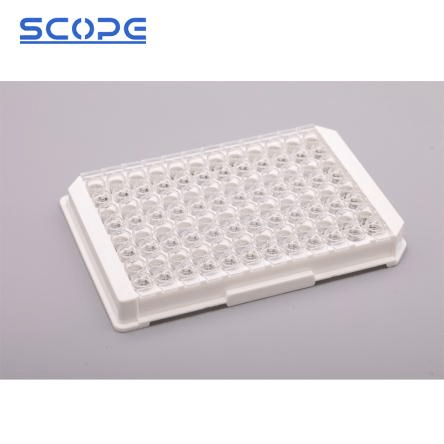
ELISA microplates, the workhorses of enzyme-linked immunosorbent assays, are typically crafted from a specific type of plastic – polystyrene. Here's a deeper dive into why polystyrene reigns supreme for ELISA applications:
Polystyrene: The Ideal Material
l Clarity: Polystyrene is naturally transparent, allowing for unobstructed light transmission during the ELISA reading process. This is crucial for accurate measurement of the enzymatic reaction's colorimetric endpoint, which often determines the concentration of the target molecule in the sample.
l Rigidity: ELISA microplates need to be sturdy enough to handle the multiple steps involved in the assay, including pipetting, washing, and incubation. Polystyrene offers a good balance between rigidity and flexibility, preventing warping or cracking during the experiment.
l Cost-effectiveness: Polystyrene is a relatively inexpensive material, making ELISA microplates accessible for various research and diagnostic applications. This affordability allows for wider use of the technology.
l Surface modification: Polystyrene can be readily modified to enhance its suitability for ELISA. Different surface treatments can be applied to optimize the binding of specific molecules, such as proteins and antibodies, to the well surface. This is crucial for ensuring efficient capture and detection of the target molecule in the assay.
Alternatives to Polystyrene (Less Common)
While polystyrene dominates the ELISA microplate landscape, a couple of alternative materials exist with specific properties:
l Polyvinyl Chloride (PVC): PVC offers similar characteristics to polystyrene in terms of clarity and cost-effectiveness. However, it might not be as readily modified for surface treatments compared to polystyrene.
l Specialized Plastics: In rare cases, some ELISA plates might be made from specialized plastics with unique properties. These plates might be designed for specific applications or offer enhanced features like improved chemical resistance.
Conclusion
Polystyrene's combination of clarity, rigidity, affordability, and surface modifiability makes it the ideal material for most ELISA microplates.Alternative materials like PVC exist but are less common. The choice of material might influence the specific properties and performance of the ELISA plate, but polystyrene remains the dominant choice due to its well-rounded suitability for the vast majority of ELISA applications. There is more information about ELISA microplates:ELISA Microplates: Mastering Preparation, Incubation, and Washing for Optimal Results.
 Deutsch
 English
 Arabic
 French
 Spanish
 Portuguese
 Turkish
 Dutch
Dutch
 Italiano
 Russian
 Romaian
 Portuguese (Brazil)
 Greek
Greek